


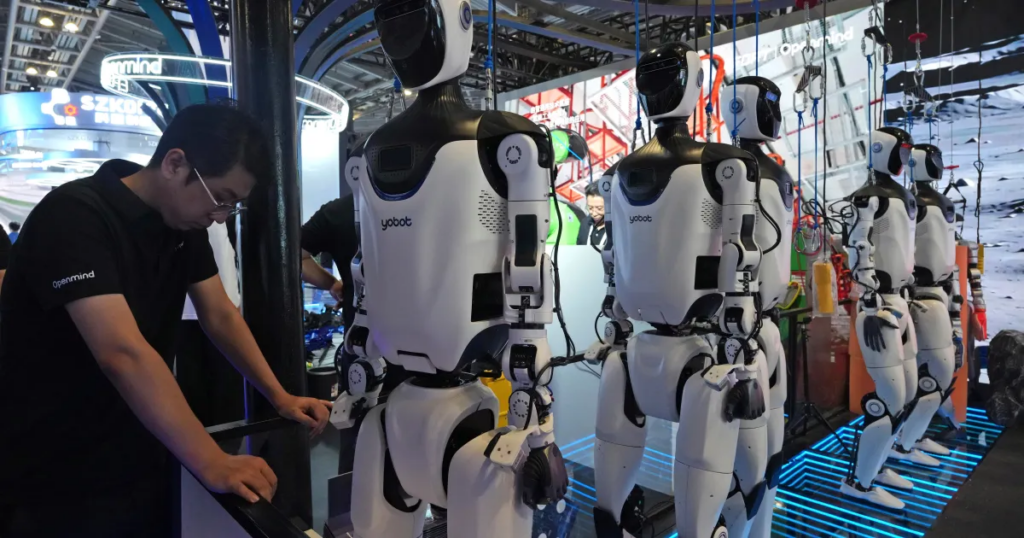
Humanoid robots are becoming the latest front in the technology rivalry between the U.S. and China.
On the 28th of July, the Federal Communications Commission (fFCC) added foreign-produced advanced robotic devices to its “Covered List”. The category includes humanoid robots and quadrupeds.
The FCC Has Blocked New Foreign-Made Robots
The new rule prevents covered foreign-produced robots from receiving new FCC equipment authorization. Companies cannot use the normal process to import, market or sell affected models in America.
However, the measure does not remove every foreign robot already available. Existing authorized models remain unaffected. Producers can also seek conditional approval when authorities determine a device creates no unacceptable risks.
Although the rule covers foreign-made devices broadly, Chinese manufacturers face the biggest impact. China has become a major force in humanoid robots as production expands. At the moment, the FCC places humanoid robots under tighter scrutiny. Producers must therefore address new authorization requirements before entering the U.S.
Washington Says Robotics Creates a Security Risk
Prior to passing the rule, U.S. national security agencies identified risks linked to advanced foreign-produced robots. They warned vulnerable devices could create supply-chain problems for economic and national security.
In addition, the agencies cited cybersecurity risks involving critical infrastructure. Because of this, Washington wants greater control over technology entering the American market.
Furthermore, FCC Chairman Brendan Carr linked the restrictions to domestic manufacturing. He said the policy should encourage companies to produce robotics technology inside the U.S.
Why the U.S. Is Restricting Chinese Humanoid Robots
Moreover, the timing matters because China’s robotics industry has expanded rapidly. Chinese government data showed more than 400 humanoid robot products had emerged by July. The figure represented more than half of the global total.
Additionally, Chinese companies are preparing for international competition. Unitree, one of China’s leading robotics companies, has attracted global attention with humanoid robots and quadruped machines.
The company priced its Shanghai IPO at 150.80 yuan per share in August. Unitree aims to raise about 6.1 billion yuan, or roughly $904 million. More than 40% of its sales come from overseas markets. As a result, this restriction could significantly affect companies targeting the American market.
The Decision Could Reshape the Global Robotics Race
The restriction creates another obstacle between Chinese robotics manufacturers and the American market. It could also encourage greater investment in domestic robotics production.
For Washington, the issue now extends beyond individual robot models. Policymakers are increasingly treating advanced connected technologies as potential national security concerns.
For Chinese companies, the American market becomes harder to access. They may therefore place greater emphasis on other international markets as their industry expands.
The Next Battle Could Reach Beyond Robots
The FCC’s robotics decision may form part of a wider technology strategy. The agency is also considering restrictions involving optical transceivers used in data centers.
Such measures would extend national security controls deeper into AI infrastructure. Meanwhile, Chinese robotics companies will continue developing products and seeking international customers.
For now, the FCC has created a clear barrier for new foreign-produced advanced robots entering America. The decision also signals Washington’s growing concern over foreign technology with potential strategic importance.
As robotics develops, the next stage will depend on how broadly the U.S. expands such restrictions and how affected companies respond.
