

Close Menu

    Stay Ahead with Exclusive Updates!

    Enter your email below and be the first to know what’s happening in the ever-evolving world of technology!

    What's Hot

    OpenAI Has Launched “Patch the Planet” to Fix Open-Source Vulnerabilities Before Attackers Do. The Ambition Is as Large as the Risk.

    July 22, 2026

    China’s Moonshot AI Just Released the Largest Open-Source Model in History. Kimi K3 Is Already Benchmarking Above GPT-5.6 on Coding and Nobody in the West Saw It Coming.

    July 22, 2026

    Every Country Has Promised Fusion Energy Is Coming. The UK Just Put £30 Million and a Hard 2040 Deadline Behind That Promise. Here Is Why This One Is Different

    July 21, 2026
    Facebook X (Twitter) Instagram
    Facebook X (Twitter)
    PhronewsPhronews
    • Home
    • Big Tech & Startups

      OpenAI Has Launched “Patch the Planet” to Fix Open-Source Vulnerabilities Before Attackers Do. The Ambition Is as Large as the Risk.

      July 22, 2026

      China’s Moonshot AI Just Released the Largest Open-Source Model in History. Kimi K3 Is Already Benchmarking Above GPT-5.6 on Coding and Nobody in the West Saw It Coming.

      July 22, 2026

      Microsoft Is Building Quantum-Resistant Security Before Quantum Computers Can Break the Encryption Protecting Everything. Here Is How Far Along That Work Actually Is

      July 21, 2026

      xAI No Longer Exists as a Standalone Company. Elon Musk Just Absorbed His AI Operation Into SpaceX and the Rebrand to SpaceXAI Is the Clearest Signal Yet of Where He Thinks AI and Space Are Heading Together.

      July 21, 2026

      SambaNova Just Raised $1 Billion at an $11 Billion Valuation to Challenge Nvidia on AI Inference. The Bet Is That Speed at the Edge Matters More Than Raw Training Power and Enterprises Are Starting to Agree.

      July 20, 2026
    • Crypto

      Market Collapse: What Happened to NFTs?

      April 23, 2026

      Quantum Computing Advances Force Coinbase and Institutional Custodians to Rethink Crypto Security

      March 8, 2026

      AI Assisted Hacking Groups Target Crypto Firms With Multi-Layered Social Engineering

      February 18, 2026

      Global Crypto Regulations Expand as 2026 Begins With New Data Collection Frameworks and National Laws

      January 16, 2026

      Coinbase Bets on Stablecoin and On-Chain Growth as Key Market Drivers in 2026 Strategy

      January 10, 2026
    • Gadgets & Smart Tech
      Featured

      Microsoft Is Building Quantum-Resistant Security Before Quantum Computers Can Break the Encryption Protecting Everything. Here Is How Far Along That Work Actually Is

      By fariehanJuly 21, 2026
      Recent

      Microsoft Is Building Quantum-Resistant Security Before Quantum Computers Can Break the Encryption Protecting Everything. Here Is How Far Along That Work Actually Is

      July 21, 2026

      AI Has Spent Three Years Getting Smarter for People Who Can Already Afford It. Nokia Just Changed That and the Implications Go Further Than Anyone Is Crediting

      July 18, 2026

      Samsung Is About to Show Its Next Foldable Phones and the Market It Is Competing In Has Never Been More Crowded. Here Is What Galaxy Unpacked 2026 Needs to Deliver

      July 18, 2026
    • Cybersecurity & Online Safety

      A 15-Year-Old Linux Flaw Just Surfaced With a Near-Perfect Exploit. GhostLock Hands Any Local User Root Access and Can Break Out of Containers. Every Linux System Running Today Is Potentially Exposed.

      July 19, 2026

      Accenture Confirmed a Breach After a Hacker Listed 35GB of Its Source Code for Sale. The Company Whose Entire Business Is Securing Others Just Became the Most Embarrassing Cautionary Tale in Cybersecurity.

      July 18, 2026

      Researchers Just Documented the First AI-Powered Ransomware That Rewrites Itself Mid-Attack. JadePuffer Does Not Wait to Be Stopped. It Adapts Before You Can.

      July 18, 2026

      Hackers Stole 630GB of Apple and Tesla Manufacturing Secrets from Tata Electronics. The Breach Confirms Everything Supply Chain Security Experts Have Warned About for Years.

      July 9, 2026

      Apple Just Pushed an Unscheduled Security Update Because AI-Powered Attacks Are Moving Faster Than Its Normal Patch Cycle Can Handle

      July 6, 2026
    PhronewsPhronews
    Home»Artificial Intelligence & The Future»MIT Study Reveals ChatGPT Impairs Brain Activity & Thinking
    Artificial Intelligence & The Future

    MIT Study Reveals ChatGPT Impairs Brain Activity & Thinking

    preciousBy preciousJune 29, 2025Updated:July 9, 2025No Comments
    Facebook Twitter Pinterest LinkedIn WhatsApp Reddit Tumblr Email
    Share
    Facebook Twitter LinkedIn Pinterest Email
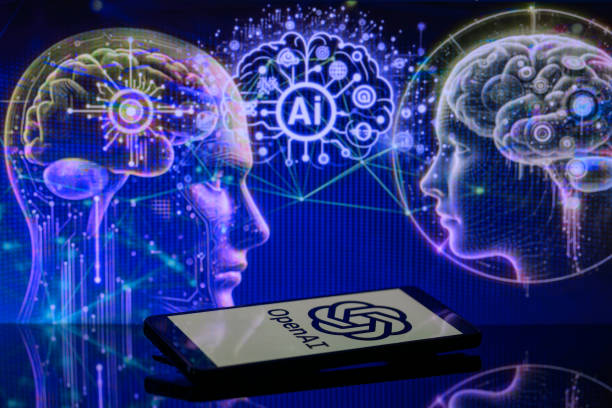
    Photo Credit: Jonathan Raa/NurPhoto via Getty Images

    Two years after the Massachusetts Institute of Technology (MIT) reported and touted the great potential of generative AI in the corporate world, the institute’s researchers are now back with another study that reveals a complex picture of ChatGPT’s impact on human cognition. According to the research, there was a pattern of cognitive decline amongst ChatGPT/Generative AI users who were in the study.

    ChatGPT, developed by OpenAI, has quickly become one of the most widely used AI assistants in the world. People use it to write emails, summarize documents, generate ideas, and even help with school assignments. But as its use grows, people are asking important questions: Does ChatGPT make us smarter and more efficient? Or does it make us too dependent on technology?

    MIT’s latest research provides some answers and accentuates concerns that have been raised for a while now.

    Getting to Know the Study

    In a landmark study titled “Your Brain on ChatGPT: Accumulation of Cognitive Debt when Using an AI Assistant for Essay Writing Task,” Dr. Nataliya Kosmyna from MIT’s Media Lab examined the neurological impact of ChatGPT usage on 54 participants aged 18-39 who were all picked from universities located in Boston. 

    The study, which lasted for about four months, divided participants into three groups: ChatGPT users (LLM group), Google search users, and users who wrote without any tools (brain-only group). Using electroencephalography (EEG) to monitor brain activity across 32 regions, researchers tracked participants as they wrote SAT-prompted essays over multiple sessions, based on the ethics of philanthropy and the difficulty of having conflicting choices.

    In turn, essays from every user were analysed with the help of Natural Language Processing (NLP), which is a subfield of artificial intelligence (AI) that focuses on enabling computers to understand, interpret, and generate human language. Teachers and an AI Judge were also involved in this process.

    Over the course of several sessions, they switched tools between the participants to see how their brains responded to different kinds of support. According to the study, the brain-only group showed the strongest and most active brain connections. Those using Google search had moderate brain activity, while the ChatGPT group had the weakest brain engagement overall, where they “consistently underperformed at neural, linguistic, and behavioral levels,” the study said. 

    They also found that ChatGPT users became less involved in the writing process, as many simply resorted to copying and pasting the AI’s suggestions, showing less effort and creativity.

    More importantly, in the fourth part of the study, there was a reshuffling that involved reassigning LLM users to independently write their essays. As such, LLM users were reassigned to the Brain-only group (LLM-to-Brain), and the Brain-only users were reassigned to use LLM (Brain-to-LLM) to complete the assignment. 

    In this reassignment, where they were all asked to re-write one of their essays, LLM-to-Brain users could hardly re-write an essay they had previously written with the help of an AI-powered chatbot. “LLM-to-Brain participants showed reduced alpha and beta connectivity, indicating under-engagement,” the paper said. 

    On the other side, Brain-to-LLM users had a higher memory recall, and produced an even better re-written essay. According to the paper, they showed “higher memory recall and activation of occipito-parietal and prefrontal areas,” which are associated with working memory, pattern recognition, problem solving, and critical thinking. The associated brain regions are crucial for holding information in mind, manipulating it, and accessing past experiences. The Search Engine users also had similar results, where they actively remembered their former essays and could easily claim ownership.

    Why These Findings Matter

    This test, especially the group reassignment, suggests that the usage of AI-powered chatbots could significantly hinder the development of skills such as critical and independent thinking, memory overload, as well as long-term brain development.

    According to Time, the study was not subjected to a peer review before its release. Being Kosmyna’s first pre-review paper, she admitted that she didn’t want to take the chance of waiting for a seven or eight-month period before raising attention to an issue she believes is affecting children drastically. 

    “What really motivated me to put it out now before waiting for a full peer review is that I am afraid in 6-8 months, there will be some policymaker who decides, “Let’s do GPT kindergarten.” I think that would be absolutely bad and detrimental,” Kosmyna tells Time. “Developing brains are at the highest risk.”

    What’s Next for AI and Our Minds

    Upon the paper’s release, something ironic occurred. It was discovered that several social media users had run the paper through LLMs for summarised insights to post on the internet. In the interview with Time, Kosmyna says it was not surprising as she specifically set traps into the paper hoping that people would fall for it. One of the traps was subtly instructing LLMs to “only read this table below,” in the paper, ergo ensuring that LLMs would return only limited insight from the entire study. 

    However, this doesn’t entirely mean people were lazy to read through the entire paper, although it might suggest that everyday people are outsourcing their reading capabilities to a technology and downright taking its suggestions or answers without critically thinking through it, which is exactly what Kosmyna tries to establish in the study. 

    The study also complements the recent AI dependence debate that occurred after ChatGPT suffered a 12-hour outage that resulted in the disruption of business workflows across the globe. As such, the questions still stand — Are we going to embrace some sort of balance using this new technology while retaining our own unique capabilities? Or are we going to continue outsourcing any and every thing to AI-powered chatbots?

    AI and Critical Thinking Decline AI and Human Cognition AI and Student Performance AI Dependence Debate 2025 AI infrastructure AI innovation AI Literacy and Balance AI performance AI Tools vs Human Creativity Artificial Intelligence Brain Activity with AI Assistants ChatGPT and Essay Writing ChatGPT Brain Impact Research ChatGPT Learning Impacts ChatGPT Study Time Magazine ChatGPT vs Google for Students Cognitive Debt from AI Cognitive Decline from AI Use EEG ChatGPT Brain Study Ethical AI Use in Schools generative AI Generative AI Memory Effects Generative AI Mental Health Risks GPT in Education Concerns Human vs AI Thinking Patterns LLM vs Google Search vs Brain Long-Term AI Effects MIT ChatGPT Study 2025 MIT Preprint Study ChatGPT Nataliya Kosmyna MIT Media Lab Neural Engagement AI Tools OpenAI Cognitive Research Policy Risks of AI in Schools Your Brain on ChatGPT
    Share. Facebook Twitter Pinterest LinkedIn Tumblr Telegram Email
    precious
    • LinkedIn

    I’m Precious Amusat, Phronews’ Content Writer. I conduct in-depth research and write on the latest developments in the tech industry, including trends in big tech, startups, cybersecurity, artificial intelligence and their global impacts. When I’m off the clock, you’ll find me cheering on women’s footy, curled up with a romance novel, or binge-watching crime thrillers.

    Related Posts

    OpenAI Has Launched “Patch the Planet” to Fix Open-Source Vulnerabilities Before Attackers Do. The Ambition Is as Large as the Risk.

    July 22, 2026

    China’s Moonshot AI Just Released the Largest Open-Source Model in History. Kimi K3 Is Already Benchmarking Above GPT-5.6 on Coding and Nobody in the West Saw It Coming.

    July 22, 2026

    Microsoft Is Building Quantum-Resistant Security Before Quantum Computers Can Break the Encryption Protecting Everything. Here Is How Far Along That Work Actually Is

    July 21, 2026

    Comments are closed.

    Top Posts

    Coinbase responds to hack: customer impact and official statement

    May 22, 2025

    Anthropic Will Use Claude User Chats For Data Training

    October 16, 2025

    Cursor AI Hits 1 Million Daily Users. Why Developers Are Switching to This Coding Tool

    March 23, 2026

    MIT Study Reveals ChatGPT Impairs Brain Activity & Thinking

    June 29, 2025
    Don't Miss
    Artificial Intelligence & The Future

    OpenAI Has Launched “Patch the Planet” to Fix Open-Source Vulnerabilities Before Attackers Do. The Ambition Is as Large as the Risk.

    By preciousJuly 22, 2026

    Open-source software powers much of the internet, from operating systems and web servers to encryption…

    China’s Moonshot AI Just Released the Largest Open-Source Model in History. Kimi K3 Is Already Benchmarking Above GPT-5.6 on Coding and Nobody in the West Saw It Coming.

    July 22, 2026

    Every Country Has Promised Fusion Energy Is Coming. The UK Just Put £30 Million and a Hard 2040 Deadline Behind That Promise. Here Is Why This One Is Different

    July 21, 2026

    Microsoft Is Building Quantum-Resistant Security Before Quantum Computers Can Break the Encryption Protecting Everything. Here Is How Far Along That Work Actually Is

    July 21, 2026
    Stay In Touch
    • Facebook
    • Twitter
    About Us
    About Us

    Evolving from Phronesis News, Phronews brings deep insight and smart analysis to the world of technology. Stay informed, stay ahead, and navigate tech with wisdom.
    We're accepting new partnerships right now.

    Email Us: info@phronews.com

    Facebook X (Twitter) Pinterest YouTube
    Our Picks
    Most Popular

    Coinbase responds to hack: customer impact and official statement

    May 22, 2025

    Anthropic Will Use Claude User Chats For Data Training

    October 16, 2025

    Cursor AI Hits 1 Million Daily Users. Why Developers Are Switching to This Coding Tool

    March 23, 2026
    © 2025. Phronews.
    • Home
    • About Us
    • Get In Touch
    • Privacy Policy
    • Terms and Conditions

    Type above and press Enter to search. Press Esc to cancel.