


In March 2021, a digital artwork by the artist Beeple sold at Christie’s for $69.3 million, making him one of the three most valuable living artists at auction. The work was a JPEG. There was no physical canvas, no sculpture, no object a buyer could hang on a wall. What the winning bidder paid for was a blockchain record confirming they owned the file. That sale became the moment NFTs broke into mainstream conversation, and for about a year, the market that followed it seemed unstoppable.
Then it fell apart.
What NFTs Actually Were
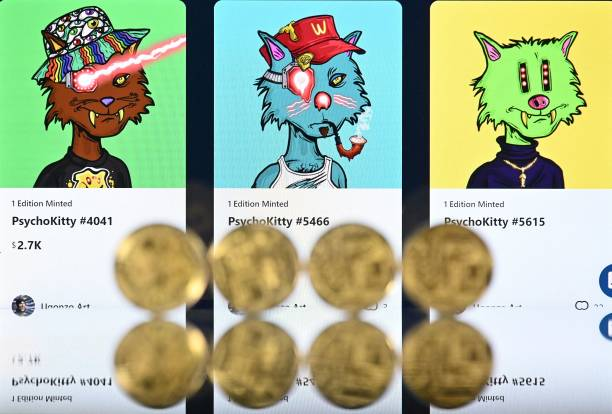
An NFT, short for non-fungible token, is a unique digital certificate stored on a blockchain that records ownership of a specific item, usually a piece of digital art, a collectible, or a video clip. The idea was that unlike regular digital files, which anyone can copy, an NFT gave the owner a verified claim to the original. Think of it like a title deed for a house, except the house is a digital file that anyone can photograph and walk away with. The deed proves you own the original, but the original offers no exclusive access, no physical experience, and in most cases, no practical benefit.
This concept attracted artists, investors, and speculators in large numbers between 2020 and 2022. At the peak in 2021, over 529,000 active traders were already participating in the art NFT market alone, with total trading volume reaching $2.9 billion. Celebrities bought into collections. Major brands launched their own tokens. Auction houses treated NFT drops like gallery openings. However, there was a big problem.
How the Collapse Happened
The market’s biggest problem was that it grew faster than it had any reason to. By 2025, there were 1.34 billion NFTs in circulation, a 3,400% increase from the 38 million available in 2021, while total sales revenue continued to fall. What this meant was that supply flooded the market at the same time buyers lost interest.
Then came the proliferation of cheaper minting tools, which meant anyone could create and list an NFT within minutes. This also meant thousands of projects were launched with little to offer buyers beyond the hope that prices would keep rising. One can liken this scenario to a property market where developers keep building houses in a town people are already leaving.
Additionally, scams and failed projects damaged trust broadly. Developers who collected money from buyers and then abandoned their projects, a practice known as a “rug pull,” became common enough that they left lasting doubt and fear across the NFT space. High transaction fees on the Ethereum network also made it expensive for casual buyers to participate, which eventually priced out the very audience the market needed to sustain itself.
Then in 2025, the average sale price per NFT fell from around $400 during the boom years to just $96. Most collections that once had active communities quietly went dormant. And around 96% of NFT collections are now considered inactive, with no trading activity or community engagement remaining.
The Platforms Shutting Down
The clearest sign of how far things have fallen is the number of platforms that have closed. MakersPlace, the platform that provided the back-end infrastructure for the $69.3 million Beeple sale, shut down in 2025, citing “ongoing market challenges and funding difficulties.” KnownOrigin shut down in July 2024, and Async Art closed back in October 2023.
Kraken NFT, X2Y2, Bybit NFT, and LG Art Lab all ceased operations across 2025. Nike ended the Web3 operations of its RTFKT brand in January of the same year. Christie’s, which had hosted that landmark Beeple sale, shut down its entire digital art department in September 2025 after none of its 11 auctions that year exceeded $400,000 in sales.
Nifty Gateway, which at its peak processed over $300 million in sales in a single month and hosted drops from artists including Beeple and Grimes, announced its closure in January 2026, giving users until April 2026 to withdraw their assets from the platform.
What Is Left of NFTs
While the NFT market has not entirely disappeared, what remains looks very different from the boom years. Gaming NFTs, where tokens represent usable in-game items rather than purely collectible images, have held up better than most categories. They accounted for 38% of all NFT transaction volumes in 2025. Platforms linking physical collectibles like trading cards to blockchain records have also found a smaller but more stable audience.
The collections that still hold any value tend to be the earliest and most historically significant ones, like CryptoPunks, or those tied to something tangible. The rest of the market, the thousands of profile picture projects and one-off drops that launched during the 2021 frenzy, has largely been forgotten or abandoned.
NFT will perhaps remain a technology with a genuinely interesting concept that attracted big money, produced very little real utility for most buyers, and eventually ran out of new people willing to pay rising prices. The market that remains is a fraction of what it was, and the mainstream or “boom” era is almost certainly not coming back.
