


Artificial intelligence is increasingly moving beyond chatbots and software into machines that can drive, fly, operate industrial equipment, and make decisions in the physical world. And as this shift gathers pace, cybersecurity companies are facing a new problem, where an attack on these systems could affect more than confidential data because the compromised machine may be capable of acting in the real world.
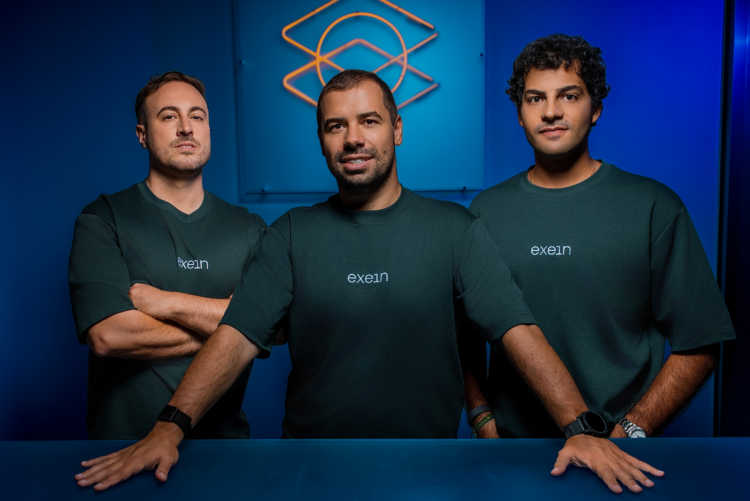
Italian cybersecurity company Exein is raising more money to tackle that risk.
The Rome-based startup has secured $270 million in new funding at a $1.7 billion valuation as it expands its security technology for what the AI industry calls physical AI. These are AI-powered systems such as robots, drones, autonomous vehicles, and industrial machines that can sense their surroundings, make decisions, and take physical actions.
The funding round was led by Headline, with participation from Sofina, Goldman Sachs, the European Investment Bank Group through the European Tech Champions Initiative, KfW Capital and T.Capital. There was also involvement from existing investors including Balderton Capital, HV Capital, Lakestar and Geodesic Capital.
More importantly, this funding round was significantly oversubscribed, which may mean a good thing for Exein.
How Exein Protects Physical AI
Exein started in 2018 with a focus on securing Internet of Things devices, but its technology is designed to operate inside the devices themselves rather than relying only on security around the network.
The company works with manufacturers and chipmakers to embed security into connected products. Its newer Photon technology operates at the kernel level, which gives it access to a core part of a device’s operating system and allows it to identify and block malicious activity while the system is running.
According to Exein, its technology is now deployed across more than two billion devices covering industries including automotive, aerospace, industrial automation, healthcare, energy, and semiconductors. The company also reported that its annual recurring revenue (ARR) in the first half of 2026 was four times higher than a year earlier.
Why Physical AI Security Is Becoming More Urgent
The expansion into physical AI comes as Exein says attacks against connected devices are increasing quickly.
According to the company, its network is now seeing around 5,000 new and non-repetitive attacks each week, five times the volume recorded a year ago. Exein also says attackers are using AI to make it cheaper and faster to find weaknesses and launch attacks against connected systems.
This becomes more serious when the target can control a vehicle, operate healthcare equipment, or manage parts of critical infrastructure. In these cases, waiting for a security team to detect an attack and manually respond may not always be fast enough.
There’s also pressure coming from regulators. Since September 11, manufacturers selling products with digital elements in the European Union have been required under the Cyber Resilience Act to report actively exploited vulnerabilities and serious security incidents.
Where the $270 Million Goes Next
Exein plans to use the funding to expand further across the United States and Asia-Pacific, hire more employees, and pursue acquisitions that can broaden its security platform.
It is also developing its own foundation model specifically for physical AI cybersecurity. The model will be trained on machine data and telemetry collected from Exein’s global device network, with the company targeting the first quarter of 2027 for its release.
The challenge now is whether security can keep pace as AI moves into more machines capable of affecting the physical world. Exein’s $270 million raise shows investors are increasingly treating that problem as a cybersecurity market of its own.
