


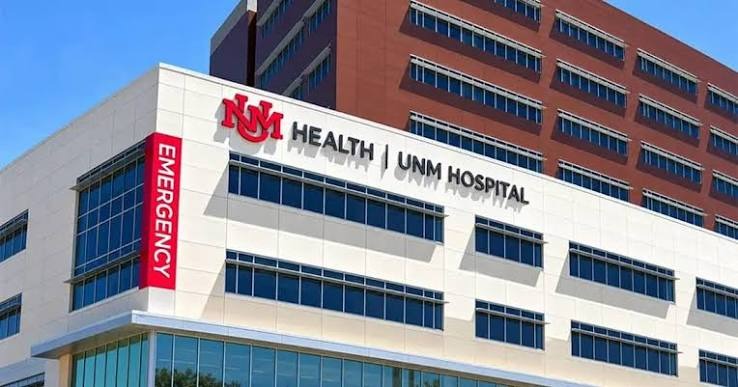
The University of New Mexico (UNM) Health System was forced to divert ambulances to other hospitals on October 26, after a cybersecurity incident disrupted operations at its Health Sciences Center in Albuquerque.
The incident temporarily affected access to emergency medical services across New Mexico, which relies on the hospital as its only Level I trauma centre for patients with the most serious injuries.
The disruption also forced the cancellation of appointments and outpatient surgeries across the health system, including more than 30 clinics. UNM Health began restoring its systems later that afternoon, while federal and state law enforcement agencies were notified of the incident.
Cyberattack Forces Hospital to Divert Emergency Patients
The cybersecurity incident was first identified around 11 a.m. on Monday, October 26, prompting the health system’s IT security teams to begin containment efforts.
By 12:30 p.m., UNM Health had temporarily stopped accepting new patients and redirected ambulance traffic to other healthcare providers in the region. The diversion lasted approximately two hours, ending at 2:30 p.m. when the hospital began restoring its operations.
The disruption was significant because UNM Hospital operates New Mexico’s only Level I trauma centre, which provides specialised treatment for patients with life-threatening injuries requiring immediate medical attention.
According to the Associated Press, the incident temporarily left the state without an emergency department equipped to handle its most serious trauma cases.
However, two other major healthcare providers, Presbyterian Healthcare Services and Lovelace Health System, coordinated with UNM to accommodate additional patients during the disruption.
UNM also suspended outpatient surgeries and cancelled appointments scheduled for the remainder of that Monday, with patients advised not to visit its facilities for routine appointments while the response was underway.
UNM Reports Disruption to Some Computer Systems
Although UNM initially provided limited information about the nature of the incident, its October 27 update offered further details about the technical impact.
According to the health system, its IT security teams determined that the incident had affected some end-user devices but had not penetrated its core systems or servers.
The organisation worked with external cybersecurity partners to secure its network and notified state and federal law enforcement agencies. It also activated its Emergency Operations Center to coordinate the response and provide guidance to employees and clinical teams.
UNM confirmed that its critical electronic systems were back online by October 27. Both UNM Hospital and Sandoval Regional Medical Center remained open, ambulance traffic returned to normal, and clinics resumed scheduled appointments and procedures.
However, the disruption extended beyond patient care. Classes at the university’s School of Medicine, College of Nursing, College of Pharmacy, and College of Population Health were cancelled on October 27.
Ransomware Group Claims Responsibility for the Incident
The incident raises concerns about the possibility of compromised personal and medical information.
According to reporting by BleepingComputer, a newly emerged ransomware group known as BYOD claimed responsibility for the attack, with the group alleging that it had compromised approximately 36,000 systems across the university’s main campus and hospital environments.
It also claimed to have obtained student records, employee information, internal emails, payroll records, and patient data.
Several UNM employees separately told the Associated Press that messages appeared on their computers claiming that student, employee, and patient information had been stolen.
However, UNM has not publicly confirmed the group’s claims or established whether patient or employee information was actually stolen. The university also declined to disclose further technical details because the incident remains under criminal investigation.
On October 28, UNM warned patients, employees, and members of the public against engaging with individuals or groups claiming responsibility for the incident. It also cautioned against clicking suspicious links, downloading attachments or sharing personal and financial information in response to unsolicited messages.
The university confirmed that it had made no concessions to any group behind the cybersecurity threat.
Healthcare Systems Remain Vulnerable to Cyberattacks
The incident highlights the operational risks associated with cyberattacks against healthcare providers, particularly those responsible for emergency and specialised medical services.
UNM Health handles approximately 900,000 outpatient visits and 100,000 emergency room visits annually, making it an important part of New Mexico’s healthcare infrastructure. Even a disruption lasting a few hours can affect emergency response arrangements, scheduled procedures, and access to medical services.
Although UNM restored its clinical operations within a day, questions surrounding the incident’s full impact and the ransomware group’s claims remain unresolved as investigations continue.
