


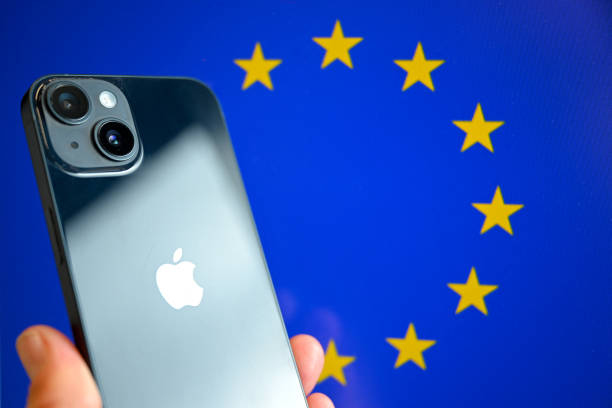
Apple’s years-long dispute with European regulators over how much control it can maintain over the iPhone ecosystem has suffered another legal setback.
The EU’s General Court has rejected the company’s challenge to key parts of its designation under the Digital Markets Act, leaving the App Store and iOS subject to some of the bloc’s strictest competition rules.
The July 8 ruling upheld the European Commission’s decision to classify Apple as a “gatekeeper” for the App Store and iOS. Under the DMA, that status applies to large digital platforms considered important gateways between businesses and consumers, and comes with rules intended to make their platforms more open to competitors.
The ruling follows Apple’s attempt to challenge decisions dating back to September 2023, when the Commission designated the company as a gatekeeper for the App Store, iOS, and Safari.
Why Apple Lost Its App Store Challenge
One of Apple’s main arguments concerned how the Commission treated its different App Stores.
Apple operates separate stores for the iPhone, iPad, Apple Watch, Mac and Apple TV. The company argued that these should be considered separate core platform services, rather than grouped together as one App Store service. Under that interpretation, only the iOS App Store met the thresholds needed for gatekeeper designation.
The Court Disagreed
Judges found that despite differences between Apple devices, the stores perform the same basic function by connecting app developers with users and distributing software applications. The differences Apple identified were mainly linked to the devices themselves and were not enough to treat the stores as separate core platform services.
Apple also challenged a DMA provision requiring gatekeepers to make parts of their platforms interoperable with rival services. The court ruled that this challenge was inadmissible because the interoperability provision was neither the legal basis for Apple’s gatekeeper designation nor directly connected to that decision.
The iMessage Case Was Different
Apple’s challenge involving iMessage had a different outcome for a specific reason.
The Commission investigated iMessage after initially classifying it as a core platform service in 2023. However, in February 2024, regulators decided not to designate Apple as a gatekeeper for iMessage.
Apple still challenged the Commission’s classification of iMessage as a number-independent interpersonal communications service. The General Court ruled that the challenge was inadmissible because the classification itself did not change Apple’s legal position. Since iMessage was never formally designated as an important gateway, the DMA’s gatekeeper obligations do not currently apply to the service.
Apple and the EU Remain Divided Over the DMA
The ruling comes amid a wider disagreement between Apple and European regulators over the DMA. Apple argues that some of the law’s requirements weaken the privacy and security protections built into its products. Following the judgment, an Apple spokesperson said the DMA’s requirements “go beyond what is lawful and proportionate.”
Apple still has the option to take the case to the EU’s Court of Justice, although any appeal would be limited to questions of law. Under EU court rules, the company has two months and ten days from formal notification of the July 8 judgment to file an appeal. As of September 24, Apple has not publicly announced whether it will challenge the ruling further.
However, EU regulators maintain that the law is designed to give businesses more room to compete and consumers more choice when using dominant digital platforms.
And this disagreement has already produced separate enforcement action. In April 2025, the European Commission fined Apple €500 million after finding that its App Store rules prevented developers from freely directing users to alternative offers outside the store.
For now, the immediate effect of the General Court’s decision is that Apple’s App Store and iOS remain designated under the DMA, which ultimately keeps the company responsible for meeting the obligations that come with its gatekeeper status.
