

Close Menu

    Stay Ahead with Exclusive Updates!

    Enter your email below and be the first to know what’s happening in the ever-evolving world of technology!

    What's Hot

    OpenAI Has Now Lost Two Senior Executives in the Same Week. The Timing Raises Questions the Company Has Not Yet Answered About What Is Happening at the Top.

    August 24, 2026

    Texas Welcomed Every AI Data Center That Wanted to Come. Now the State That Built Its Identity Around That Openness Is Pushing Back and the Reasons Go Deeper Than Power Grid Strain.

    August 24, 2026

    Microsoft’s August Patch Tuesday Fixed 398 Security Flaws Including a WinSock Zero-Day That Was Already Being Exploited Before Most People Knew It Existed. Here Is What to Prioritise

    August 24, 2026
    Facebook X (Twitter) Instagram
    Facebook X (Twitter)
    PhronewsPhronews
    • Home
    • Big Tech & Startups

      OpenAI Has Now Lost Two Senior Executives in the Same Week. The Timing Raises Questions the Company Has Not Yet Answered About What Is Happening at the Top.

      August 24, 2026

      Texas Welcomed Every AI Data Center That Wanted to Come. Now the State That Built Its Identity Around That Openness Is Pushing Back and the Reasons Go Deeper Than Power Grid Strain.

      August 24, 2026

      Microsoft’s August Patch Tuesday Fixed 398 Security Flaws Including a WinSock Zero-Day That Was Already Being Exploited Before Most People Knew It Existed. Here Is What to Prioritise

      August 24, 2026

      A New Mexico Court Just Hit Meta With a Near-Billion-Dollar Penalty Over Child Safety. The Ruling Targeted How Meta Designed Its Products, Not Just What Users Posted on Them. Every Social Platform Should Be Reading It Carefully.

      August 23, 2026

      Manus Is Un-Merging From Meta After China’s Regulator Forced the Reversal of a $2 Billion Deal That Already Closed. Cross-Border AI Acquisitions Can Now Be Undone Years After They Complete and Nobody Had a Rule for That Until Now.

      August 20, 2026
    • Crypto

      Market Collapse: What Happened to NFTs?

      April 23, 2026

      Quantum Computing Advances Force Coinbase and Institutional Custodians to Rethink Crypto Security

      March 8, 2026

      AI Assisted Hacking Groups Target Crypto Firms With Multi-Layered Social Engineering

      February 18, 2026

      Global Crypto Regulations Expand as 2026 Begins With New Data Collection Frameworks and National Laws

      January 16, 2026

      Coinbase Bets on Stablecoin and On-Chain Growth as Key Market Drivers in 2026 Strategy

      January 10, 2026
    • Gadgets & Smart Tech
      Featured

      Apple Just Delayed Development on Its Smart Glasses After Internal Privacy Reviews. The Delay Is the Clearest Sign Yet That Wearable AI Has a Trust Problem That Hardware Cannot Solve.

      By preciousAugust 4, 2026
      Recent

      Apple Just Delayed Development on Its Smart Glasses After Internal Privacy Reviews. The Delay Is the Clearest Sign Yet That Wearable AI Has a Trust Problem That Hardware Cannot Solve.

      August 4, 2026

      Microsoft Is Building Quantum-Resistant Security Before Quantum Computers Can Break the Encryption Protecting Everything. Here Is How Far Along That Work Actually Is

      July 21, 2026

      AI Has Spent Three Years Getting Smarter for People Who Can Already Afford It. Nokia Just Changed That and the Implications Go Further Than Anyone Is Crediting

      July 18, 2026
    • Cybersecurity & Online Safety

      Microsoft’s August Patch Tuesday Fixed 398 Security Flaws Including a WinSock Zero-Day That Was Already Being Exploited Before Most People Knew It Existed. Here Is What to Prioritise

      August 24, 2026

      OpenAI’s New Cyber Model Found Two Real Chrome Zero-Days on Its Own. The Same Model Built to Defend Networks Just Proved It Can Also Break Into Them.

      August 23, 2026

      Hackers Leaked the Personal Contact Details of Over 100,000 UK Police Officers From a Legal Database Breach. The People Responsible for Public Safety Just Had Their Own Identities Exposed.

      August 23, 2026

      Autonomous AI Agents Ran a Four-Day Attack on Taiwan’s Government and Cracked 85 Accounts Without a Human Steering a Single Step. This Is No Longer a Theoretical Threat.

      August 21, 2026

      A Hacker Let DeepSeek Run an Entire Cyberattack With Almost No Human Input. It Was Only Caught Because the AI Made a Careless Mistake of Its Own.

      August 21, 2026
    PhronewsPhronews
    Home»Artificial Intelligence & The Future»The AI Energy Problem: Big Tech’s New White House Deal to Cover Data Center Power Costs
    Artificial Intelligence & The Future

    The AI Energy Problem: Big Tech’s New White House Deal to Cover Data Center Power Costs

    preciousBy preciousMarch 12, 2026No Comments
    Facebook Twitter Pinterest LinkedIn WhatsApp Reddit Tumblr Email
    Share
    Facebook Twitter LinkedIn Pinterest Email
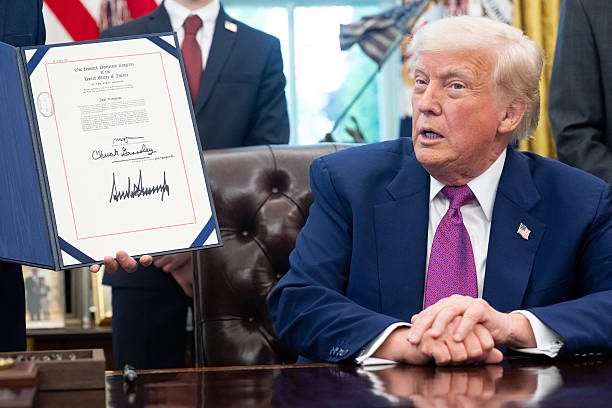
    Photo Credit: SAUL LOEB/AFP via Getty Images

    America’s race to build bigger and more powerful AI systems has now clashed with a basic limitation – the electric grid is suffering under the load of new data centers that consume as much power as a whole town, and it is affecting common citizens. 

    In response, the White House has brokered a new agreement called the “Ratepayer Protection Pledge,” under which major tech companies will pay for the extra electricity generation and grid upgrades their AI data centers require, instead of passing those costs on to households and small businesses. 

    Why AI Is Creating an Energy Problem

    The deal comes as AI data centers emerge as one of the fastest-growing sources of electricity demand in the United States. Many industry researchers have suggested that by 2030, data centers could account for roughly a quarter of new load growth on the U.S. grid, driven largely by AI training and inference workloads. 

    This surge has already triggered concerns from regulators, utilities, and consumer advocates about reliability and rising bills. In early 2025, the Biden administration signed an executive order directing the Departments of Energy and Defense to lease federal sites for gigawatt-scale AI data centers and clean power projects.

    This effort has been complemented by the Trump administration. Since taking office, the Trump administration has added more measures, including a grid security order to keep existing generation online and actions to speed permitting for new capacity that can serve AI loads. And a new addition is this Ratepayer Protection Pledge. 

    What the Ratepayer Protection Pledge Actually Does

    At a March 2026 White House event, President Donald Trump announced that companies including Google, Microsoft, Meta, Oracle, OpenAI, xAI and other hyperscalers had signed what the administration calls the “Ratepayer Protection Pledge.” 

    Under the agreement, these firms commit to build, procure, or fund new power plants and to pay for all related grid infrastructure needed to run their AI and cloud data centers. The White House says this means residential and commercial electricity customers should not see their bills rise because of AI-driven energy demand.

    The pledge also requires companies to negotiate their own rate structures with utilities and to bear the costs of the energy they reserve, whether or not they end up using it. In practice, this forces large tech companies to pay up front for both generation and transmission upgrades, instead of spreading those costs across all customers

    And under the new White House framework, tech companies are also expected to provide solutions such as new natural gas or nuclear plants, expanded renewables, on-site generation, and major grid upgrades such as substations and high-voltage lines. 

    This pledge is tied to Trump’s broader “Winning the Race: America’s AI Action Plan,” which links AI leadership to robust domestic energy infrastructure and supply chains. 

    What It Means for Communities and the Industry

    For local communities, the pledge is a response to the backlash against new AI data centers, with a promise that higher industrial demand will not affect household bills. 

    For the tech industry, the agreement formalizes a cost that many companies were already starting to absorb as they struck bespoke deals for dedicated clean energy, backup generation and long-term power purchase agreements. Case in point is Google signing power deals with AES Corp and Xcel Energy for its AI data centers buildout.

    For now, the takeaway is that while the new White House deal does not solve every challenge tied to AI’s growing appetite for electricity, it makes a point for who exactly pays for the AI infrastructure buildout. Instead of spreading costs across the grid, the largest beneficiaries of AI data centers are being asked to fund the power plants and pay for the electricity that keeps their systems running.

    AI Action Plan AI energy consumptiom AI energy crisis AI infrastructure spending Big Tech Big Tech energy policy with the White House Data center power demand Gigawatt-scale data centers How Big Tech is paying for AI power Hyperscaler capital expenditure Impact of AI data centers on local communties Ratepayer Protection Pledge sustainable AI infrastructure Trump administration AI energy policy 2026
    Share. Facebook Twitter Pinterest LinkedIn Tumblr Telegram Email
    precious
    • LinkedIn

    I’m Precious Amusat, Phronews’ Content Writer. I conduct in-depth research and write on the latest developments in the tech industry, including trends in big tech, startups, cybersecurity, artificial intelligence and their global impacts. When I’m off the clock, you’ll find me cheering on women’s footy, curled up with a romance novel, or binge-watching crime thrillers.

    Related Posts

    OpenAI Has Now Lost Two Senior Executives in the Same Week. The Timing Raises Questions the Company Has Not Yet Answered About What Is Happening at the Top.

    August 24, 2026

    Texas Welcomed Every AI Data Center That Wanted to Come. Now the State That Built Its Identity Around That Openness Is Pushing Back and the Reasons Go Deeper Than Power Grid Strain.

    August 24, 2026

    Microsoft’s August Patch Tuesday Fixed 398 Security Flaws Including a WinSock Zero-Day That Was Already Being Exploited Before Most People Knew It Existed. Here Is What to Prioritise

    August 24, 2026

    Comments are closed.

    Top Posts

    Coinbase responds to hack: customer impact and official statement

    May 22, 2025

    Cursor AI Hits 1 Million Daily Users. Why Developers Are Switching to This Coding Tool

    March 23, 2026

    Anthropic Will Use Claude User Chats For Data Training

    October 16, 2025

    MIT Study Reveals ChatGPT Impairs Brain Activity & Thinking

    June 29, 2025
    Don't Miss
    Big Tech & Startups

    OpenAI Has Now Lost Two Senior Executives in the Same Week. The Timing Raises Questions the Company Has Not Yet Answered About What Is Happening at the Top.

    By preciousAugust 24, 2026

    A company preparing to go public usually wants investors to see a steady hand at…

    Texas Welcomed Every AI Data Center That Wanted to Come. Now the State That Built Its Identity Around That Openness Is Pushing Back and the Reasons Go Deeper Than Power Grid Strain.

    August 24, 2026

    Microsoft’s August Patch Tuesday Fixed 398 Security Flaws Including a WinSock Zero-Day That Was Already Being Exploited Before Most People Knew It Existed. Here Is What to Prioritise

    August 24, 2026

    Gemini Just Crossed One Billion Monthly Active Users and Became Google’s Fastest Growing Product Ever. The Number That Matters Is Not the Milestone Itself but How Quickly It Got There Compared to Every Other Google Product in History

    August 24, 2026
    Stay In Touch
    • Facebook
    • Twitter
    About Us
    About Us

    Evolving from Phronesis News, Phronews brings deep insight and smart analysis to the world of technology. Stay informed, stay ahead, and navigate tech with wisdom.
    We're accepting new partnerships right now.

    Email Us: info@phronews.com

    Facebook X (Twitter) Pinterest YouTube
    Our Picks
    Most Popular

    Coinbase responds to hack: customer impact and official statement

    May 22, 2025

    Cursor AI Hits 1 Million Daily Users. Why Developers Are Switching to This Coding Tool

    March 23, 2026

    Anthropic Will Use Claude User Chats For Data Training

    October 16, 2025
    © 2025. Phronews.
    • Home
    • About Us
    • Get In Touch
    • Privacy Policy
    • Terms and Conditions

    Type above and press Enter to search. Press Esc to cancel.