


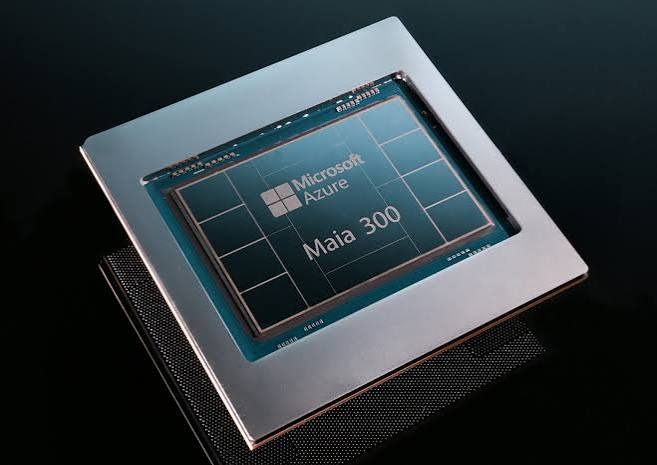
Microsoft is preparing to move more of its AI workloads to its own processors as demand for computing power grows and technology companies look for alternatives to Nvidia’s AI chips.
The company announced Maia 300 on October 12, 2026, saying it plans to begin production deployments in 2027 and make the chip its primary system for running AI models across its products and services.
The announcement comes as Microsoft expands its investment in AI infrastructure. The company could reportedly deploy more than one million Maia 300 chips next year to support its internal AI services, and the plan could reduce its reliance on external chip suppliers, although Microsoft has not said it will stop using Nvidia’s processors.
Why Microsoft Is Building Its Own AI Chips
AI services require substantial computing resources to generate responses, to sometimes write code, and carry out complex tasks. This means companies running these services at scale need processors that can handle growing workloads without driving up infrastructure costs.
Nvidia supplies many of the GPUs used to train and run AI models across the industry. And while Microsoft also relies on these processors across its cloud infrastructure, its Maia chip programme gives it another option for running AI workloads within its own data centres.
Maia 300 is the third generation of Microsoft’s custom AI chips. Its predecessor, Maia 200, is already running production workloads, including Microsoft Copilot and Microsoft’s own AI models. The company also uses Maia 200 to run OpenAI models through Azure, its cloud computing platform.
Microsoft plans to expand its Maia infrastructure to multi-gigawatt deployments from 2027. This means deploying computing systems with a combined power capacity measured in billions of watts, reflecting the scale of infrastructure needed to run AI services.
How Maia 300 Is Designed to Improve Efficiency
Microsoft designed Maia 300 to handle AI inference, the process through which a trained model generates answers or performs tasks. The chip targets workloads involving long-context reasoning, conversational AI, and agents that complete tasks through multiple steps.
Its design uses chiplets, which are smaller specialised sections of silicon combined within one processor package. The main computing chiplets use TSMC’s N2P manufacturing process, while other components use a 3-nanometre process for functions such as memory control and data movement. This allows Microsoft to use different manufacturing technologies for different parts of the chip.
Microsoft says Maia 300 expects to deliver 40% more tokens per megawatt than leading GPU-based systems.
The chip will also support racks containing 96 accelerators, with each rack consuming about 167 kilowatts of power. According to Microsoft, this configuration can deliver up to seven times the token throughput of a Maia 200 rack.
What This Means for Nvidia
Microsoft’s plans reflect a wider effort among major technology companies to develop their own AI processors, as building custom chips gives cloud providers more control over how their infrastructure handles workloads and how efficiently it uses power.
However, Maia 300 will not immediately remove Microsoft’s dependence on Nvidia. The new chip is scheduled for production deployment in 2027, and Microsoft has not announced a complete shift away from external suppliers.
For now, the company is expanding its own hardware options while continuing to operate a large AI infrastructure business. The extent to which Maia 300 reduces its reliance on Nvidia will become clearer at Microsoft Ignite 2026, where the company expects to shed more light and share more details.
