


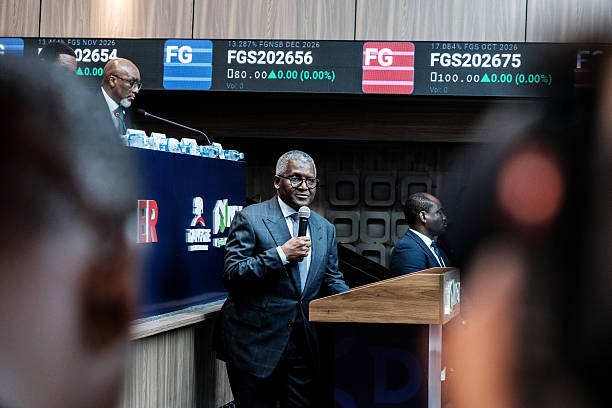
Aliko Dangote, the richest man in Africa, has opened what is being called Africa’s Biggest IPO, giving ordinary Nigerians a chance to buy into his $20 billion refinery that has already reshaped the country’s fuel market.
Dangote Petroleum Refinery and Petrochemicals FZE is offering 4.1 billion shares at ₦525 each, aiming to raise about $1.6 billion and valuing the company near $49 billion. Subscription opened on September 14 and runs through October 13, with a minimum entry of 10 shares, roughly ₦5,250.
Dangote pitched the offer as a “people’s IPO,” built for retail investors rather than institutions, and even added an incentive that rewards small buyers with a free share if they hold their minimum stake for 12 straight months.
But the scale of the offer has also invited scrutiny, and analysts are split on whether this is a rare entry point into a world class asset or a premium priced bet with real risks attached.
The Case For Buying
The refinery is already operating and central to Nigeria’s fuel supply, which sets it apart from most IPOs that ask investors to bet on a plan rather than a working business.
Dangote has also floated a dollar linked dividend structure, an appealing prospect for investors trying to hedge against naira volatility.
So, beyond returns, buying in offers a direct stake in a plant that has turned Nigeria from a fuel importer into an exporter, and in an expansion drive meant to nearly double capacity to 1.4 million barrels a day, which would make it the world’s largest refinery.
Why Some Investors are Holding Back
The refinery cost $20 billion to build, yet the IPO implies a valuation near $49 billion, a premium that analysts say rests heavily on management projections and a July private placement rather than a long public trading record.
The prospectus shows total secured debt at $5.67 billion as of June 2026, down from $6.24 billion, but that reduction has to be weighed against a separate $14.3 billion expansion bill that the IPO proceeds only partly cover, with the rest expected to come from operating cash flow and further borrowing.
Two other signals cut against the optimism. One, Fitch Ratings, one of the major global agencies that grades companies on their ability to repay debt, downgraded Dangote Industries’ credit rating in 2024, standing as an outside reassessment of the company’s financial standing. Two, the dollar dividend Dangote has since promoted has also not been formally approved by regulators.
Some analysts have also questioned the “people’s IPO” framing itself, noting that Dangote retains roughly 87% ownership even after the sale, while researchers tracking Nigerian equities argue that ₦525 a share may already be priced above what the refinery’s underlying assets and earnings justify.
More importantly, while Dangote has publicly invited ordinary Nigerians outside the company to buy shares, the more than 3,000 people who actually build and run the refinery do not currently have a dedicated equity stake of their own.
According to the company’s prospectus, there is no employee share scheme or incentive bonus scheme in place. It only describes a possible future framework under consideration, with no details yet on who would qualify or how much equity it would involve.
This conundrum immediately raises fair questions: Is this a wealthy businessman finding another way to profit off ordinary Nigerians? Is he genuinely handing ordinary Nigerians a real chance to build wealth of their own? Or is this a familiar pattern where outside investors are courted while the workforce that keeps the plant running waits on a scheme that has not yet been designed?
Are You Really Missing Out If You Skip It?
Not necessarily. The IPO opening gives people a chance to buy in early, but it does not remove the risks. The refinery still has a major expansion ahead, and its returns will depend on costs, oil prices, exchange rates, and the wider Nigerian economy.
While skipping the offer automatically means missing early entry, it also means avoiding exposure to a business who is deep in debt.
What You Stand To Gain If You Do Buy In
For those who go in, the potential upside includes long term dividend income, exposure to a strategic asset with export earnings, and a stake in a company positioning itself for further expansion across Africa.
Now, whether that upside outweighs the risks depends on how Dangote chooses to operate his business moving forward.
