


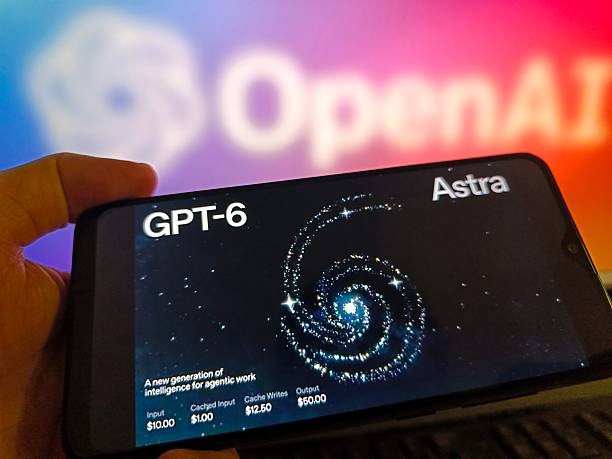
OpenAI is expanding its push into workplace automation with GPT-6 Astra, a model designed to operate computers and complete complex assignments.
Launched on September 3, the model has prompted company president Greg Brockman to suggest that artificial general intelligence (AGI) may have arrived.
“I think it might be about this model,” Brockman said in a briefing with reporters about GPT-6 Astra ushering in the arrival of AGI. “Welcome to the AGI era.”
The company had made an announcement on the initial release to selected organisations, followed by ChatGPT Plus, Pro, Business, and Enterprise subscribers. It also announced access through its API, Microsoft Azure, and AWS Bedrock.
What GPT-6 Astra Can Do
According to OpenAI, Astra can fill out forms, update customer records, conduct research and produce documents, spreadsheets, and presentations. Its demonstrations also include working with engineering software and building games, which extends the range of assignments users can hand over to an AI assistant.
OpenAI reports that Astra scored 99.9% on ARC-AGI-3 and 98% on FrontierMath Tier 4, which tests advanced mathematics.
The company also reported faster computer use. In simulations on the OSWorld 2.0 benchmark, Astra scored 72.6% at roughly 40 minutes per task, compared with GPT-5.6 Sol’s 65.7% at about 75 minutes.
Has AGI Actually Arrived?
On the one hand, OpenAI defines AGI as highly independent systems that outperform humans at most economically valuable work, and that remains a broad claim about what AI can accomplish across the economy.
On the other hand, Brockman described AGI’s arrival as his personal belief, suggesting people might eventually identify Astra as the model that started that era.
However, there are limits to what the company’s testing establishes. In a September 9 update to its technical safety report, OpenAI clarified that observing no failures in an evaluation does not establish reliability across different settings. This matters when assessing how confidently test results can be applied to everyday work.
Greater Capabilities Bring Harder Safety Questions
Astra is OpenAI’s first model to reach its “Critical” cybersecurity capability level. With suitable tools and access, the company says it can discover previously unknown security flaws and develop ways to exploit them across well-protected systems without guidance at every step.
OpenAI also reports improved adherence to safety boundaries. In a simulation involving more than 54,000 internal Codex tasks, Astra received roughly half as many flags for more serious unwanted behaviour as GPT-5.6 Sol.
However, OpenAI found Astra’s written reasoning harder to monitor in tests that explicitly encouraged it to evade oversight. The company says Astra violated safety restrictions less often overall, but the monitoring findings remain a concern.
Ultimately, these findings suggest that advances in workplace automation also depend on whether AI companies can reliably detect harmful behaviour.
