

Close Menu

    Stay Ahead with Exclusive Updates!

    Enter your email below and be the first to know what’s happening in the ever-evolving world of technology!

    What's Hot

    Grid-Responsive AI: How Nvidia Plans to Turn Data Centers Into Power Assets with Emerald AI

    April 16, 2026

    Cyber Retaliation: How Iran-Linked Hackers Paralyzed Medical Giant Stryker

    April 16, 2026

    The Trillion-Dollar Exit: Why a SpaceX IPO Would Reshape the Space Economy

    April 15, 2026
    Facebook X (Twitter) Instagram
    Facebook X (Twitter)
    PhronewsPhronews
    • Home
    • Big Tech & Startups

      The Trillion-Dollar Exit: Why a SpaceX IPO Would Reshape the Space Economy

      April 15, 2026

      The Sacramento Blueprint: How California is Writing the U.S. AI Rulebook

      April 14, 2026

      Silicon Sovereignty: Microsoft’s $10B Play to Secure Japan’s AI Future

      April 14, 2026

      The Rule-Breaker: Why DeepSeek V4 is China’s Defiant Bid for AI Supremacy

      April 13, 2026

      Scheduling Monopoly? Why Nvidia’s SchedMD Deal Alarms Open-Source Devs

      April 13, 2026
    • Crypto

      Quantum Computing Advances Force Coinbase and Institutional Custodians to Rethink Crypto Security

      March 8, 2026

      AI Assisted Hacking Groups Target Crypto Firms With Multi-Layered Social Engineering

      February 18, 2026

      Global Crypto Regulations Expand as 2026 Begins With New Data Collection Frameworks and National Laws

      January 16, 2026

      Coinbase Bets on Stablecoin and On-Chain Growth as Key Market Drivers in 2026 Strategy

      January 10, 2026

      Tether Faces Ongoing Transparency Questions and Reserve Scrutiny Amid Massive Bitcoin Accumulation

      January 5, 2026
    • Gadgets & Smart Tech
      Featured

      AirPods Max 2: USB-C, Live Translation, and the H2 Upgrade

      By preciousMarch 26, 2026
      Recent

      AirPods Max 2: USB-C, Live Translation, and the H2 Upgrade

      March 26, 2026

      How ABB and Nvidia are Perfecting Industrial Robotics using AI Simulation

      March 20, 2026

      Neura Robotics Reaches €4B Valuation With Tether Backing

      March 12, 2026
    • Cybersecurity & Online Safety

      Cyber Retaliation: How Iran-Linked Hackers Paralyzed Medical Giant Stryker

      April 16, 2026

      Your Company Could Be Iran’s Next Target: What U.S. Tech Firms Need to Do Right Now

      April 6, 2026

      Google Is Warning Us About The Encryption Protecting Your Data Today. It May Not Survive Quantum Computing

      April 5, 2026

      Accenture and Anthropic Team Up on AI-powered Cybersecurity

      April 4, 2026

      Your BVN, Passport, and Bank Account May Already Be on the Dark Web. What Every Nigerian Must Do Right Now After the Banking Breaches

      April 4, 2026
    PhronewsPhronews
    Home»Artificial Intelligence & The Future»Google TPU Chips Threatens Nvidia’s GPU Dominance
    Artificial Intelligence & The Future

    Google TPU Chips Threatens Nvidia’s GPU Dominance

    preciousBy preciousJanuary 13, 2026No Comments
    Facebook Twitter Pinterest LinkedIn WhatsApp Reddit Tumblr Email
    Share
    Facebook Twitter LinkedIn Pinterest Email
    Photo Credit: Medium via Sandy Sanjaya

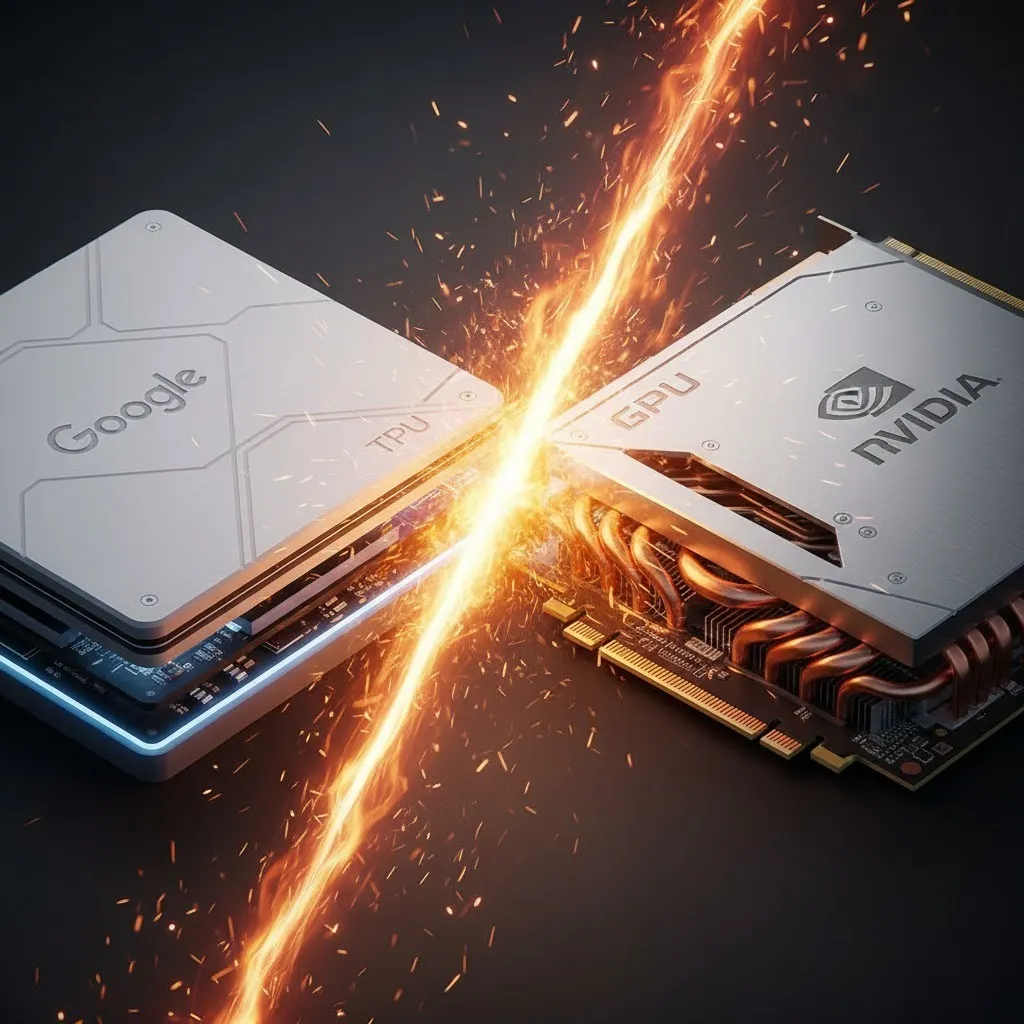
    Google’s Tensor Processing Units (TPUs) pose a growing challenge to Nvidia’s dominance in AI hardware through its production of superior efficiency in large-scale workloads and massive planned deployments. 

    What this means is while Nvidia still maintains over 90% market share in GPUs used in data centers thanks to its CUDA ecosystem, Google’s custom-developed TPUs specifically excel in cost-optimized training and inference – something the AI industry desperately needs and is jumping at. 

    In other words, the shift marks an important reshaping of the AI infrastructure market, where cost efficiency and specialized performance are beginning to trump the software ecosystem advantages that have protected Nvidia’s 90% market share. 

    However, in response to this perceived threat, Nvidia boasts in an X post that they are “generation ahead of the industry.”

    “We’re delighted by Google’s success – they’ve made great advances in AI and we continue to supply to Google,” the AI giant wrote. “Nvidia is a generation ahead of the industry – it’s the only platform that runs every AI model and does it everywhere computing is done.”

    Nvidia also touts that their GPUs offer “greater performance, versatility, and fungibility than ASICs, which are designed for specific AI frameworks or functions.” While this may be true, Google’s latest custom silicon Ironwood TPU still stands as a serious competitor to Nvidia’s improvised Blackwell architecture.

    While both architectures deliver great performance, Ironwood specifically gains distance in economics and scale, and this vantage point gives Google the ability to build AI systems with massive compute power. 

    Ironwood TPU also executes inference workloads at roughly four times the cost-performance of Nvidia’s H100 GPU. This helps Google’s stance as a strong competitor seeing as inference workloads are predictably the thing that will consume 75% of all AI compute by the end of the decade but yet receives a fraction of optimization focus in the AI hardware industry.

    There is also a recent decentralization shift in the industry as many tech companies are not participating and remaining in singular partnerships with Nvidia to serve their AI needs. For instance, Meta announced back in December 2025 they were in advanced talks to spend billions of dollars on Google’s AI chips in a bid to avoid the company’s over-reliance on Nvidia’s hardware. 

    This competitive timeline matters for the industry at large – for both investors and the companies. Nvidia may use this competition to their advantage to gain clarity and accelerate its own efficiency improvements and double down on workloads where general-purpose design remains strategically valuable. 

    “We are experiencing accelerating demand for both our custom TPUs and Nvidia GPUs,” was what a Google spokesperson said in a statement. “We are committed to supporting both, as we have for years.”

    AI chips AI decentralization shift AI hardware AI inference workloads AI infrastructure AI innovation AI market share Artificial Intelligence ASICs vs GPUs Cost-optimized AI training CUDA ecosystem Custom silicon development Google Google TPU vs Nvidia GPU Google TPUs Hardware-cost performance Ironwood TPU Machine learning infrastructure Meta Google AI chip deal Nvidia Nvidia Blackwell architecture Nvidia GPU competition Nvidia GPU data centers Nvidia GPU supply chain Nvidia GPUs NVIDIA H100 GPU Reducing reliance on Nvidia hardware semiconductor industry Tensor Processing Units
    Share. Facebook Twitter Pinterest LinkedIn Tumblr Telegram Email
    precious
    • LinkedIn

    I’m Precious Amusat, Phronews’ Content Writer. I conduct in-depth research and write on the latest developments in the tech industry, including trends in big tech, startups, cybersecurity, artificial intelligence and their global impacts. When I’m off the clock, you’ll find me cheering on women’s footy, curled up with a romance novel, or binge-watching crime thrillers.

    Related Posts

    Grid-Responsive AI: How Nvidia Plans to Turn Data Centers Into Power Assets with Emerald AI

    April 16, 2026

    The Trillion-Dollar Exit: Why a SpaceX IPO Would Reshape the Space Economy

    April 15, 2026

    The Sacramento Blueprint: How California is Writing the U.S. AI Rulebook

    April 14, 2026

    Comments are closed.

    Top Posts

    Coinbase responds to hack: customer impact and official statement

    May 22, 2025

    MIT Study Reveals ChatGPT Impairs Brain Activity & Thinking

    June 29, 2025

    From Ally to Adversary: What Elon Musk’s Feud with Trump Means for the EV Industry

    June 6, 2025

    Anthropic Will Use Claude User Chats For Data Training

    October 16, 2025
    Don't Miss
    Uncategorized

    Grid-Responsive AI: How Nvidia Plans to Turn Data Centers Into Power Assets with Emerald AI

    By preciousApril 16, 2026

    Data centers are power-hungry by design, but Nvidia wants them to work in the opposite…

    Cyber Retaliation: How Iran-Linked Hackers Paralyzed Medical Giant Stryker

    April 16, 2026

    The Trillion-Dollar Exit: Why a SpaceX IPO Would Reshape the Space Economy

    April 15, 2026

    The Sacramento Blueprint: How California is Writing the U.S. AI Rulebook

    April 14, 2026
    Stay In Touch
    • Facebook
    • Twitter
    About Us
    About Us

    Evolving from Phronesis News, Phronews brings deep insight and smart analysis to the world of technology. Stay informed, stay ahead, and navigate tech with wisdom.
    We're accepting new partnerships right now.

    Email Us: info@phronews.com

    Facebook X (Twitter) Pinterest YouTube
    Our Picks
    Most Popular

    Coinbase responds to hack: customer impact and official statement

    May 22, 2025

    MIT Study Reveals ChatGPT Impairs Brain Activity & Thinking

    June 29, 2025

    From Ally to Adversary: What Elon Musk’s Feud with Trump Means for the EV Industry

    June 6, 2025
    © 2025. Phronews.
    • Home
    • About Us
    • Get In Touch
    • Privacy Policy
    • Terms and Conditions

    Type above and press Enter to search. Press Esc to cancel.