


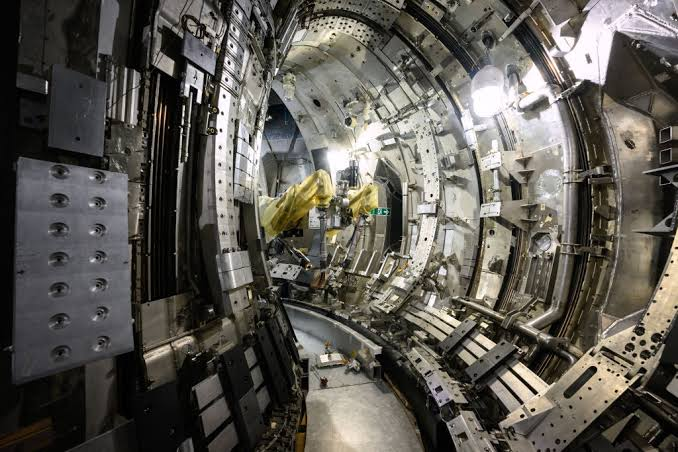
The UK’s fusion energy has entered a new phase after decades of ambitious promises and repeated delays. The United Kingdom has committed £30 million to support work on its prototype fusion power plant. At the same time, officials continue pursuing a firm 2040 target through the Spherical Tokamak for Energy Production, or STEP, programme.
As a result, the latest announcement has drawn attention because it represents practical progress. Although major technical challenges remain, the combination of funding, digital tools, and policy support makes the UK’s latest approach more convincing than many earlier efforts.
The £30 Million Deal Signals a Shift From Research to Delivery
For years, fusion projects focused primarily on scientific research. Now, the UK has placed greater emphasis on design, planning, and execution. UK Fusion Energy Ltd awarded a £30 million contract to Dassault Systèmes to support the STEP programme with advanced digital technology.
Specifically, the company will provide design tools through its 3DEXPERIENCE platform. Engineers will create virtual reactor models before construction begins. Consequently, teams can test systems, detect design conflicts, and improve coordination much earlier.
In turn, early testing can reduce delays and lower project risks. Rather than waiting for physical prototypes, engineers can refine designs continuously as work progresses.
Why UK’s Fusion Energy Has a More Credible 2040 Roadmap
Many countries have announced ambitious fusion goals over several decades. However, most initiatives struggled to pair those ambitions with clear delivery plans. By comparison, the UK’s latest strategy combines investment, technical support, and a defined long-term target.
In addition, the government continues strengthening the regulatory framework for future fusion facilities. Recent policy developments aim to prepare planning rules before commercial plants become operational.
At the same time, technical work continues alongside policy planning instead of waiting for regulations to catch up. Therefore, both tracks can advance together. Although no deadline guarantees success, a structured roadmap provides stronger direction than broad promises alone.
Digital Engineering Could Solve Fusion’s Biggest Development Challenges
Fusion reactors combine highly complex systems that must operate under extreme temperatures and conditions. Therefore, developers need accurate simulations before manufacturing begins.
Digital technology allows specialists to evaluate reactor performance inside virtual environments. Additionally, engineers can identify potential issues before building expensive components. At the same time, different teams can collaborate using shared digital models throughout the project.
Consequently, design decisions become more efficient because every change appears across connected systems. Ultimately, the technology supports better planning while reducing unnecessary revisions during later stages.
How UK’s Fusion Energy Is Building an Industrial Ecosystem
The STEP programme aims to achieve more than constructing a single prototype reactor. Instead, it also encourages long-term industrial growth around fusion technologies.
For example, the UK Atomic Energy Authority recently expanded cooperation with Japan’s QST through a new partnership. Meanwhile, companies across manufacturing, technology, and specialist engineering fields can contribute valuable expertise.
As collaboration increases, participating industries can strengthen capabilities needed for future reactors. Likewise, stronger partnerships can encourage knowledge sharing across the wider fusion sector.
What the UK’s Plan Means for the Global Fusion Race
Fusion continues attracting governments and private companies worldwide. Because of this, competition has expanded beyond scientific laboratories into manufacturing, supply chains, and commercial preparation.
The UK’s latest investment reflects that broader shift. Instead of focusing only on future scientific breakthroughs, the programme combines funding, digital design, regulatory planning, and international cooperation within a structured strategy.
Definitely, significant technical challenges remain before commercial fusion becomes reality. Even with this, the UK’s approach demonstrates how governments can align research, industry, and policy to move fusion power closer to practical electricity generation.
