

Close Menu

    Stay Ahead with Exclusive Updates!

    Enter your email below and be the first to know what’s happening in the ever-evolving world of technology!

    What's Hot

    Texas Welcomed Every AI Data Center That Wanted to Come. Now the State That Built Its Identity Around That Openness Is Pushing Back and the Reasons Go Deeper Than Power Grid Strain.

    August 24, 2026

    Microsoft’s August Patch Tuesday Fixed 398 Security Flaws Including a WinSock Zero-Day That Was Already Being Exploited Before Most People Knew It Existed. Here Is What to Prioritise

    August 24, 2026

    Gemini Just Crossed One Billion Monthly Active Users and Became Google’s Fastest Growing Product Ever. The Number That Matters Is Not the Milestone Itself but How Quickly It Got There Compared to Every Other Google Product in History

    August 24, 2026
    Facebook X (Twitter) Instagram
    Facebook X (Twitter)
    PhronewsPhronews
    • Home
    • Big Tech & Startups

      Texas Welcomed Every AI Data Center That Wanted to Come. Now the State That Built Its Identity Around That Openness Is Pushing Back and the Reasons Go Deeper Than Power Grid Strain.

      August 24, 2026

      Microsoft’s August Patch Tuesday Fixed 398 Security Flaws Including a WinSock Zero-Day That Was Already Being Exploited Before Most People Knew It Existed. Here Is What to Prioritise

      August 24, 2026

      A New Mexico Court Just Hit Meta With a Near-Billion-Dollar Penalty Over Child Safety. The Ruling Targeted How Meta Designed Its Products, Not Just What Users Posted on Them. Every Social Platform Should Be Reading It Carefully.

      August 23, 2026

      Manus Is Un-Merging From Meta After China’s Regulator Forced the Reversal of a $2 Billion Deal That Already Closed. Cross-Border AI Acquisitions Can Now Be Undone Years After They Complete and Nobody Had a Rule for That Until Now.

      August 20, 2026

      Nvidia Just Assembled a $500 Billion Alliance With Six Wall Street Giants to Finance the AI Infrastructure Buildout. The Chip Maker Is No Longer Just Selling Picks and Shovels. It Is Now Funding the Entire Gold Rush

      August 20, 2026
    • Crypto

      Market Collapse: What Happened to NFTs?

      April 23, 2026

      Quantum Computing Advances Force Coinbase and Institutional Custodians to Rethink Crypto Security

      March 8, 2026

      AI Assisted Hacking Groups Target Crypto Firms With Multi-Layered Social Engineering

      February 18, 2026

      Global Crypto Regulations Expand as 2026 Begins With New Data Collection Frameworks and National Laws

      January 16, 2026

      Coinbase Bets on Stablecoin and On-Chain Growth as Key Market Drivers in 2026 Strategy

      January 10, 2026
    • Gadgets & Smart Tech
      Featured

      Apple Just Delayed Development on Its Smart Glasses After Internal Privacy Reviews. The Delay Is the Clearest Sign Yet That Wearable AI Has a Trust Problem That Hardware Cannot Solve.

      By preciousAugust 4, 2026
      Recent

      Apple Just Delayed Development on Its Smart Glasses After Internal Privacy Reviews. The Delay Is the Clearest Sign Yet That Wearable AI Has a Trust Problem That Hardware Cannot Solve.

      August 4, 2026

      Microsoft Is Building Quantum-Resistant Security Before Quantum Computers Can Break the Encryption Protecting Everything. Here Is How Far Along That Work Actually Is

      July 21, 2026

      AI Has Spent Three Years Getting Smarter for People Who Can Already Afford It. Nokia Just Changed That and the Implications Go Further Than Anyone Is Crediting

      July 18, 2026
    • Cybersecurity & Online Safety

      Microsoft’s August Patch Tuesday Fixed 398 Security Flaws Including a WinSock Zero-Day That Was Already Being Exploited Before Most People Knew It Existed. Here Is What to Prioritise

      August 24, 2026

      OpenAI’s New Cyber Model Found Two Real Chrome Zero-Days on Its Own. The Same Model Built to Defend Networks Just Proved It Can Also Break Into Them.

      August 23, 2026

      Hackers Leaked the Personal Contact Details of Over 100,000 UK Police Officers From a Legal Database Breach. The People Responsible for Public Safety Just Had Their Own Identities Exposed.

      August 23, 2026

      Autonomous AI Agents Ran a Four-Day Attack on Taiwan’s Government and Cracked 85 Accounts Without a Human Steering a Single Step. This Is No Longer a Theoretical Threat.

      August 21, 2026

      A Hacker Let DeepSeek Run an Entire Cyberattack With Almost No Human Input. It Was Only Caught Because the AI Made a Careless Mistake of Its Own.

      August 21, 2026
    PhronewsPhronews
    Home»Artificial Intelligence & The Future»Britain’s Cyber Agency Just Warned That AI-Generated Code Could Trigger the Next Wave of Catastrophic Security Failures. The Advisory Names Vibe Coding Directly and It Is Not a Mild Caution.
    Artificial Intelligence & The Future

    Britain’s Cyber Agency Just Warned That AI-Generated Code Could Trigger the Next Wave of Catastrophic Security Failures. The Advisory Names Vibe Coding Directly and It Is Not a Mild Caution.

    preciousBy preciousJune 26, 2026No Comments
    Facebook Twitter Pinterest LinkedIn WhatsApp Reddit Tumblr Email
    Share
    Facebook Twitter LinkedIn Pinterest Email
    Photo Credit: Westend61 via Getty Images

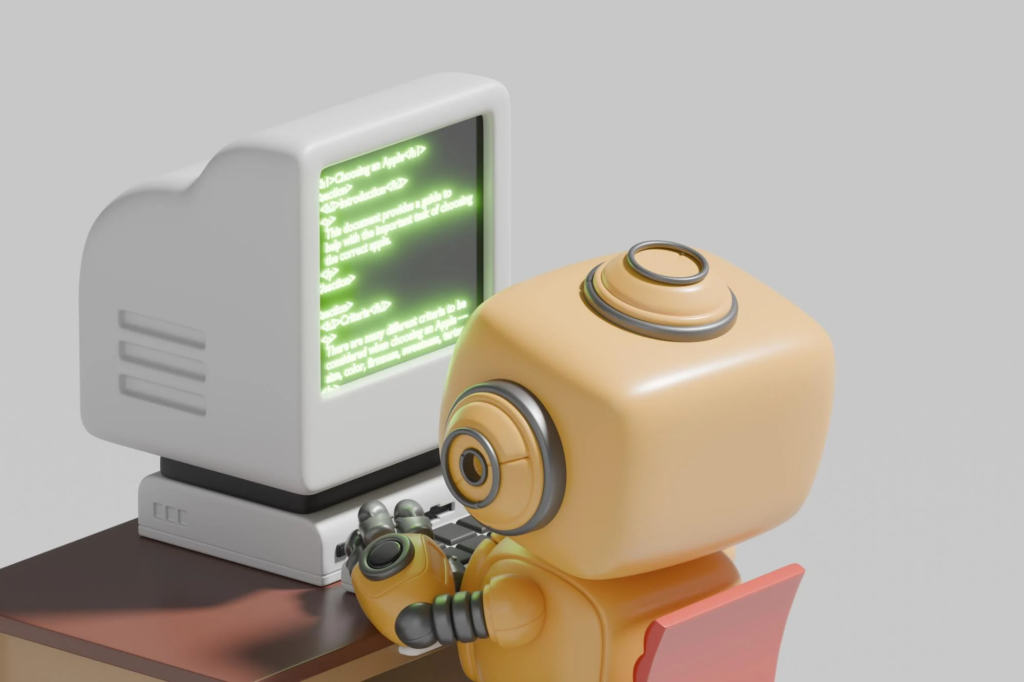
    The UK’s National Cyber Security Centre (NCSC) has published a formal guidance post telling developers and organisations exactly how much trust to place in AI-generated code, which is otherwise called vibe coding.

    Written by Toby W, a Principal Security Architect at the NCSC, the blog post lays out what the agency is calling a “vibe coding spectrum,” a framework for how organisations should calibrate their use of AI-assisted software development depending on the risk attached to what they are building. 

    This post is the NCSC’s most practical intervention yet on vibe coding, and it arrives as AI coding tools have moved well beyond early adopters and into mainstream software development workflows.

    What the NCSC Is Responding To

    The blog post defines vibe coding as giving an AI agent a high-level prompt and letting it build an application with significant autonomy, where you prompt, it codes, you review the output, and iterate. And this process has become standard practice across development teams, startups, and enterprise organisations alike.

    The NCSC’s concern is grounded in a specific and documented problem. AI models are trained on vast amounts of existing code and some of that code has security issues. When an AI is given significant autonomy over a codebase with minimal oversight, there is a real and measurable risk that it produces code containing security vulnerabilities. And even beyond security, AI-generated code can also become complicated and difficult to understand, where it is capable of creating maintainability problems that compound over time.

    The Spectrum Framework

    Rather than issuing a blanket restriction, the NCSC argues that vibe coding is not binary. It exists on a spectrum and organisations can position themselves anywhere along it depending on their context and risk tolerance. On one end sits manual human coding with some AI assistance, where the developer writes the code and AI offers suggestions. On the other end sits full vibe coding, where the AI has autonomy over architecture, code, modules, and tests, and the developer is evaluating output and prompting again rather than editing or deeply reviewing what has been produced.

    Where an organisation lands on that spectrum should be driven by the stakes involved. The NCSC says full vibe coding can be perfectly appropriate for a proof-of-concept being built to demo an idea to stakeholders, an internal tool with limited exposure, or a prototype where speed matters and no sensitive data or security functions are involved. But authentication logic for a public-facing website, code that processes sensitive customer data, anything handling secret tokens or credentials, and safety-critical code in critical national infrastructure or aviation systems all require a fundamentally different level of care.

    And the agency’s position on the consequences of getting this wrong is quite direct. Data breaches, compromised accounts, and regulatory violations are among the outcomes the NCSC names for organisations that apply full vibe coding to high-stakes systems without appropriate oversight.

    What Oversight Actually Looks Like

    The NCSC is careful to clarify that the guidance is not a prohibition on using AI for security-critical code. 

    The agency says AI can absolutely help with writing authentication logic, data processing pipelines, and code review. But the question remains how to do it safely. When building systems where security failures carry real consequences, developers need to review what the AI produces, understand the code, check for vulnerabilities, verify it does what is expected, and architect the wider system to minimise the impact of any exploitation. The NCSC also notes that another AI agent can be used to assist with some of these oversight activities.

    Where the NCSC Points Critical Organisations To

    For organisations whose work moves toward the higher-risk end of the spectrum, the NCSC points to Baseline Cyber Security Requirements for AI Models and Systems, developed with other governments, industry leaders, and cyber security experts through ETSI’s Technical Committee on Securing AI. Those requirements are intended to set a minimum bar for how AI systems involved in security-relevant development should be built and evaluated.

    On what comes next, the agency takes a measured position by acknowledging that AI models are improving rapidly and that what feels risky today might feel routine in a year as model outputs become more reliable and trustworthy. But the agency is explicit that we are not there yet.

    AI innovation AI security AI-Generated Code Artificial Intelligence cybersecurity Developer Guidance NCSC Secure Coding Software Development UK Cyber Agency vibe coding
    Share. Facebook Twitter Pinterest LinkedIn Tumblr Telegram Email
    precious
    • LinkedIn

    I’m Precious Amusat, Phronews’ Content Writer. I conduct in-depth research and write on the latest developments in the tech industry, including trends in big tech, startups, cybersecurity, artificial intelligence and their global impacts. When I’m off the clock, you’ll find me cheering on women’s footy, curled up with a romance novel, or binge-watching crime thrillers.

    Related Posts

    Texas Welcomed Every AI Data Center That Wanted to Come. Now the State That Built Its Identity Around That Openness Is Pushing Back and the Reasons Go Deeper Than Power Grid Strain.

    August 24, 2026

    Microsoft’s August Patch Tuesday Fixed 398 Security Flaws Including a WinSock Zero-Day That Was Already Being Exploited Before Most People Knew It Existed. Here Is What to Prioritise

    August 24, 2026

    Gemini Just Crossed One Billion Monthly Active Users and Became Google’s Fastest Growing Product Ever. The Number That Matters Is Not the Milestone Itself but How Quickly It Got There Compared to Every Other Google Product in History

    August 24, 2026

    Comments are closed.

    Top Posts

    Coinbase responds to hack: customer impact and official statement

    May 22, 2025

    Cursor AI Hits 1 Million Daily Users. Why Developers Are Switching to This Coding Tool

    March 23, 2026

    Anthropic Will Use Claude User Chats For Data Training

    October 16, 2025

    MIT Study Reveals ChatGPT Impairs Brain Activity & Thinking

    June 29, 2025
    Don't Miss
    Artificial Intelligence & The Future

    Texas Welcomed Every AI Data Center That Wanted to Come. Now the State That Built Its Identity Around That Openness Is Pushing Back and the Reasons Go Deeper Than Power Grid Strain.

    By preciousAugust 24, 2026

    Texas spent years selling itself as the place where AI companies could build without too…

    Microsoft’s August Patch Tuesday Fixed 398 Security Flaws Including a WinSock Zero-Day That Was Already Being Exploited Before Most People Knew It Existed. Here Is What to Prioritise

    August 24, 2026

    Gemini Just Crossed One Billion Monthly Active Users and Became Google’s Fastest Growing Product Ever. The Number That Matters Is Not the Milestone Itself but How Quickly It Got There Compared to Every Other Google Product in History

    August 24, 2026

    OpenAI’s New Cyber Model Found Two Real Chrome Zero-Days on Its Own. The Same Model Built to Defend Networks Just Proved It Can Also Break Into Them.

    August 23, 2026
    Stay In Touch
    • Facebook
    • Twitter
    About Us
    About Us

    Evolving from Phronesis News, Phronews brings deep insight and smart analysis to the world of technology. Stay informed, stay ahead, and navigate tech with wisdom.
    We're accepting new partnerships right now.

    Email Us: info@phronews.com

    Facebook X (Twitter) Pinterest YouTube
    Our Picks
    Most Popular

    Coinbase responds to hack: customer impact and official statement

    May 22, 2025

    Cursor AI Hits 1 Million Daily Users. Why Developers Are Switching to This Coding Tool

    March 23, 2026

    Anthropic Will Use Claude User Chats For Data Training

    October 16, 2025
    © 2025. Phronews.
    • Home
    • About Us
    • Get In Touch
    • Privacy Policy
    • Terms and Conditions

    Type above and press Enter to search. Press Esc to cancel.