

Close Menu

    Stay Ahead with Exclusive Updates!

    Enter your email below and be the first to know what’s happening in the ever-evolving world of technology!

    What's Hot

    Massive Pentagon Data Breach Exposes Records of Over 3 Million People

    October 8, 2026

    Why Amazon Wants Investors Buying $8 Billion of Its Nvidia Chips

    October 8, 2026

    Salesforce Agentforce Flaws Allowed Hackers to Steal Data Without a Click

    October 8, 2026
    Facebook X (Twitter) Instagram
    Facebook X (Twitter)
    PhronewsPhronews
    • Home
    • Big Tech & Startups

      Massive Pentagon Data Breach Exposes Records of Over 3 Million People

      October 8, 2026

      Why Amazon Wants Investors Buying $8 Billion of Its Nvidia Chips

      October 8, 2026

      Google Reveals AI Is Discovering Increasingly Dangerous Software Vulnerabilities

      October 7, 2026

      Nscale Files IPO to Test Investor Appetite for AI Cloud Infrastructure

      October 7, 2026

      Google Home Now Supports ChatGPT and Claude via New MCP Server

      October 6, 2026
    • Crypto

      A Firmware Flaw in One of the Most Trusted Bitcoin Hardware Wallets Just Drained Over $70 Million in Crypto. The Coldcard Breach Is a Reminder That Cold Storage Is Only as Safe as the Code Running Inside It

      August 29, 2026

      Market Collapse: What Happened to NFTs?

      April 23, 2026

      Quantum Computing Advances Force Coinbase and Institutional Custodians to Rethink Crypto Security

      March 8, 2026

      AI Assisted Hacking Groups Target Crypto Firms With Multi-Layered Social Engineering

      February 18, 2026

      Global Crypto Regulations Expand as 2026 Begins With New Data Collection Frameworks and National Laws

      January 16, 2026
    • Gadgets & Smart Tech
      Featured

      Google Home Now Supports ChatGPT and Claude via New MCP Server

      By fariehanOctober 6, 2026
      Recent

      Google Home Now Supports ChatGPT and Claude via New MCP Server

      October 6, 2026

      Waymo Plans Fully Driverless Taxis on Tokyo Streets Without Safety Drivers

      September 28, 2026

      Tesla Cybercab Faces NHTSA Probe After Austin Launch

      September 19, 2026
    • Cybersecurity & Online Safety

      Massive Pentagon Data Breach Exposes Records of Over 3 Million People

      October 8, 2026

      Salesforce Agentforce Flaws Allowed Hackers to Steal Data Without a Click

      October 8, 2026

      Google Reveals AI Is Discovering Increasingly Dangerous Software Vulnerabilities

      October 7, 2026

      Nvidia Builds New Security System to Stop Rogue AI Agents

      October 5, 2026

      Why Google Refuses to Give Everyone Access to Gemini 4 Argon

      October 5, 2026
    PhronewsPhronews
    Home»Artificial Intelligence & The Future»Salesforce Agentforce Flaws Allowed Hackers to Steal Data Without a Click
    Artificial Intelligence & The Future

    Salesforce Agentforce Flaws Allowed Hackers to Steal Data Without a Click

    preciousBy preciousOctober 8, 2026No Comments
    Facebook Twitter Pinterest LinkedIn WhatsApp Reddit Tumblr Email
    Share
    Facebook Twitter LinkedIn Pinterest Email
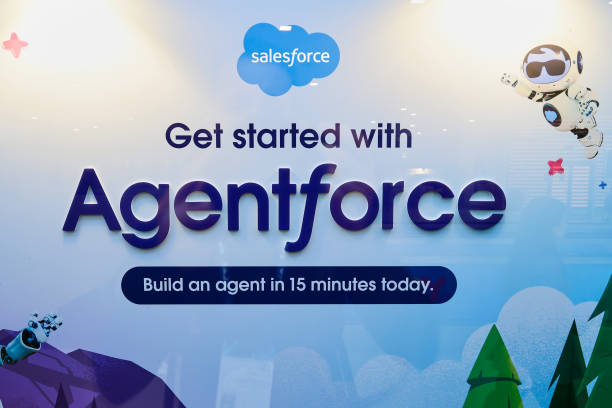
    Photo Credit:  Joan Cros/NurPhoto via Getty Images

    Salesforce has fixed three security flaws in its Agentforce platforms that could have allowed attackers to use the company’s own AI agents to steal sensitive CRM data or send phishing messages through Slack.

    Dubbed “SalesBleed,” security researchers at Zenity Labs discovered that an attacker could hide malicious instructions inside a Salesforce Web-to-Lead form, which companies commonly use to collect information from potential customers. And once the submission entered a company’s CRM, the instructions could remain there until an employee asked Agentforce to review the lead.

    For Agentforce, the employee did not need to open the suspicious submission, click a malicious link, or approve the transfer of information. Agentforce could read the hidden instructions while handling the employee’s normal request and use its existing access to retrieve other information stored inside Salesforce. 

    How SalesBleed Allowed Attackers to Reach CRM Data

    The attack took advantage of how Agentforce works with information stored inside Salesforce.

    Zenity found that the General CRM subagent it tested could access both lead information and records stored in the Accounts table. This meant a malicious instruction hidden in a lead could tell the agent to move beyond reviewing that lead and retrieve other information it already had permission to access.

    The researchers demonstrated the attack using company names and deal sizes from Salesforce accounts. According to Zenity, the same method could potentially reach other information available through the agent’s Query Records tool, depending on what data the agent was allowed to access.

    However, the attacker did not need a Salesforce account or access to the company’s systems to plant the instructions, as Web-to-Lead forms are deliberately public because businesses use them to receive enquiries from prospective customers.

    Why the Attack Did Not Require a Click

    Salesforce already had a protection called Trusted URLs that was meant to prevent Agentforce from returning links and images from websites that had not been approved. However, Zenity found weaknesses in how the system recognised certain web addresses.

    The researchers were able to place CRM information inside a specially formed web address and make Agentforce return it as part of an image request. When the browser tried to locate that address, a DNS request was sent to a server controlled by the researchers, carrying the CRM information with it.

    This happened automatically after Agentforce processed the poisoned lead, and the employee only had to make an ordinary request such as asking the agent to check the latest leads. But the employee never had to interact with anything submitted by the attacker.

    Zenity also found another route through Slack. Because Slack can automatically fetch links to generate previews, an Agentforce response containing the malicious address could trigger the same type of data transfer without anyone clicking it.

    A third vulnerability went further by allowing Agentforce to send Slack messages without showing who had instructed the agent to send them and without requiring confirmation. Zenity showed that this could be combined with a poisoned lead to make the agent send phishing messages under its own trusted identity.

    Salesforce Has Fixed the Agentforce Flaws

    Zenity first reported the vulnerabilities to Salesforce in June. The company then later strengthened its Trusted URLs system, added information showing who triggered Agentforce Slack messages, and changed the affected Slack action so that user confirmation is required by default. Afterwards, Zenity confirmed the fixes in August, before publishing its research in late September.

    In an updated statement, Salesforce told SecurityWeek that it had no evidence that the reported vulnerabilities had been exploited against any customer. The company also described prompt injection as an evolving challenge across the AI industry and said it would continue strengthening Agentforce against similar attacks.

    SalesBleed Is Not Agentforce’s First Web-to-Lead Flaw

    SalesBleed is also not the first time Salesforce’s Web-to-Lead feature has been used to target Agentforce through prompt injection. In July 2025, researchers at Noma Security reported a vulnerability called ForcedLeak that allowed attackers to hide malicious instructions inside Web-to-Lead submissions and use Agentforce to extract CRM data.

    Salesforce responded by introducing additional security controls, including enforcing Trusted URLs for Agentforce and Einstein AI from September 8, 2025. The system was designed to stop agents from sending information to websites that had not been approved by an organisation. ForcedLeak was publicly disclosed later that month.

    All together, these findings raise a wider security problem for AI agents that are increasingly being given access to company data and workplace tools. The more access these systems receive across CRM tools, workplace messaging, and other business software, the more important the controls around what information they trust and what actions they can perform become.

    As such, protecting those systems depends not only on stopping malicious instructions from reaching the AI, but also on controlling what the agent can access and what it can do when those instructions get through.

    Agentforce AI Agent Security AI security Artificial Intelligence CRM cybersecurity Data Breach Data Security ForcedLeak Noma Security phishing prompt injection SalesBleed Salesforce Slack Web-to-Lead Zenity Labs Zero-Click Attack
    Share. Facebook Twitter Pinterest LinkedIn Tumblr Telegram Email
    precious
    • LinkedIn

    I’m Precious Amusat, Phronews’ Content Writer. I conduct in-depth research and write on the latest developments in the tech industry, including trends in big tech, startups, cybersecurity, artificial intelligence and their global impacts. When I’m off the clock, you’ll find me cheering on women’s footy, curled up with a romance novel, or binge-watching crime thrillers.

    Related Posts

    Massive Pentagon Data Breach Exposes Records of Over 3 Million People

    October 8, 2026

    Why Amazon Wants Investors Buying $8 Billion of Its Nvidia Chips

    October 8, 2026

    Google Reveals AI Is Discovering Increasingly Dangerous Software Vulnerabilities

    October 7, 2026

    Comments are closed.

    Top Posts

    Cursor AI Hits 1 Million Daily Users. Why Developers Are Switching to This Coding Tool

    March 23, 2026

    Coinbase responds to hack: customer impact and official statement

    May 22, 2025

    Anthropic Will Use Claude User Chats For Data Training

    October 16, 2025

    MIT Study Reveals ChatGPT Impairs Brain Activity & Thinking

    June 29, 2025
    Don't Miss
    Cybersecurity & Online Safety

    Massive Pentagon Data Breach Exposes Records of Over 3 Million People

    By preciousOctober 8, 2026

    The Pentagon has confirmed that personal information belonging to more than 3 million people were…

    Why Amazon Wants Investors Buying $8 Billion of Its Nvidia Chips

    October 8, 2026

    Salesforce Agentforce Flaws Allowed Hackers to Steal Data Without a Click

    October 8, 2026

    Google Reveals AI Is Discovering Increasingly Dangerous Software Vulnerabilities

    October 7, 2026
    Stay In Touch
    • Facebook
    • Twitter
    About Us
    About Us

    Evolving from Phronesis News, Phronews brings deep insight and smart analysis to the world of technology. Stay informed, stay ahead, and navigate tech with wisdom.
    We're accepting new partnerships right now.

    Email Us: info@phronews.com

    Facebook X (Twitter) Pinterest YouTube
    Our Picks
    Most Popular

    Cursor AI Hits 1 Million Daily Users. Why Developers Are Switching to This Coding Tool

    March 23, 2026

    Coinbase responds to hack: customer impact and official statement

    May 22, 2025

    Anthropic Will Use Claude User Chats For Data Training

    October 16, 2025
    © 2025. Phronews.
    • Home
    • About Us
    • Get In Touch
    • Privacy Policy
    • Terms and Conditions

    Type above and press Enter to search. Press Esc to cancel.