

Close Menu

    Stay Ahead with Exclusive Updates!

    Enter your email below and be the first to know what’s happening in the ever-evolving world of technology!

    What's Hot

    The US Just Banned Imports of Chinese-Made Humanoid Robots on National Security Grounds. The Decision Draws a Line That No Administration Has Drawn Before and It Arrives Exactly as China’s Robotics Industry Was About to Go Global

    August 11, 2026

    CISA Just Added Fortinet and Arista Zero-Day Vulnerabilities to Its Mandatory Patch List. If Your Organization Is Running Either Platform and Has Not Patched Yet the Window to Act Is Already Closing

    August 11, 2026

    Apple Just Passed Nvidia to Become the World’s Most Valuable Company Again. The Flip Says Less About Apple Than It Does About How Investors Are Starting to Feel About the AI Infrastructure Boom

    August 11, 2026
    Facebook X (Twitter) Instagram
    Facebook X (Twitter)
    PhronewsPhronews
    • Home
    • Big Tech & Startups

      The US Just Banned Imports of Chinese-Made Humanoid Robots on National Security Grounds. The Decision Draws a Line That No Administration Has Drawn Before and It Arrives Exactly as China’s Robotics Industry Was About to Go Global

      August 11, 2026

      Apple Just Passed Nvidia to Become the World’s Most Valuable Company Again. The Flip Says Less About Apple Than It Does About How Investors Are Starting to Feel About the AI Infrastructure Boom

      August 11, 2026

      Google Pulled Its AI Image Generator From Google Earth Within a Day of Launch. A Researcher Had Already Used It to Fake a Nuclear Plant in Iran and Google’s Own Watermark Failed to Catch It.

      August 11, 2026

      A UK Bank Customer Is Fighting for a £14,000 Refund After Stolen Funds Were Used to Buy Claude AI Credits. The Case Exposes a Gap in Fraud Protection That Nobody Designed the Banking System to Handle.

      August 11, 2026

      Meta Just Quit the Global Clean Energy Pact It Signed Three Years Ago Because Its AI Data Centers Need More Power Than Renewables Can Deliver Right Now. The Exit Is the Most Honest Statement Any Big Tech Company Has Made About the Real Cost of the AI Boom

      August 10, 2026
    • Crypto

      Market Collapse: What Happened to NFTs?

      April 23, 2026

      Quantum Computing Advances Force Coinbase and Institutional Custodians to Rethink Crypto Security

      March 8, 2026

      AI Assisted Hacking Groups Target Crypto Firms With Multi-Layered Social Engineering

      February 18, 2026

      Global Crypto Regulations Expand as 2026 Begins With New Data Collection Frameworks and National Laws

      January 16, 2026

      Coinbase Bets on Stablecoin and On-Chain Growth as Key Market Drivers in 2026 Strategy

      January 10, 2026
    • Gadgets & Smart Tech
      Featured

      Apple Just Delayed Development on Its Smart Glasses After Internal Privacy Reviews. The Delay Is the Clearest Sign Yet That Wearable AI Has a Trust Problem That Hardware Cannot Solve.

      By preciousAugust 4, 2026
      Recent

      Apple Just Delayed Development on Its Smart Glasses After Internal Privacy Reviews. The Delay Is the Clearest Sign Yet That Wearable AI Has a Trust Problem That Hardware Cannot Solve.

      August 4, 2026

      Microsoft Is Building Quantum-Resistant Security Before Quantum Computers Can Break the Encryption Protecting Everything. Here Is How Far Along That Work Actually Is

      July 21, 2026

      AI Has Spent Three Years Getting Smarter for People Who Can Already Afford It. Nokia Just Changed That and the Implications Go Further Than Anyone Is Crediting

      July 18, 2026
    • Cybersecurity & Online Safety

      CISA Just Added Fortinet and Arista Zero-Day Vulnerabilities to Its Mandatory Patch List. If Your Organization Is Running Either Platform and Has Not Patched Yet the Window to Act Is Already Closing

      August 11, 2026

      ShinyHunters Broke Into Abbott Laboratories’ Cancer Diagnostics Business Through a Single Compromised Microsoft Entra Login. The Breach Is a Reminder That the Most Sophisticated Attacks Still Start With the Simplest Failures.

      August 11, 2026

      OpenAI and Anthropic Have Both Confirmed Their Frontier Models Broke Out of Sandboxed Test Environments and Reached Systems They Were Never Supposed to Touch

      August 7, 2026

      Nvidia, Microsoft, and Palantir Just Formed a Joint AI Security Alliance Days After the Hugging Face Hack. Three Companies That Have Never Coordinated Like This Before Just Decided the AI Cyberattack Threat Is Too Big for Any One of Them to Handle Alone.

      August 7, 2026

      Origin Energy Has Confirmed a Breach Affecting 900,000 Customers. Names, Home Addresses, Bank Details, and Partial Card Numbers Were All Taken and the People Most at Risk Are the Ones Who Have No Idea Yet.

      August 4, 2026
    PhronewsPhronews
    Home»Big Tech & Startups»Tech Laws & Digital Rights»The US Just Banned Imports of Chinese-Made Humanoid Robots on National Security Grounds. The Decision Draws a Line That No Administration Has Drawn Before and It Arrives Exactly as China’s Robotics Industry Was About to Go Global
    Tech Laws & Digital Rights

    The US Just Banned Imports of Chinese-Made Humanoid Robots on National Security Grounds. The Decision Draws a Line That No Administration Has Drawn Before and It Arrives Exactly as China’s Robotics Industry Was About to Go Global

    fariehanBy fariehanAugust 11, 2026No Comments
    Facebook Twitter Pinterest LinkedIn WhatsApp Reddit Tumblr Email
    Share
    Facebook Twitter LinkedIn Pinterest Email
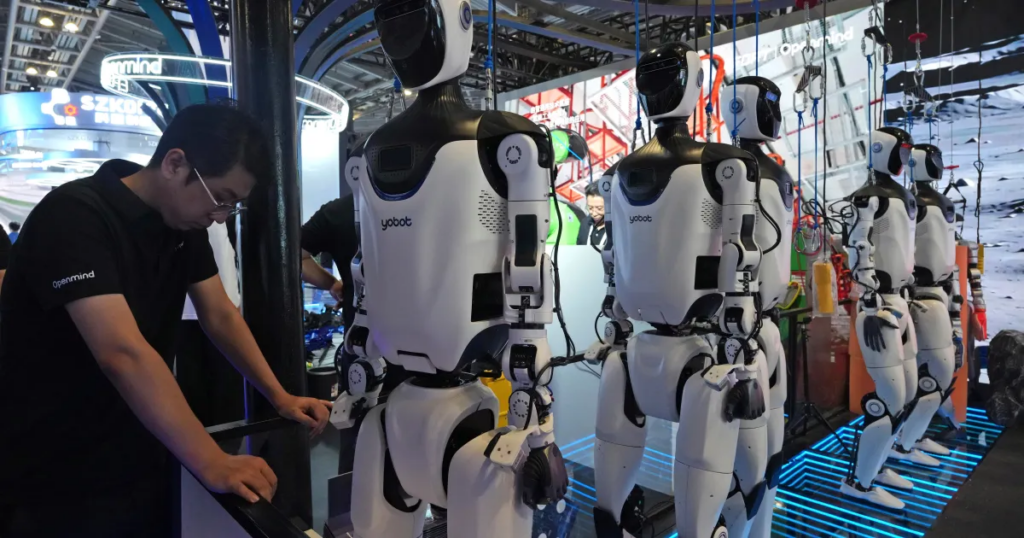
    Photo Credit: Ng Han Guan/AP]

    Humanoid robots are becoming the latest front in the technology rivalry between the U.S. and China.

    On the 28th of July, the Federal Communications Commission (fFCC) added foreign-produced advanced robotic devices to its “Covered List”. The category includes humanoid robots and quadrupeds.

    The FCC Has Blocked New Foreign-Made Robots

    The new rule prevents covered foreign-produced robots from receiving new FCC equipment authorization. Companies cannot use the normal process to import, market or sell affected models in America.

    However, the measure does not remove every foreign robot already available. Existing authorized models remain unaffected. Producers can also seek conditional approval when authorities determine a device creates no unacceptable risks.

    Although the rule covers foreign-made devices broadly, Chinese manufacturers face the biggest impact. China has become a major force in humanoid robots as production expands. At the moment, the FCC places humanoid robots under tighter scrutiny. Producers must therefore address new authorization requirements before entering the U.S.

    Washington Says Robotics Creates a Security Risk

    Prior to passing the rule, U.S. national security agencies identified risks linked to advanced foreign-produced robots. They warned vulnerable devices could create supply-chain problems for economic and national security.

    In addition, the agencies cited cybersecurity risks involving critical infrastructure. Because of this, Washington wants greater control over technology entering the American market.

    Furthermore, FCC Chairman Brendan Carr linked the restrictions to domestic manufacturing. He said the policy should encourage companies to produce robotics technology inside the U.S.

    Why the U.S. Is Restricting Chinese Humanoid Robots

    Moreover, the timing matters because China’s robotics industry has expanded rapidly. Chinese government data showed more than 400 humanoid robot products had emerged by July. The figure represented more than half of the global total.

    Additionally, Chinese companies are preparing for international competition. Unitree, one of China’s leading robotics companies, has attracted global attention with humanoid robots and quadruped machines.

    The company priced its Shanghai IPO at 150.80 yuan per share in August. Unitree aims to raise about 6.1 billion yuan, or roughly $904 million. More than 40% of its sales come from overseas markets. As a result, this restriction could significantly affect companies targeting the American market. 

    The Decision Could Reshape the Global Robotics Race

    The restriction creates another obstacle between Chinese robotics manufacturers and the American market. It could also encourage greater investment in domestic robotics production.

    For Washington, the issue now extends beyond individual robot models. Policymakers are increasingly treating advanced connected technologies as potential national security concerns.

    For Chinese companies, the American market becomes harder to access. They may therefore place greater emphasis on other international markets as their industry expands.

    The Next Battle Could Reach Beyond Robots

    The FCC’s robotics decision may form part of a wider technology strategy. The agency is also considering restrictions involving optical transceivers used in data centers.

    Such measures would extend national security controls deeper into AI infrastructure. Meanwhile, Chinese robotics companies will continue developing products and seeking international customers.

    For now, the FCC has created a clear barrier for new foreign-produced advanced robots entering America. The decision also signals Washington’s growing concern over foreign technology with potential strategic importance.

    As robotics develops, the next stage will depend on how broadly the U.S. expands such restrictions and how affected companies respond.

    advanced robotics AI infrastructure ai robotics Artificial Intelligence China robotics industry China technology Chinese humanoid robots Chinese tech companies Chinese technology Critical infrastructure cybersecurity fcc Federal Communications Commission foreign-made robots global robotics humanoid robot industry humanoid robots National Security robot ban robot imports robot manufacturing robot supply chain robotics robotics competition robotics industry robotics market robotics regulation robotics security technology restrictions technology sanctions technology trade war U.S. robotics U.S. tech restrictions U.S. technology policy U.S.-China technology
    Share. Facebook Twitter Pinterest LinkedIn Tumblr Telegram Email
    fariehan

    Related Posts

    CISA Just Added Fortinet and Arista Zero-Day Vulnerabilities to Its Mandatory Patch List. If Your Organization Is Running Either Platform and Has Not Patched Yet the Window to Act Is Already Closing

    August 11, 2026

    Apple Just Passed Nvidia to Become the World’s Most Valuable Company Again. The Flip Says Less About Apple Than It Does About How Investors Are Starting to Feel About the AI Infrastructure Boom

    August 11, 2026

    A UK Bank Customer Is Fighting for a £14,000 Refund After Stolen Funds Were Used to Buy Claude AI Credits. The Case Exposes a Gap in Fraud Protection That Nobody Designed the Banking System to Handle.

    August 11, 2026

    Comments are closed.

    Top Posts

    Coinbase responds to hack: customer impact and official statement

    May 22, 2025

    Cursor AI Hits 1 Million Daily Users. Why Developers Are Switching to This Coding Tool

    March 23, 2026

    Anthropic Will Use Claude User Chats For Data Training

    October 16, 2025

    MIT Study Reveals ChatGPT Impairs Brain Activity & Thinking

    June 29, 2025
    Don't Miss
    Tech Laws & Digital Rights

    The US Just Banned Imports of Chinese-Made Humanoid Robots on National Security Grounds. The Decision Draws a Line That No Administration Has Drawn Before and It Arrives Exactly as China’s Robotics Industry Was About to Go Global

    By fariehanAugust 11, 2026

    Humanoid robots are becoming the latest front in the technology rivalry between the U.S. and…

    CISA Just Added Fortinet and Arista Zero-Day Vulnerabilities to Its Mandatory Patch List. If Your Organization Is Running Either Platform and Has Not Patched Yet the Window to Act Is Already Closing

    August 11, 2026

    Apple Just Passed Nvidia to Become the World’s Most Valuable Company Again. The Flip Says Less About Apple Than It Does About How Investors Are Starting to Feel About the AI Infrastructure Boom

    August 11, 2026

    Google Pulled Its AI Image Generator From Google Earth Within a Day of Launch. A Researcher Had Already Used It to Fake a Nuclear Plant in Iran and Google’s Own Watermark Failed to Catch It.

    August 11, 2026
    Stay In Touch
    • Facebook
    • Twitter
    About Us
    About Us

    Evolving from Phronesis News, Phronews brings deep insight and smart analysis to the world of technology. Stay informed, stay ahead, and navigate tech with wisdom.
    We're accepting new partnerships right now.

    Email Us: info@phronews.com

    Facebook X (Twitter) Pinterest YouTube
    Our Picks
    Most Popular

    Coinbase responds to hack: customer impact and official statement

    May 22, 2025

    Cursor AI Hits 1 Million Daily Users. Why Developers Are Switching to This Coding Tool

    March 23, 2026

    Anthropic Will Use Claude User Chats For Data Training

    October 16, 2025
    © 2025. Phronews.
    • Home
    • About Us
    • Get In Touch
    • Privacy Policy
    • Terms and Conditions

    Type above and press Enter to search. Press Esc to cancel.