


New York has become the first U.S. state to temporarily stop the construction of new hyperscale data centers, putting one of the fastest growing parts of the AI industry under direct government restrictions.
Governor Kathy Hochul signed an executive order that places a one-year moratorium on new environmental permits for data centers that require 50 megawatts or more of electricity. The state says the pause will give regulators time to create new rules that address the impact of these facilities on power grids, water supplies and local communities.
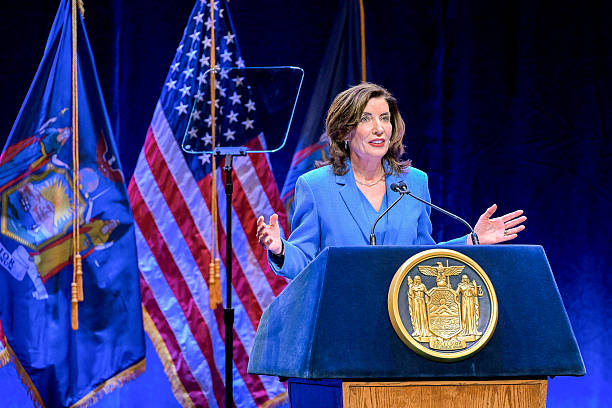
“As data center development threatens to hike up utility bills, deplete our natural resources, and create uncertainty for New Yorkers, it’s my responsibility to take action and lead,” Hochul said at the event announcing this one-year moratorium New York Governor Kathy Hochul.
This decision marks a major shift in the national conversation around AI infrastructure. Until now, most debates have focused on how quickly the U.S. could build enough computing power to compete globally. But for New York, it is instead asking whether the current pace of expansion is sustainable.
Why New York Hit the Brakes
The order applies only to large hyperscale facilities that consume at least 50 megawatts of electricity. Existing data centers and projects that have already secured their permits are not affected.
During the pause, state agencies will develop a regulatory framework covering energy demand, environmental reviews, water use and community impacts. The administration also plans to pursue legislation that would remove sales tax exemptions for massive data center projects.
Governor Hochul said New York supports artificial intelligence but does not want residents to bear the cost of rapid infrastructure expansion through higher utility bills or added pressure on public resources.
“We’re in the midst of one of the most significant economic upheavals in generations… perhaps ever,” Hochul said. “These hyperscale AI data centers consume enormous amounts of power, truly threatening to outpace our grid’s capacity,” she added. “They drive up costs for local ratepayers, and I refuse to let those costs get passed down to New Yorkers.”
AI’s Growing Infrastructure Challenge
The state’s governor move reflects a broader issue facing the AI industry. Building advanced AI models requires enormous computing capacity, and companies have been racing to develop large data centers across the United States.
Those facilities consume significant amounts of electricity and water while requiring large amounts of land. As more projects are proposed, local governments and residents have raised concerns about their effect on energy reliability, environmental resources and quality of life. In fact, Reuters recently reported that opposition to large data centers has become an increasingly important political issue in several parts of the country.
And New York lawmakers have argued that a temporary pause gives the state more time to understand the impact of the current data centers before approving additional projects.
The Industry Sees New Uncertainty
No doubt, the moratorium has drawn criticism from business groups and supporters of AI infrastructure, who argue that it could push billions of dollars in future investment to states with fewer restrictions. President Donald Trump also criticized it as “a terrible decision,” saying companies could choose to expand in states such as Texas, Arizona, Alabama and Florida instead. This comes a year after the U.S. Senate dropped a proposed 10-year AI regulation moratorium.
Even so, the order is temporary rather than permanent. State officials say the goal is to establish clear standards for future development instead of preventing data center construction altogether.
A Decision Other States will Watch Closely
New York’s action is the first statewide moratorium of its kind in the United States, making it an important test for future AI policy. If the state develops a framework that balances technology investment with environmental and community concerns, it could influence how other states regulate the next wave of AI infrastructure.
As demand for AI computing continues to grow, the debate is now about deciding where these data centers should be built, how they should operate, and who should bear the cost of supporting the industry’s rapid expansion.
