

Close Menu

    Stay Ahead with Exclusive Updates!

    Enter your email below and be the first to know what’s happening in the ever-evolving world of technology!

    What's Hot

    An Enterprise Client Accidentally Spent $500 Million on Claude in a Single Month. Every Company Deploying AI Agents Needs to Read This.

    June 3, 2026

    Anthropic Just Surpassed OpenAI in the Private Market. The AI Race Has A New Leader and the Gap Is Widening Fast.

    June 3, 2026

    GitHub Lost 3,800 Internal Repositories to a Poisoned Developer Extension. The Supply Chain Attack Nobody Saw Coming Is Now the Most Dangerous Kind.

    June 2, 2026
    Facebook X (Twitter) Instagram
    Facebook X (Twitter)
    PhronewsPhronews
    • Home
    • Big Tech & Startups

      Anthropic Just Surpassed OpenAI in the Private Market. The AI Race Has A New Leader and the Gap Is Widening Fast.

      June 3, 2026

      Trump Backed Down on His AI Executive Order After Big Tech Pushed Back. What the Retreat Reveals About U.S. AI Policy Is More Important Than the Order Itself.

      May 31, 2026

      SpaceX Filed Its IPO Papers and Is Targeting a $1.75 Trillion Valuation. If It Goes Through It Will Be the Largest Public Offering in History and It Will Reshape the Tech Market Permanently.

      May 31, 2026

      Foxconn Got Hit by Ransomware and 11 Million Files Were Stolen. The Nitrogen Attack on the World’s Largest Electronics Maker Has Consequences for Every Big Tech Supply Chain

      May 31, 2026

      Anthropic Is About to Turn a Profit for the First Time. Its Q2 Revenue Is Expected to Hit $10.9 Billion and That Number Changes Everything About the AI Business Model.

      May 28, 2026
    • Crypto

      Market Collapse: What Happened to NFTs?

      April 23, 2026

      Quantum Computing Advances Force Coinbase and Institutional Custodians to Rethink Crypto Security

      March 8, 2026

      AI Assisted Hacking Groups Target Crypto Firms With Multi-Layered Social Engineering

      February 18, 2026

      Global Crypto Regulations Expand as 2026 Begins With New Data Collection Frameworks and National Laws

      January 16, 2026

      Coinbase Bets on Stablecoin and On-Chain Growth as Key Market Drivers in 2026 Strategy

      January 10, 2026
    • Gadgets & Smart Tech
      Featured

      Foldable Phones Are No Longer a Gimmick — The Motorola Razr 2026 Is the Latest Sign That Foldables Are Going Mainstream

      By fariehanMay 3, 2026
      Recent

      Foldable Phones Are No Longer a Gimmick — The Motorola Razr 2026 Is the Latest Sign That Foldables Are Going Mainstream

      May 3, 2026

      Meta Raises Quest VR Headset Prices as Component Costs Rise

      May 1, 2026

      Robotics Showcase: China Uses a Half-Marathon to Signal Progress in Humanoid Tech

      April 27, 2026
    • Cybersecurity & Online Safety

      GitHub Lost 3,800 Internal Repositories to a Poisoned Developer Extension. The Supply Chain Attack Nobody Saw Coming Is Now the Most Dangerous Kind.

      June 2, 2026

      Foxconn Got Hit by Ransomware and 11 Million Files Were Stolen. The Nitrogen Attack on the World’s Largest Electronics Maker Has Consequences for Every Big Tech Supply Chain

      May 31, 2026

      A Cybersecurity Firm Just Had Its Own Source Code Stolen. Trellix’s Breach Is the Most Embarrassing Kind and the Most Instructive One.

      May 22, 2026

      Hackers Built a Zero-Day Exploit Using AI and Almost Got Away With It. Google Caught It in Time. Next Time May Be Different.

      May 19, 2026

      275 Million Students Had Their Data Exposed in the Largest Education Cyberattack Ever Recorded. Here Is Exactly What Happened to Canvas

      May 19, 2026
    PhronewsPhronews
    Home»Artificial Intelligence & The Future»U.S. Senate drops 10-year AI regulation moratorium
    Artificial Intelligence & The Future

    U.S. Senate drops 10-year AI regulation moratorium

    preciousBy preciousJuly 13, 2025Updated:July 15, 2025No Comments
    Facebook Twitter Pinterest LinkedIn WhatsApp Reddit Tumblr Email
    Share
    Facebook Twitter LinkedIn Pinterest Email
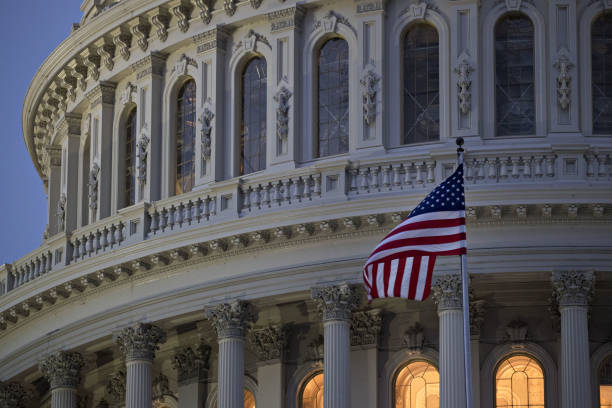
     Photo Credit: Andrew Harrer/Bloomberg

    The U.S. Senate recently voted 99-1 to remove a controversial 10-year moratorium on state artificial intelligence (AI) regulations from President Trump’s “One Big Beautiful Bill Act.” The vote, held during a marathon session on July 1, 2025, marked a rare moment of overwhelming bipartisan agreement in the U.S. Senate, and it also marked a shift in how the rapidly growing AI technologies should be governed. 

    The moratorium, originally included in Trump’s tax policy bill, aimed to prevent states from enacting or enforcing their own AI regulations for a decade. Supporters of this moratorium argued this would avoid a patchwork of state laws that would stifle innovation and weaken America’s position in the global AI race, especially against competitors like China. 

    Critics, however, saw it as the creation of a regulatory vacuum that would leave consumers, workers, and the minorities vulnerable to unchecked AI risks. As previously reported by Phronews, one of the most vocal critics of the 10-year moratorium was Dario Amodei, CEO of Anthropic, a leading AI research and safety company, and also the developer of the Claude AI assistant. 

    In an op-ed, Amodei calls the 10-year ban as at the time it was proposed, a “far too blunt an instrument.” Amodei, being at the helm of an AI research and safety company, admits that AI is growing at an unprecedented rate that can totally change the world for good in the next few years. However, he warns that the 10-year AI regulation moratorium will leave the development and usage of AI unchecked which will in turn have adverse effects on society. 

    And because the implementation of the 10-year ban wouldn’t immediately call for the creation of AI regulation at the federal level, he warns that, “Without a clear plan for a federal response, a moratorium would give us the worst of both worlds – no ability for states to act, and no national policy as a backstop.”

    It is important to note that prior to the proposing and the inclusion of this bill into President Trump’s tax policy bill, there was no AI regulation neither at the federal level nor at the state level. So it makes sense that proposing a decade-long ban on State AI regulation when there’s no regulation at the federal level will result in a regulatory vacuum, where a new technology or industry emerges faster than laws or regulations can be developed to govern it. 

    It is probably with this realization that the Senate’s decision was bipartisan, where both Republican and Democratic senators voiced concerns about stripping states of their ability to respond to AI risks in real time. The final vote being 99-1 reflected rare unity in the U.S. Senate, especially on a tech policy issue. 

    Apart from this bipartisan opposition, there were also factors like state pressure and consumer rights advocacy that contributed to the dropping of the ban. When the moratorium was initially proposed, over 50 state attorneys and more than 250 state lawmakers signed letters urging Congress to preserve state authority over AI regulation. Activists groups also warned that a decade-long freeze would leave Americans exposed to dangers such as deepfakes, algorithmic discrimination and bias, as well as threats to children’s online safety. 

    With the cancellation of the ban, states in the U.S. now retain the authority to regulate AI as they see fit. At least 45 states have already introduced AI-related legislation, with 31 states addressing critical issues such as deepfake prevention and election integrity, employment discrimination in AI-powered hiring systems, consumer protection and transparency, children’s online safety, and artists’ rights and protection from unauthorized AI-generated content. 

    However, this vote does not end the current debate of federal regulation vs. state regulation. Many lawmakers and industry leaders, including Amodei, continue to call for comprehensive federal AI legislation. Tech giants like OpenAI and Google also argue that only a national framework can provide both the flexibility and the safeguards needed as AI technologies become more powerful and pervasive. 

    Senator Maria Cantwell (D-WA) summed up the evolving AI landscape with a post on X saying, “This [removal of the moratorium] allows us to work together nationally to provide a new federal framework on Artificial Intelligence that accelerates U.S. leadership in AI while still protecting consumers.”

    Ai future regulation Ai governance united states Ai innovation policy Ai lawmaking authority Ai legal framework Ai legislation news Ai legislative update ai policy shift Ai regulation 2025 Ai regulation repeal Bipartisan ai decision Federal vs state ai control July 2025 senate vote National ai competitiveness One big beautiful bill act Patchwork law concerns Senate bipartisan moment State ai laws State tech governance Tech policy 2025 Trump ai moratorium United states ai strategy Us ai policy change Us senate ai vote
    Share. Facebook Twitter Pinterest LinkedIn Tumblr Telegram Email
    precious
    • LinkedIn

    I’m Precious Amusat, Phronews’ Content Writer. I conduct in-depth research and write on the latest developments in the tech industry, including trends in big tech, startups, cybersecurity, artificial intelligence and their global impacts. When I’m off the clock, you’ll find me cheering on women’s footy, curled up with a romance novel, or binge-watching crime thrillers.

    Related Posts

    An Enterprise Client Accidentally Spent $500 Million on Claude in a Single Month. Every Company Deploying AI Agents Needs to Read This.

    June 3, 2026

    Anthropic Just Surpassed OpenAI in the Private Market. The AI Race Has A New Leader and the Gap Is Widening Fast.

    June 3, 2026

    Trump Backed Down on His AI Executive Order After Big Tech Pushed Back. What the Retreat Reveals About U.S. AI Policy Is More Important Than the Order Itself.

    May 31, 2026

    Comments are closed.

    Top Posts

    Coinbase responds to hack: customer impact and official statement

    May 22, 2025

    Anthropic Will Use Claude User Chats For Data Training

    October 16, 2025

    Cursor AI Hits 1 Million Daily Users. Why Developers Are Switching to This Coding Tool

    March 23, 2026

    MIT Study Reveals ChatGPT Impairs Brain Activity & Thinking

    June 29, 2025
    Don't Miss
    Artificial Intelligence & The Future

    An Enterprise Client Accidentally Spent $500 Million on Claude in a Single Month. Every Company Deploying AI Agents Needs to Read This.

    By preciousJune 3, 2026

    An unnamed enterprise racked up roughly $500 million in charges on Anthropic’s Claude in a…

    Anthropic Just Surpassed OpenAI in the Private Market. The AI Race Has A New Leader and the Gap Is Widening Fast.

    June 3, 2026

    GitHub Lost 3,800 Internal Repositories to a Poisoned Developer Extension. The Supply Chain Attack Nobody Saw Coming Is Now the Most Dangerous Kind.

    June 2, 2026

    Trump Backed Down on His AI Executive Order After Big Tech Pushed Back. What the Retreat Reveals About U.S. AI Policy Is More Important Than the Order Itself.

    May 31, 2026
    Stay In Touch
    • Facebook
    • Twitter
    About Us
    About Us

    Evolving from Phronesis News, Phronews brings deep insight and smart analysis to the world of technology. Stay informed, stay ahead, and navigate tech with wisdom.
    We're accepting new partnerships right now.

    Email Us: info@phronews.com

    Facebook X (Twitter) Pinterest YouTube
    Our Picks
    Most Popular

    Coinbase responds to hack: customer impact and official statement

    May 22, 2025

    Anthropic Will Use Claude User Chats For Data Training

    October 16, 2025

    Cursor AI Hits 1 Million Daily Users. Why Developers Are Switching to This Coding Tool

    March 23, 2026
    © 2025. Phronews.
    • Home
    • About Us
    • Get In Touch
    • Privacy Policy
    • Terms and Conditions

    Type above and press Enter to search. Press Esc to cancel.