

Close Menu

    Stay Ahead with Exclusive Updates!

    Enter your email below and be the first to know what’s happening in the ever-evolving world of technology!

    What's Hot

    Token Efficiency: Why Aria Networks Raised $125M for AI-Native Infrastructure

    April 18, 2026

    Virtual Safeguards: China Bans Addictive “Digital Humans” for Minors

    April 18, 2026

    Grid-Responsive AI: How Nvidia Plans to Turn Data Centers Into Power Assets with Emerald AI

    April 16, 2026
    Facebook X (Twitter) Instagram
    Facebook X (Twitter)
    PhronewsPhronews
    • Home
    • Big Tech & Startups

      Token Efficiency: Why Aria Networks Raised $125M for AI-Native Infrastructure

      April 18, 2026

      Virtual Safeguards: China Bans Addictive “Digital Humans” for Minors

      April 18, 2026

      Grid-Responsive AI: How Nvidia Plans to Turn Data Centers Into Power Assets with Emerald AI

      April 16, 2026

      The Trillion-Dollar Exit: Why a SpaceX IPO Would Reshape the Space Economy

      April 15, 2026

      The Sacramento Blueprint: How California is Writing the U.S. AI Rulebook

      April 14, 2026
    • Crypto

      Quantum Computing Advances Force Coinbase and Institutional Custodians to Rethink Crypto Security

      March 8, 2026

      AI Assisted Hacking Groups Target Crypto Firms With Multi-Layered Social Engineering

      February 18, 2026

      Global Crypto Regulations Expand as 2026 Begins With New Data Collection Frameworks and National Laws

      January 16, 2026

      Coinbase Bets on Stablecoin and On-Chain Growth as Key Market Drivers in 2026 Strategy

      January 10, 2026

      Tether Faces Ongoing Transparency Questions and Reserve Scrutiny Amid Massive Bitcoin Accumulation

      January 5, 2026
    • Gadgets & Smart Tech
      Featured

      AirPods Max 2: USB-C, Live Translation, and the H2 Upgrade

      By preciousMarch 26, 2026
      Recent

      AirPods Max 2: USB-C, Live Translation, and the H2 Upgrade

      March 26, 2026

      How ABB and Nvidia are Perfecting Industrial Robotics using AI Simulation

      March 20, 2026

      Neura Robotics Reaches €4B Valuation With Tether Backing

      March 12, 2026
    • Cybersecurity & Online Safety

      Cyber Retaliation: How Iran-Linked Hackers Paralyzed Medical Giant Stryker

      April 16, 2026

      Your Company Could Be Iran’s Next Target: What U.S. Tech Firms Need to Do Right Now

      April 6, 2026

      Google Is Warning Us About The Encryption Protecting Your Data Today. It May Not Survive Quantum Computing

      April 5, 2026

      Accenture and Anthropic Team Up on AI-powered Cybersecurity

      April 4, 2026

      Your BVN, Passport, and Bank Account May Already Be on the Dark Web. What Every Nigerian Must Do Right Now After the Banking Breaches

      April 4, 2026
    PhronewsPhronews
    Home»Artificial Intelligence & The Future»Trump tells Big Tech to build their own power plants to support AI infrastructure
    Artificial Intelligence & The Future

    Trump tells Big Tech to build their own power plants to support AI infrastructure

    preciousBy preciousFebruary 27, 2026No Comments
    Facebook Twitter Pinterest LinkedIn WhatsApp Reddit Tumblr Email
    Share
    Facebook Twitter LinkedIn Pinterest Email
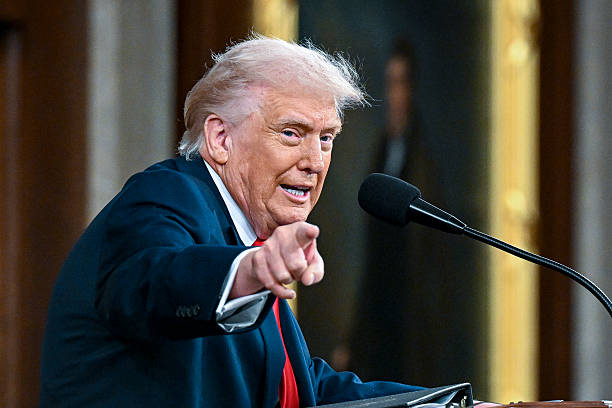
    U.S. President Donald Trump. Photo Credit: Kenny Holston-Pool/Getty Images

    U.S. President Donald Trump used his State of the Union address to announce a new policy requiring major technology companies to generate their own electricity for their AI data centers, rather than drawing from the national grid and passing those costs on to American consumers.

    “We’re telling the major tech companies that they have the obligation to provide for their own power needs,” Trump said during the address. “They can build their own power plants as part of their factory so that no one’s prices will go up, and in many cases, prices of electricity will go down for the community, and very substantially down.”

    The Ratepayer Protection Pledge

    Trump framed the directive around what he called a “ratepayer protection pledge,” an agreement he said he had already negotiated with the tech sector ahead of the address. While he did not explain the nitty-gritty of the pledge, Trump added that these technology companies are “going to produce their own electricity.”

    The details of enforcement, however, remain unclear, as Trump did not specify which companies are bound by the pledge or even outline consequences for non-compliance.

    It goes without saying that these major tech companies may include Elon Musk’s xAI, Amazon, Google, Meta, Microsoft, Oracle, and OpenAI, and they are reportedly expected to formally sign the pledge when they visit the White House in early March, according to anonymous sources who informed Reuters.

    Why the Grid Can’t Keep Up

    At the center of the problem is the sheer scale of electricity that AI data centers now demand and an aging national grid that was never designed to handle it.

    “We have an old grid. It could never handle the kind of numbers, the amount of electricity that’s needed,” Trump said during the address.

    The numbers back that up. In 2025, regulators across the country approved $11.6 billion in rate increases to accommodate AI’s electricity demands, many of which have already taken effect. 

    And that spike is also showing up directly in household bills as AI data centers have been linked to expected monthly residential electricity bill increases of, for example, $16 in Ohio and $18 in Western Maryland. 

    Tech Companies Are Already Building

    The directive comes as many tech companies have already begun building independent power infrastructure. According to a February 2026 report from Cleanview, a data visualization firm that tracks clean energy and data center projects, roughly 30% of all planned data center capacity in the United States has plans to build its own power plants. Of the 30%, 90% of the planned capacity was added in 2025 alone.

    Elon Musk’s xAI is among the most visible examples. The company has deployed mobile generators at AI data center sites in Tennessee and Mississippi, although the move drew scrutiny because some of those generators were installed without permits.

    Several major players have also announced voluntary consumer protection measures ahead of the formal pledge signing. Microsoft launched what it called its “Community-First AI Infrastructure” initiative, committing to cover higher utility rates tied to its data centers, reduce water consumption, and support local jobs and taxes. OpenAI also announced a similar initiative tied to its Stargate data center projects.

    What Comes Next

    The formal signing at the White House in early March will be the clearest indication yet of how binding this arrangement is meant to be. For now, it remains a pledge, with the weight of presidential pressure behind it, but without a defined legal enforcement.

    What is clear is that the cost of building and powering AI data centers is no longer being treated as a problem for utility companies and consumers to absorb. Whether through self-built power plants, purchased capacity, or third-party agreements, Big Tech is now expected to foot its own energy bill.

    AI data center regulations AI infrastructure Artificial Intelligence Big Tech big tech accountability Big Tech energy crisis Data center power consumption Ratepayer Protection Pledge State of the Union 2026 trump ai policy U.S. power gird pressure
    Share. Facebook Twitter Pinterest LinkedIn Tumblr Telegram Email
    precious
    • LinkedIn

    I’m Precious Amusat, Phronews’ Content Writer. I conduct in-depth research and write on the latest developments in the tech industry, including trends in big tech, startups, cybersecurity, artificial intelligence and their global impacts. When I’m off the clock, you’ll find me cheering on women’s footy, curled up with a romance novel, or binge-watching crime thrillers.

    Related Posts

    Token Efficiency: Why Aria Networks Raised $125M for AI-Native Infrastructure

    April 18, 2026

    Virtual Safeguards: China Bans Addictive “Digital Humans” for Minors

    April 18, 2026

    Grid-Responsive AI: How Nvidia Plans to Turn Data Centers Into Power Assets with Emerald AI

    April 16, 2026

    Comments are closed.

    Top Posts

    Coinbase responds to hack: customer impact and official statement

    May 22, 2025

    MIT Study Reveals ChatGPT Impairs Brain Activity & Thinking

    June 29, 2025

    From Ally to Adversary: What Elon Musk’s Feud with Trump Means for the EV Industry

    June 6, 2025

    Anthropic Will Use Claude User Chats For Data Training

    October 16, 2025
    Don't Miss
    Artificial Intelligence & The Future

    Token Efficiency: Why Aria Networks Raised $125M for AI-Native Infrastructure

    By preciousApril 18, 2026

    Aria Networks, a Palo Alto-based networking startup founded in January 2025, has raised $125 million…

    Virtual Safeguards: China Bans Addictive “Digital Humans” for Minors

    April 18, 2026

    Grid-Responsive AI: How Nvidia Plans to Turn Data Centers Into Power Assets with Emerald AI

    April 16, 2026

    Cyber Retaliation: How Iran-Linked Hackers Paralyzed Medical Giant Stryker

    April 16, 2026
    Stay In Touch
    • Facebook
    • Twitter
    About Us
    About Us

    Evolving from Phronesis News, Phronews brings deep insight and smart analysis to the world of technology. Stay informed, stay ahead, and navigate tech with wisdom.
    We're accepting new partnerships right now.

    Email Us: info@phronews.com

    Facebook X (Twitter) Pinterest YouTube
    Our Picks
    Most Popular

    Coinbase responds to hack: customer impact and official statement

    May 22, 2025

    MIT Study Reveals ChatGPT Impairs Brain Activity & Thinking

    June 29, 2025

    From Ally to Adversary: What Elon Musk’s Feud with Trump Means for the EV Industry

    June 6, 2025
    © 2025. Phronews.
    • Home
    • About Us
    • Get In Touch
    • Privacy Policy
    • Terms and Conditions

    Type above and press Enter to search. Press Esc to cancel.