

Close Menu

    Stay Ahead with Exclusive Updates!

    Enter your email below and be the first to know what’s happening in the ever-evolving world of technology!

    What's Hot

    Token Efficiency: Why Aria Networks Raised $125M for AI-Native Infrastructure

    April 18, 2026

    Virtual Safeguards: China Bans Addictive “Digital Humans” for Minors

    April 18, 2026

    Grid-Responsive AI: How Nvidia Plans to Turn Data Centers Into Power Assets with Emerald AI

    April 16, 2026
    Facebook X (Twitter) Instagram
    Facebook X (Twitter)
    PhronewsPhronews
    • Home
    • Big Tech & Startups

      Token Efficiency: Why Aria Networks Raised $125M for AI-Native Infrastructure

      April 18, 2026

      Virtual Safeguards: China Bans Addictive “Digital Humans” for Minors

      April 18, 2026

      Grid-Responsive AI: How Nvidia Plans to Turn Data Centers Into Power Assets with Emerald AI

      April 16, 2026

      The Trillion-Dollar Exit: Why a SpaceX IPO Would Reshape the Space Economy

      April 15, 2026

      The Sacramento Blueprint: How California is Writing the U.S. AI Rulebook

      April 14, 2026
    • Crypto

      Quantum Computing Advances Force Coinbase and Institutional Custodians to Rethink Crypto Security

      March 8, 2026

      AI Assisted Hacking Groups Target Crypto Firms With Multi-Layered Social Engineering

      February 18, 2026

      Global Crypto Regulations Expand as 2026 Begins With New Data Collection Frameworks and National Laws

      January 16, 2026

      Coinbase Bets on Stablecoin and On-Chain Growth as Key Market Drivers in 2026 Strategy

      January 10, 2026

      Tether Faces Ongoing Transparency Questions and Reserve Scrutiny Amid Massive Bitcoin Accumulation

      January 5, 2026
    • Gadgets & Smart Tech
      Featured

      AirPods Max 2: USB-C, Live Translation, and the H2 Upgrade

      By preciousMarch 26, 2026
      Recent

      AirPods Max 2: USB-C, Live Translation, and the H2 Upgrade

      March 26, 2026

      How ABB and Nvidia are Perfecting Industrial Robotics using AI Simulation

      March 20, 2026

      Neura Robotics Reaches €4B Valuation With Tether Backing

      March 12, 2026
    • Cybersecurity & Online Safety

      Cyber Retaliation: How Iran-Linked Hackers Paralyzed Medical Giant Stryker

      April 16, 2026

      Your Company Could Be Iran’s Next Target: What U.S. Tech Firms Need to Do Right Now

      April 6, 2026

      Google Is Warning Us About The Encryption Protecting Your Data Today. It May Not Survive Quantum Computing

      April 5, 2026

      Accenture and Anthropic Team Up on AI-powered Cybersecurity

      April 4, 2026

      Your BVN, Passport, and Bank Account May Already Be on the Dark Web. What Every Nigerian Must Do Right Now After the Banking Breaches

      April 4, 2026
    PhronewsPhronews
    Home»Artificial Intelligence & The Future»Tesla Launches China AI Training Center for Full Self-Driving Development
    Artificial Intelligence & The Future

    Tesla Launches China AI Training Center for Full Self-Driving Development

    preciousBy preciousFebruary 18, 2026No Comments
    Facebook Twitter Pinterest LinkedIn WhatsApp Reddit Tumblr Email
    Share
    Facebook Twitter LinkedIn Pinterest Email
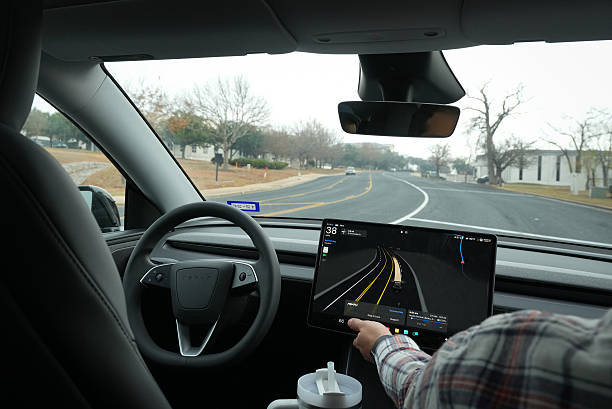
    Photo Credit: Jay Janner/The Austin American-Statesman via Getty Images

    Tesla has put an artificial intelligence (AI) training center into operation in China, a move the company says is designed to adapt its Full Self-Driving (FSD) technology to local road conditions, filling a gap that has held the system back since its China debut nearly a year ago.

    Tesla China Vice President Grace Tao confirmed the development in early February, telling Shanghai-based financial media outlet Cailian that the facility is now active and focused on building out local assisted-driving and AI capabilities. Tao said the center has sufficient computing power to support development of assisted-driving features, though she declined to disclose details such as its location, the size of the investment, or specific computational capacity.

    Why Tesla Needed a Local Training Center

    The core issue is data. Tesla’s FSD relies on a neural network trained using video clips from real driving situations, enabling vehicles to make human-like decisions. The system has been built on billions of miles of data collected from Tesla vehicles across the U.S. and other markets.

    China’s strict data localization laws, however, have prevented Tesla from sending driving data collected on Chinese roads to its U.S.-based servers. That means when Tesla first launched its FSD-equivalent system in China in February 2025, the company was working around the problem rather than solving it. CEO Elon Musk acknowledged at the time that the company “just used publicly available video on the Internet of roads and signs in China and used that to train in simulation.”

    However, it had real limitations such as Chinese roads coming with their own traffic patterns, road signs, and driving behaviors that a system trained on foreign internet footage could not fully account for. With a local training center now running, Tesla can collect actual driving data from its vehicles on Chinese roads, train its neural network against that data, and improve the system’s performance for those specific conditions, all while staying within Chinese data regulations.

    The launch of the training center also completes what Tesla has been building toward since 2021, when it established a data center in Shanghai for local data storage. The new facility closes the loop on a full localization chain – data storage, local training, and algorithm optimization.

    The Competitive Pressure Behind the Timing

    Tesla’s move comes as Chinese automakers are pushing hard on autonomous driving. Companies like Huawei, Xpeng, and Li Auto have been aggressively developing their own autonomous driving systems, trained entirely on local Chinese data, and thousands of Level 3 (L3) capable vehicles are expected to hit Chinese roads in 2026 following recent regulatory approvals.

    L3 autonomous driving refers to a system that can handle most driving tasks on its own but still requires a human ready to take control when required or prompted, which is a step beyond what Tesla’s current China offering provides.

    “Chinese fans of autonomous driving will benefit from intensified competition between Tesla and its local rivals,” said Yin Ran, an angel investor in Shanghai. “As thousands of L3 cars are likely to hit China’s roads in 2026, a new battle will take shape as all electric-car builders try to deliver efficient and affordable self-driving systems.” 

    Tesla’s approach differs from most of its Chinese rivals in one key way. While competitors often rely on high-definition maps and LiDAR sensors, Tesla relies on a vision-only system that can adapt to any road without pre-mapping offers a scalability advantage that mapped solutions struggle to match.

    FSD Approval in China Remains Unconfirmed

    Despite the infrastructure progress, regulatory approval for FSD in China is still pending. At the World Economic Forum in Davos last month, Musk said the company was targeting approval “hopefully next month,” but sources cited by state-owned outlet China Daily said that information was “not true.” Chinese authorities did not provide additional details on whether a formal review is underway or what a potential timeline might look like.

    Currently, Tesla offers “Intelligent Assisted Driving” in China, the rebranded version of its FSD system that it introduced in February 2025.

    Tesla Broader AI Investment Plans

    Tesla’s capital expenditure for 2026 is expected to exceed $20 billion globally, with investment priorities including AI computing power, robotics factories, mass production of the autonomous Cybercab, energy storage, charging networks, and battery plants. The China AI training center is part of that wider infrastructure push.

    China is also one of Tesla’s most important production bases, as the company’s Gigafactory set a monthly record with over 97,100 deliveries in December 2025, and the company delivered 851,000 units worldwide that year, with China accounting for more than half of total global deliveries.

    Getting FSD right for China is, by that measure, not a side project. It is central to how Tesla performs in its most critical market.

    AI infrastructure AI innovation Artificial Intelligence Autonomous driving 2026 China EV market trends 2026 Data localization laws China Elon Musk Full Self-Driving Software L3 autonomous driving Smart Tech Tesla Tesla AI training center Tesla FSD China Tesla in China Tesla vs Xpeng vs Huawei
    Share. Facebook Twitter Pinterest LinkedIn Tumblr Telegram Email
    precious
    • LinkedIn

    I’m Precious Amusat, Phronews’ Content Writer. I conduct in-depth research and write on the latest developments in the tech industry, including trends in big tech, startups, cybersecurity, artificial intelligence and their global impacts. When I’m off the clock, you’ll find me cheering on women’s footy, curled up with a romance novel, or binge-watching crime thrillers.

    Related Posts

    Token Efficiency: Why Aria Networks Raised $125M for AI-Native Infrastructure

    April 18, 2026

    Virtual Safeguards: China Bans Addictive “Digital Humans” for Minors

    April 18, 2026

    Grid-Responsive AI: How Nvidia Plans to Turn Data Centers Into Power Assets with Emerald AI

    April 16, 2026

    Comments are closed.

    Top Posts

    Coinbase responds to hack: customer impact and official statement

    May 22, 2025

    MIT Study Reveals ChatGPT Impairs Brain Activity & Thinking

    June 29, 2025

    From Ally to Adversary: What Elon Musk’s Feud with Trump Means for the EV Industry

    June 6, 2025

    Anthropic Will Use Claude User Chats For Data Training

    October 16, 2025
    Don't Miss
    Artificial Intelligence & The Future

    Token Efficiency: Why Aria Networks Raised $125M for AI-Native Infrastructure

    By preciousApril 18, 2026

    Aria Networks, a Palo Alto-based networking startup founded in January 2025, has raised $125 million…

    Virtual Safeguards: China Bans Addictive “Digital Humans” for Minors

    April 18, 2026

    Grid-Responsive AI: How Nvidia Plans to Turn Data Centers Into Power Assets with Emerald AI

    April 16, 2026

    Cyber Retaliation: How Iran-Linked Hackers Paralyzed Medical Giant Stryker

    April 16, 2026
    Stay In Touch
    • Facebook
    • Twitter
    About Us
    About Us

    Evolving from Phronesis News, Phronews brings deep insight and smart analysis to the world of technology. Stay informed, stay ahead, and navigate tech with wisdom.
    We're accepting new partnerships right now.

    Email Us: info@phronews.com

    Facebook X (Twitter) Pinterest YouTube
    Our Picks
    Most Popular

    Coinbase responds to hack: customer impact and official statement

    May 22, 2025

    MIT Study Reveals ChatGPT Impairs Brain Activity & Thinking

    June 29, 2025

    From Ally to Adversary: What Elon Musk’s Feud with Trump Means for the EV Industry

    June 6, 2025
    © 2025. Phronews.
    • Home
    • About Us
    • Get In Touch
    • Privacy Policy
    • Terms and Conditions

    Type above and press Enter to search. Press Esc to cancel.