


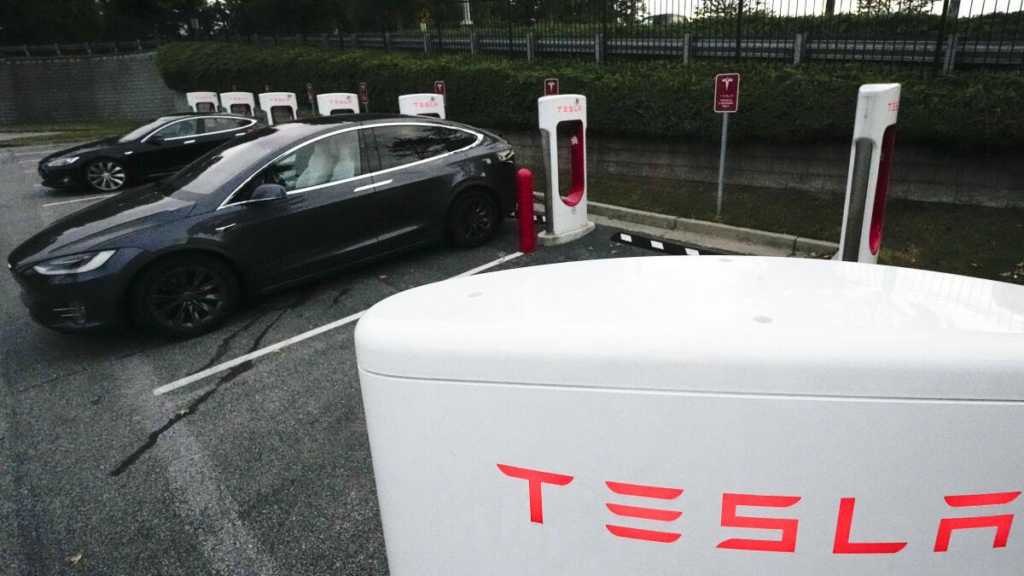
Tesla’s self-driving AI learns from millions of simulated crashes before encountering similar risks on public roads. Instead of relying only on real-world driving, Tesla trains its Full Self-Driving (FSD) system inside virtual environments.
Because of this, engineers are able to study dangerous situations without exposing road users to unnecessary risks.
Why Tesla’s Self-Driving AI Is Learning From Millions of Simulated Crashes
Currently, many serious crashes happen too rarely for efficient real-world testing. Therefore, Tesla creates simulated scenarios that include sudden obstacles, changing traffic, and poor weather. Engineers can repeat every scenario until the system improves its response.
Moreover, simulations allow developers to test situations that would be unsafe to recreate on public roads. The process also speeds up software development while reducing testing risks.
How Simulation Helps Autonomous Vehicles Learn Faster
Simulation lets Tesla evaluate countless driving scenarios much faster than road testing alone. With this, engineers can quickly identify weaknesses and refine software before wider deployment.
In addition, virtual testing supports repeated evaluations under controlled conditions. Consistent testing helps developers compare software updates and measure performance more efficiently.
As a result, many autonomous vehicle companies now combine simulation with real-world driving data to strengthen AI development.
The Biggest Limits of Training With Fake Crashes
However, simulations cannot capture every real-world challenge. Human behavior often changes without warning. Also, road conditions, construction zones, and unexpected hazards create difficult situations.
Therefore, Tesla still needs extensive road testing alongside virtual training. Real-world driving reveals conditions that simulations may not fully reproduce. Together, both methods provide broader insight into system performance.
Why Tesla’s Self-Driving AI Continues to Face Safety Questions
Meanwhile, recent federal investigations continue to examine fatal crashes involving Tesla vehicles and driver assistance systems. Regulators want stronger evidence that advanced driving software performs safely outside controlled testing.
At the same time, Tesla states that drivers must remain attentive while using current FSD technology. Ongoing investigations will help shape future oversight and safety expectations.
What This Means for the Future of Self-Driving Cars
Overall, simulation will likely play a larger role in autonomous vehicle development. Faster computing allows developers to evaluate more complex driving situations before public deployment.
However, virtual testing cannot replace real-world validation. Instead, developers will continue combining both approaches to improve vehicle safety.
Ultimately, simulated crash training could reduce future collisions when paired with thorough road testing and independent safety evaluation.
