


Commercial transport operators across Africa face rising fuel and vehicle maintenance costs, making it increasingly expensive to keep their businesses running.
But Nigerian mobility startup Metro Africa Xpress (MAX) is working to address these challenges by providing electric vehicles and battery subscription services to drivers, and it has secured additional funding to expand that business across the continent.
The Lagos-based startup has received fresh financing from U.S.-based climate fintech company Nithio, extending its Series B3 funding round to $29 million.
Announced on October 12, 2026, the investment will support the deployment of more electric two-wheelers and the expansion of MAX’s solar-powered charging and battery-swapping network across existing and new markets.
How MAX Provides Electric Vehicles to Commercial Drivers
Founded in 2015 by Adetayo Bamiduro and Chinedu Azodoh, MAX operates an electric vehicle and battery subscription platform that provides commercial transport operators with access to vehicles without requiring them to purchase the assets upfront.
The company refers to these operators as MAX Champions. Through its subscription model, drivers pay daily fees to access electric vehicles, alongside services such as insurance, maintenance, and training.
Its platform also combines partnerships with vehicle manufacturers, digital payments, fleet management technology, and financing services to support the operation of its electric vehicle network.
MAX currently works with electric vehicle manufacturers Spiro and NOVR. According to the company, its Spiro fleet has grown to nearly 7,000 vehicles as part of a planned 10,000-unit first-phase deployment. Its partnership with NOVR also gives drivers access to batteries capable of delivering more than 150 kilometres on a single charge.
The startup has extended its operations beyond Nigeria through partnerships in Ghana with clean energy company Kofa and electric vehicle manufacturer TailG.
Expanding Its Battery-Swapping Infrastructure
A major part of MAX’s expansion strategy involves building the infrastructure needed to keep its electric vehicles running.
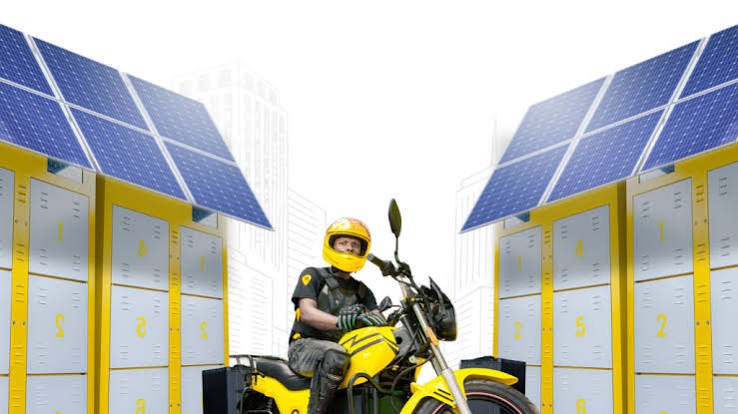
Unlike conventional vehicles that depend on petrol stations, MAX’s electric fleet uses a network of charging and battery-swapping locations. These facilities allow drivers to replace depleted batteries with charged ones instead of waiting for their vehicles to recharge.
According to Nithio, MAX’’s extended energy network currently covers 143 battery-swapping locations with 288 battery cabinets. The network is also supported by approximately 1 megawatt-peak of solar power generation capacity, which has produced more than 200,000 kilowatt-hours of clean energy.
The company says its drivers have completed more than 380,000 battery swaps, with monthly swaps approaching 77,000.
With the new financing, MAX plans to deploy more electric two-wheelers through its manufacturing partners and extend its solar-powered charging and battery-swapping infrastructure into additional markets.
MAX’s Growing Electric Mobility Business
The latest investment comes as MAX continues to expand its presence across Africa. The company currently operates in 20 cities across West and Central Africa, serving more than 60,000 commercial drivers and facilitating over one billion trips, according to figures shared by the company.
MAX also reported reaching profitability in Nigeria in January 2026, its largest market, after deploying more than $56 million in fleet financing and recovering $44 million in repayments.
For Nithio, the investment in MAX adds to its growing interest in financing electric mobility businesses across Africa. The climate fintech previously provided $7 million in debt financing to electric motorcycle company Spiro in February 2026.
Ultimately, Nithio’s investment in MAX reflects its interest in businesses combining clean transportation with financial services that help commercial operators access income-generating assets.
And as MAX expands its vehicle fleet and energy infrastructure, the company will be looking to extend its subscription model to more commercial drivers while increasing access to electric transportation across its markets.
