

Close Menu

    Stay Ahead with Exclusive Updates!

    Enter your email below and be the first to know what’s happening in the ever-evolving world of technology!

    What's Hot

    Token Efficiency: Why Aria Networks Raised $125M for AI-Native Infrastructure

    April 18, 2026

    Virtual Safeguards: China Bans Addictive “Digital Humans” for Minors

    April 18, 2026

    Grid-Responsive AI: How Nvidia Plans to Turn Data Centers Into Power Assets with Emerald AI

    April 16, 2026
    Facebook X (Twitter) Instagram
    Facebook X (Twitter)
    PhronewsPhronews
    • Home
    • Big Tech & Startups

      Token Efficiency: Why Aria Networks Raised $125M for AI-Native Infrastructure

      April 18, 2026

      Virtual Safeguards: China Bans Addictive “Digital Humans” for Minors

      April 18, 2026

      Grid-Responsive AI: How Nvidia Plans to Turn Data Centers Into Power Assets with Emerald AI

      April 16, 2026

      The Trillion-Dollar Exit: Why a SpaceX IPO Would Reshape the Space Economy

      April 15, 2026

      The Sacramento Blueprint: How California is Writing the U.S. AI Rulebook

      April 14, 2026
    • Crypto

      Quantum Computing Advances Force Coinbase and Institutional Custodians to Rethink Crypto Security

      March 8, 2026

      AI Assisted Hacking Groups Target Crypto Firms With Multi-Layered Social Engineering

      February 18, 2026

      Global Crypto Regulations Expand as 2026 Begins With New Data Collection Frameworks and National Laws

      January 16, 2026

      Coinbase Bets on Stablecoin and On-Chain Growth as Key Market Drivers in 2026 Strategy

      January 10, 2026

      Tether Faces Ongoing Transparency Questions and Reserve Scrutiny Amid Massive Bitcoin Accumulation

      January 5, 2026
    • Gadgets & Smart Tech
      Featured

      AirPods Max 2: USB-C, Live Translation, and the H2 Upgrade

      By preciousMarch 26, 2026
      Recent

      AirPods Max 2: USB-C, Live Translation, and the H2 Upgrade

      March 26, 2026

      How ABB and Nvidia are Perfecting Industrial Robotics using AI Simulation

      March 20, 2026

      Neura Robotics Reaches €4B Valuation With Tether Backing

      March 12, 2026
    • Cybersecurity & Online Safety

      Cyber Retaliation: How Iran-Linked Hackers Paralyzed Medical Giant Stryker

      April 16, 2026

      Your Company Could Be Iran’s Next Target: What U.S. Tech Firms Need to Do Right Now

      April 6, 2026

      Google Is Warning Us About The Encryption Protecting Your Data Today. It May Not Survive Quantum Computing

      April 5, 2026

      Accenture and Anthropic Team Up on AI-powered Cybersecurity

      April 4, 2026

      Your BVN, Passport, and Bank Account May Already Be on the Dark Web. What Every Nigerian Must Do Right Now After the Banking Breaches

      April 4, 2026
    PhronewsPhronews
    Home»Artificial Intelligence & The Future»Gadgets & Smart Tech»Gadget prices set to rise under Trump’s new Tariff Policy
    Gadgets & Smart Tech

    Gadget prices set to rise under Trump’s new Tariff Policy

    preciousBy preciousApril 5, 2025Updated:June 13, 2025No Comments
    Facebook Twitter Pinterest LinkedIn WhatsApp Reddit Tumblr Email
    Share
    Facebook Twitter LinkedIn Pinterest Email
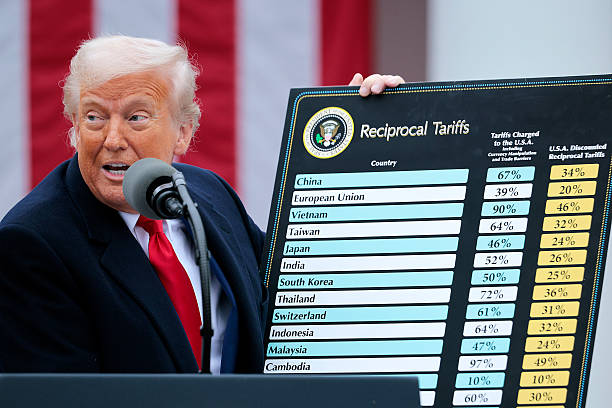
    President Trump holds up a chart while speaking during a “Make America Wealthy Again” trade announcement event in the Rose Garden at the White House. Photo by Chip Somodevilla/Getty Images.

    In the wake of President Trump’s recent tariff imposition, the tech industry has now been tasked with readying itself for a steep surge in gadget prices.

    Following the imposition of a 20% tariff on Chinese imports in February, the new announcement of a staggering 34% tariff, has culminated into a total of 54% on various products, including everyday gadgets and other electronics. This new tariff policy under the U.S. President Trump’s administration is set to severely affect a wider range of electronic devices — from smartphones and laptops to smart appliances and wearable tech such as over-the-counter hearing aids.

    In addition to the tariff placed on Chinese imports, President Trump also announced a 20% tariff imposition on the European Union, 46% on Vietnamese imports, 32% on Taiwanese imports, 25% and 24% on South Korean and Malaysian imports, respectively, as well as a 10% tariff on all other baseline trading counties, thereby declaring what he calls an economic emergency.

    These tariffs have targeted a broad range of products, particularly those originating from Chinese markets, which are essential to the functioning and availability of many gadgets in the U.S. market. These tariffs, often described as a trade war strategy by Trump, might significantly affect supply chains, manufacturing costs, and ultimately, bleed into consumer prices.

    For instance, Apple. Apple’s flagship products, including the iPhone, much of which are manufactured in China are now susceptible to tariff hikes. As such, the new tariff policy indicates that Apple could raise retail prices, transferring the burden to consumers. 

    According to a report by Reuters citing projections from Rosenblatt Securities, a high-end iPhone is estimated to cost nearly $2,300 if Apple passes the costs on to consumers as a result of the tariffs. Per the report, the cheapest iPhone 16 model could see a 43% price increase, rising from its launch price $799 to $1,142 in the U.S.

    While it is possible for Apple to shoulder some responsibilities, analysts say the most they could take on or absorb ranges between 5%-10%, which means the remaining percentage of the price hike will be passed down to its consumers. 

    On the day the tariffs were announced, Apple’s shares fell by 9.3%, marking the company’s worst performance since March 2020. The market’s reaction signified an uncertainty that surrounds future profitability and sales, as there might be an increase in production costs due to the tariffs. However, one might not see a change in the prices of Apple’s iPhone until its next release later in the year — the iPhone 17 series.

    But the impact of rising gadget prices goes beyond just the flagship products of popular and bigger tech companies. Smaller tech companies, who depend on affordable parts to remain competitive, could find themselves in a tight spot due to the increment in manufacturing costs. In turn, it could lead to a reduction in the diversity of gadgets available in the market, and hurt innovations in the long-run. 

    Startups and smaller enterprises may either have to absorb these costs, reducing profit margins, or pass them onto consumers, leading to fewer choices and higher prices. This means that the average consumer, simply looking to upgrade their smartphone or buy a new laptop, may encounter a much higher price tag than expected.

    As a result of these tariffs-inducing pressure, Apple as well as other tech companies in the U.S. would be tasked with exploring alternative manufacturing locations in the country, and investing in domestic production. They might also have to engage in diplomatic talks with the government for policy changes that could alleviate these pressures.

    The backbone of President Trump’s tariff policies lies in the attempt to reshape trade dynamics, particularly with China, who has been a dominant and competitive player in the manufacturing of cutting-edge technologies, as well as a long-time adversary to the U.S. 

    These tariff policies began as a strategic effort to reduce China’s export stake into the U.S., with President Trump calling it an unfair trade practice, and in turn, wanting to strengthen the U.S. domestic economy and prioritize the interests of Americans. In addition to this recent effort is the blacklisting of over 60 Chinese companies from exporting their product into the U.S., as Trump believes it poses a certain risk to the national security and foreign policies of the U.S. 

    While the intention behind the tariff policy may be to strengthen domestic production, the unintended consequences are likely to leave lasting effects on the tech industry, affecting prices, and production in a significant way. 

    Critics of the tariff policy argue that the burden will eventually fall on consumers who are likely to see significant increases in the prices of common gadgets. However, President Trump doesn’t see it that way — he instead sees it as a way for the U.S. to establish its trade hegemony by solidly investing in domestic production.

    alternative tech manufacturing Apple share drop Apple tariff impact Chinese imports tariffs consumer electronics prices electronics price hikes foreign trade policy gadget price surge global trade dynamics iPhone 16 price hike iPhone price increase manufacturing costs manufacturing location shifts President Trump tariffs smaller tech companies impact smartphone price increases South Korea tariffs Supply Chain Disruption Taiwan tariffs tariff effects on tech companies tariff impact on innovation tariffs and economic consequences tech company profits tech industry cost pressure tech industry tariffs tech startups challenges tech supply chain costs trade negotiations with China. trade policy trade war strategy U.S. domestic production U.S. economic emergency U.S. policy on foreign trade U.S. tariff policies U.S. tariffs on EU imports U.S. trade hegemony U.S.-China trade relations Vietnam tariffs
    Share. Facebook Twitter Pinterest LinkedIn Tumblr Telegram Email
    precious
    • LinkedIn

    I’m Precious Amusat, Phronews’ Content Writer. I conduct in-depth research and write on the latest developments in the tech industry, including trends in big tech, startups, cybersecurity, artificial intelligence and their global impacts. When I’m off the clock, you’ll find me cheering on women’s footy, curled up with a romance novel, or binge-watching crime thrillers.

    Related Posts

    AirPods Max 2: USB-C, Live Translation, and the H2 Upgrade

    March 26, 2026

    How ABB and Nvidia are Perfecting Industrial Robotics using AI Simulation

    March 20, 2026

    Neura Robotics Reaches €4B Valuation With Tether Backing

    March 12, 2026

    Comments are closed.

    Top Posts

    Coinbase responds to hack: customer impact and official statement

    May 22, 2025

    MIT Study Reveals ChatGPT Impairs Brain Activity & Thinking

    June 29, 2025

    From Ally to Adversary: What Elon Musk’s Feud with Trump Means for the EV Industry

    June 6, 2025

    Anthropic Will Use Claude User Chats For Data Training

    October 16, 2025
    Don't Miss
    Artificial Intelligence & The Future

    Token Efficiency: Why Aria Networks Raised $125M for AI-Native Infrastructure

    By preciousApril 18, 2026

    Aria Networks, a Palo Alto-based networking startup founded in January 2025, has raised $125 million…

    Virtual Safeguards: China Bans Addictive “Digital Humans” for Minors

    April 18, 2026

    Grid-Responsive AI: How Nvidia Plans to Turn Data Centers Into Power Assets with Emerald AI

    April 16, 2026

    Cyber Retaliation: How Iran-Linked Hackers Paralyzed Medical Giant Stryker

    April 16, 2026
    Stay In Touch
    • Facebook
    • Twitter
    About Us
    About Us

    Evolving from Phronesis News, Phronews brings deep insight and smart analysis to the world of technology. Stay informed, stay ahead, and navigate tech with wisdom.
    We're accepting new partnerships right now.

    Email Us: info@phronews.com

    Facebook X (Twitter) Pinterest YouTube
    Our Picks
    Most Popular

    Coinbase responds to hack: customer impact and official statement

    May 22, 2025

    MIT Study Reveals ChatGPT Impairs Brain Activity & Thinking

    June 29, 2025

    From Ally to Adversary: What Elon Musk’s Feud with Trump Means for the EV Industry

    June 6, 2025
    © 2025. Phronews.
    • Home
    • About Us
    • Get In Touch
    • Privacy Policy
    • Terms and Conditions

    Type above and press Enter to search. Press Esc to cancel.