

Close Menu

    Stay Ahead with Exclusive Updates!

    Enter your email below and be the first to know what’s happening in the ever-evolving world of technology!

    What's Hot

    Your Company Could Be Iran’s Next Target: What U.S. Tech Firms Need to Do Right Now

    April 6, 2026

    Why Mistral is Borrowing for Data Centers Instead of Raising Equity. What It Signals About the AI Funding Landscape

    April 5, 2026

    DeepSeek’s Longest Outage Might Be A Sign The Chinese Company Isn’t Ready to Compete Globally

    April 5, 2026
    Facebook X (Twitter) Instagram
    Facebook X (Twitter)
    PhronewsPhronews
    • Home
    • Big Tech & Startups

      Why Mistral is Borrowing for Data Centers Instead of Raising Equity. What It Signals About the AI Funding Landscape

      April 5, 2026

      DeepSeek’s Longest Outage Might Be A Sign The Chinese Company Isn’t Ready to Compete Globally

      April 5, 2026

      Google Is Warning Us About The Encryption Protecting Your Data Today. It May Not Survive Quantum Computing

      April 5, 2026

      Big Tech’s $635 Billion AI Spending Plan Faces an Energy Reality Check

      April 3, 2026

      Nvidia-backed Starcloud Wants Data Centers in Space as Earth’s Power Problem Worsens

      April 3, 2026
    • Crypto

      Quantum Computing Advances Force Coinbase and Institutional Custodians to Rethink Crypto Security

      March 8, 2026

      AI Assisted Hacking Groups Target Crypto Firms With Multi-Layered Social Engineering

      February 18, 2026

      Global Crypto Regulations Expand as 2026 Begins With New Data Collection Frameworks and National Laws

      January 16, 2026

      Coinbase Bets on Stablecoin and On-Chain Growth as Key Market Drivers in 2026 Strategy

      January 10, 2026

      Tether Faces Ongoing Transparency Questions and Reserve Scrutiny Amid Massive Bitcoin Accumulation

      January 5, 2026
    • Gadgets & Smart Tech
      Featured

      AirPods Max 2: USB-C, Live Translation, and the H2 Upgrade

      By preciousMarch 26, 2026
      Recent

      AirPods Max 2: USB-C, Live Translation, and the H2 Upgrade

      March 26, 2026

      How ABB and Nvidia are Perfecting Industrial Robotics using AI Simulation

      March 20, 2026

      Neura Robotics Reaches €4B Valuation With Tether Backing

      March 12, 2026
    • Cybersecurity & Online Safety

      Your Company Could Be Iran’s Next Target: What U.S. Tech Firms Need to Do Right Now

      April 6, 2026

      Google Is Warning Us About The Encryption Protecting Your Data Today. It May Not Survive Quantum Computing

      April 5, 2026

      Accenture and Anthropic Team Up on AI-powered Cybersecurity

      April 4, 2026

      Your BVN, Passport, and Bank Account May Already Be on the Dark Web. What Every Nigerian Must Do Right Now After the Banking Breaches

      April 4, 2026

      Sterling Bank. Remita. FCMB. One Hacker. Nigeria’s Financial Sector Might Be Under Coordinated Attack — Here’s Everything We Know

      April 3, 2026
    PhronewsPhronews
    Home»Cybersecurity & Online Safety»Deepfake Zoom Calls Used in Corporate Fraud Attacks: Inside the Latest AI Social Engineering Scheme
    Cybersecurity & Online Safety

    Deepfake Zoom Calls Used in Corporate Fraud Attacks: Inside the Latest AI Social Engineering Scheme

    fariehanBy fariehanFebruary 17, 2026No Comments
    Facebook Twitter Pinterest LinkedIn WhatsApp Reddit Tumblr Email
    Share
    Facebook Twitter LinkedIn Pinterest Email

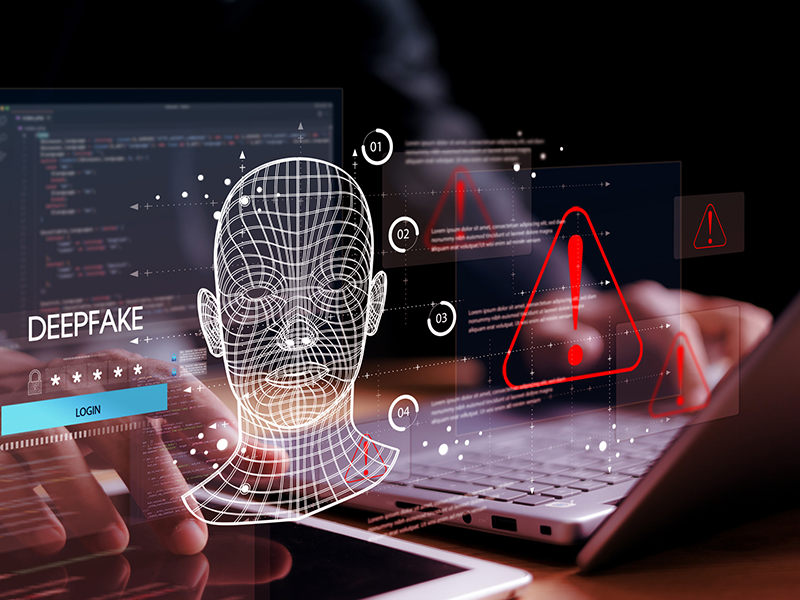
    Deepfake corporate fraud has evolved once again. Unlike traditional cyberattacks focused on phishing and faking invoices, attackers are now targeting zoom calls. 

    In several recent cases, attackers used AI-generated video and voice to impersonate executives during live meetings. The finance teams saw familiar faces and heard familiar voices so they assumed all was alright. It wasn’t until later that security teams discovered the deception. 

    How Deepfake Zoom Attacks Work

    Firstly, attackers gather materials from the internet. Public speaking videos, audio from interviews and social media clips are all a part of the tools used to create the deepfake. Then, they use generative AI tools to clone facial expressions and speech patterns. 

    Recently, there was a similar attack connected to a North Korean group. The hackers targeted a crypto company and sent a zoom link for a 30 minute call after originally contacting them via telegram. The victim was unsuspecting since they could see real executives on the screen. Then, the attackers used the pretense of having the victim fix their audio during the call to deploy several unique pieces of malware. 

    In many cases, the attacks follow a simple pattern. It usually starts with a compromised account or a deliberate act of impersonating an official. The attackers simulate a messenger call that drops constantly and blame it on the network. Then, they send a pre-generated low quality emergency video message. 

    As a result, the victim is convinced they’re legit and doesn’t question anything further. The attackers could make any type of request, from demanding credentials, confidential data or software installation. 

    Why Deepfake Fraud Succeeds

    Deepfake fraud is successful because it exploits human trust. People are quick to respond to visuals and voice before they realize something is off. 

    For example, employees feel pressured to react quickly when an executive makes a request especially during a live call. This urgency completely kills doubt. At the same time, a lot of companies still rely on email confirmations to approve transactions and if attackers have access to these channels, they can further reinforce the illusion. 

    Moreover, some attacks now feature multiple AI-generated participants in one meeting. In 2025, there was a case in Singapore where attackers used deepfake to impersonate a company’s executives and secured a huge transfer. However, due to cross-border cooperation between Singapore and Hong Kong, the money was eventually recovered. 

    Consequently, the risks these deepfakes pose goes beyond the employees, it affects the entire approval chain. 

    The Future of Corporate Security

    Right now, videos no longer suffice as a form of identity verification. Corporations need to redesign verification processes. 

    Security teams increasingly recommend multi-step verification processes. For instance, finance teams should require confirmation through a secure internal system or verified phone number that attackers don’t have access to. 

    At the same time, organizations must update their employee training. Staff need to treat urgent video meetings with the same scepticism as suspicious emails. In addition, layered authentication and behaviour monitoring can reduce exposure. 

    Deepfake attacks will continue to evolve. However, companies need to strengthen their security systems and identity verification to make these attacks harder to execute. 

    AI corporate fraud ai security risks AI social engineering scams AI voice cloning AI-phishing evolution Artificial Intelligence corporate cyber risk corporate security strategy cybersecurity Cybersecurity awareness training cybersecurity treats 2026 deepfake deepfake scam Deepfake xoom calls executive impersonation scam financial transfer fraud multi-factor verification synthetic media fraud What is AI social engineering Zoom fraud attacks
    Share. Facebook Twitter Pinterest LinkedIn Tumblr Telegram Email
    fariehan

    Related Posts

    Your Company Could Be Iran’s Next Target: What U.S. Tech Firms Need to Do Right Now

    April 6, 2026

    Why Mistral is Borrowing for Data Centers Instead of Raising Equity. What It Signals About the AI Funding Landscape

    April 5, 2026

    DeepSeek’s Longest Outage Might Be A Sign The Chinese Company Isn’t Ready to Compete Globally

    April 5, 2026

    Comments are closed.

    Top Posts

    Coinbase responds to hack: customer impact and official statement

    May 22, 2025

    MIT Study Reveals ChatGPT Impairs Brain Activity & Thinking

    June 29, 2025

    From Ally to Adversary: What Elon Musk’s Feud with Trump Means for the EV Industry

    June 6, 2025

    Coinbase Hack 2025: Everything we know so far.

    May 21, 2025
    Don't Miss
    Cybersecurity & Online Safety

    Your Company Could Be Iran’s Next Target: What U.S. Tech Firms Need to Do Right Now

    By preciousApril 6, 2026

    Iran’s Islamic Revolutionary Guard Corps (IRGC) has placed 18 major U.S. technology companies on a…

    Why Mistral is Borrowing for Data Centers Instead of Raising Equity. What It Signals About the AI Funding Landscape

    April 5, 2026

    DeepSeek’s Longest Outage Might Be A Sign The Chinese Company Isn’t Ready to Compete Globally

    April 5, 2026

    Google Is Warning Us About The Encryption Protecting Your Data Today. It May Not Survive Quantum Computing

    April 5, 2026
    Stay In Touch
    • Facebook
    • Twitter
    About Us
    About Us

    Evolving from Phronesis News, Phronews brings deep insight and smart analysis to the world of technology. Stay informed, stay ahead, and navigate tech with wisdom.
    We're accepting new partnerships right now.

    Email Us: info@phronews.com

    Facebook X (Twitter) Pinterest YouTube
    Our Picks
    Most Popular

    Coinbase responds to hack: customer impact and official statement

    May 22, 2025

    MIT Study Reveals ChatGPT Impairs Brain Activity & Thinking

    June 29, 2025

    From Ally to Adversary: What Elon Musk’s Feud with Trump Means for the EV Industry

    June 6, 2025
    © 2025. Phronews.
    • Home
    • About Us
    • Get In Touch
    • Privacy Policy
    • Terms and Conditions

    Type above and press Enter to search. Press Esc to cancel.