


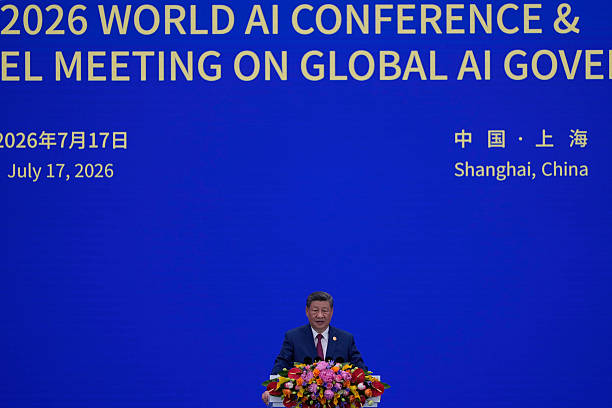
China has taken one of its biggest steps yet to shape how artificial intelligence (AI) is governed around the world.
On July 16, representatives from 29 countries signed an agreement in Shanghai to establish the World Artificial Intelligence Cooperation Organization (WAICO). The new intergovernmental body will be headquartered in Shanghai and is designed to promote international cooperation and global governance for AI.
More importantly, United Nations Secretary-General António Guterres attended the signing ceremony, giving the launch added international visibility.
The move comes as governments around the world continue to debate how AI should be regulated. While countries in Europe, the United States, and other regions have spent years discussing frameworks, standards, and safety rules, China is now creating a permanent international institution focused on AI governance.
A New Global AI Organization
Chinese Foreign Minister Wang Yi signed the agreement on behalf of China alongside representatives from the 29 founding member countries, which include Russia, Kazakhstan, Pakistan, Indonesia, Brazil, Venezuela, Ethiopia and Cameroon.
According to the agreement, WAICO is an independent international organization that follows the principles of the UN Charter and aims to promote AI that is beneficial, safe, and fair.
The organization will focus on strengthening cooperation among member countries while supporting the development of global AI governance. It also aims to improve coordination on AI strategies, governance rules, and technical standards as countries continue to integrate AI into their economies.
China is Expanding its Role in AI Governance
The announcement came during the World Artificial Intelligence Conference in Shanghai, where Chinese President Xi Jinping called for broader international cooperation on AI. He argued that AI should not become an exclusive technology controlled by only a few countries and said more developing nations should have access to its benefits.
China also announced several related initiatives during the conference. These include offering 5,000 AI training opportunities for developing countries over the next five years and expanding AI cooperation with organizations such as the African Union, ASEAN, BRICS, and Latin American partners.
Together, these efforts show that China is trying to position itself as a leading partner for countries seeking AI technology, infrastructure, and governance support.
Why This Matters
Global AI governance has become increasingly important as powerful AI models spread across industries. Governments are trying to address issues such as safety, transparency, cybersecurity, copyright, and the responsible use of advanced AI systems.
Where many Western initiatives have focused on voluntary commitments, safety summits, and national regulations, China’s latest move adds another international institution to that, one built around a broad coalition of developing countries and headquartered in Asia.
Whether WAICO becomes a major global standard-setting body will depend on what it produces over the coming years. Its long-term influence will likely be measured by the governance frameworks, technical standards, and international cooperation programs it develops rather than the agreement that created it.
But for now, the launch signals that the global conversation about AI governance is increasingly being shaped by countries deciding to come together rather than doing it alone.
