

Close Menu

    Stay Ahead with Exclusive Updates!

    Enter your email below and be the first to know what’s happening in the ever-evolving world of technology!

    What's Hot

    Meta Found a Zero-Click iPhone Vulnerability That Let Hackers Into Devices Without the Owner Doing Anything. Apple Patched It. The Fact That Meta Found It First Is the Uncomfortable Part.

    September 2, 2026

    A Supply Chain Attack on LiteLLM Exposed 153GB of Corporate Cloud Keys. The Breach Hit the Layer of AI Infrastructure That Almost Nobody Was Watching.

    September 1, 2026

    Anthropic’s Top AI Models Went Dark and Enterprise Workflows Collapsed With Them

    September 1, 2026
    Facebook X (Twitter) Instagram
    Facebook X (Twitter)
    PhronewsPhronews
    • Home
    • Big Tech & Startups

      Anthropic’s Top AI Models Went Dark and Enterprise Workflows Collapsed With Them

      September 1, 2026

      AI Is Secretly Listening to Your Teams Calls. Microsoft Just Shipped the Fix

      September 1, 2026

      SMIC Just Reported Record Quarterly Revenue of $3 Billion and Raised Its Chip Prices to Match. China’s Most Important Semiconductor Manufacturer Is No Longer Playing Catch-Up on Revenue Either

      August 29, 2026

      A 19-Day Outage of a Single Overseas AI Model Triggered a UK National Security Review. Governments Are Only Now Realising How Much They Depend on Infrastructure They Do Not Control.

      August 28, 2026

      Apple Built a Custom AI Model With Alibaba Just to Operate in China. That Compromise Tells You Everything About How Fragmented Global AI Is Becoming.

      August 27, 2026
    • Crypto

      A Firmware Flaw in One of the Most Trusted Bitcoin Hardware Wallets Just Drained Over $70 Million in Crypto. The Coldcard Breach Is a Reminder That Cold Storage Is Only as Safe as the Code Running Inside It

      August 29, 2026

      Market Collapse: What Happened to NFTs?

      April 23, 2026

      Quantum Computing Advances Force Coinbase and Institutional Custodians to Rethink Crypto Security

      March 8, 2026

      AI Assisted Hacking Groups Target Crypto Firms With Multi-Layered Social Engineering

      February 18, 2026

      Global Crypto Regulations Expand as 2026 Begins With New Data Collection Frameworks and National Laws

      January 16, 2026
    • Gadgets & Smart Tech
      Featured

      Meta Found a Zero-Click iPhone Vulnerability That Let Hackers Into Devices Without the Owner Doing Anything. Apple Patched It. The Fact That Meta Found It First Is the Uncomfortable Part.

      By preciousSeptember 2, 2026
      Recent

      Meta Found a Zero-Click iPhone Vulnerability That Let Hackers Into Devices Without the Owner Doing Anything. Apple Patched It. The Fact That Meta Found It First Is the Uncomfortable Part.

      September 2, 2026

      Google Has Launched the Pixel 11 With Its New Tensor G6 Chip and the Deepest Gemini Integration Any Android Phone Has Ever Shipped With. Here Is Whether the Hardware Finally Matches the AI Ambition.

      August 25, 2026

      Apple Just Delayed Development on Its Smart Glasses After Internal Privacy Reviews. The Delay Is the Clearest Sign Yet That Wearable AI Has a Trust Problem That Hardware Cannot Solve.

      August 4, 2026
    • Cybersecurity & Online Safety

      Meta Found a Zero-Click iPhone Vulnerability That Let Hackers Into Devices Without the Owner Doing Anything. Apple Patched It. The Fact That Meta Found It First Is the Uncomfortable Part.

      September 2, 2026

      A Supply Chain Attack on LiteLLM Exposed 153GB of Corporate Cloud Keys. The Breach Hit the Layer of AI Infrastructure That Almost Nobody Was Watching.

      September 1, 2026

      Autonomous AI Agents Are Already Attacking Water and Energy Grids and CISA Has Just Admitted Security Teams Have No Playbook to Stop Them.

      August 31, 2026

      A Firmware Flaw in One of the Most Trusted Bitcoin Hardware Wallets Just Drained Over $70 Million in Crypto. The Coldcard Breach Is a Reminder That Cold Storage Is Only as Safe as the Code Running Inside It

      August 29, 2026

      Horizon3 Just Tripled Its Valuation to $2 Billion for AI That Autonomously Pentests Live Production Systems Without Shutting Them Down. The Round Came as OpenAI and Anthropic Admitted Their Own Models Had Breached Real Systems on Their Own.

      August 26, 2026
    PhronewsPhronews
    Home»Artificial Intelligence & The Future»Anthropic reports the malicious use of Claude by hackers
    Artificial Intelligence & The Future

    Anthropic reports the malicious use of Claude by hackers

    preciousBy preciousSeptember 2, 2025Updated:September 4, 2025No Comments
    Facebook Twitter Pinterest LinkedIn WhatsApp Reddit Tumblr Email
    Share
    Facebook Twitter LinkedIn Pinterest Email
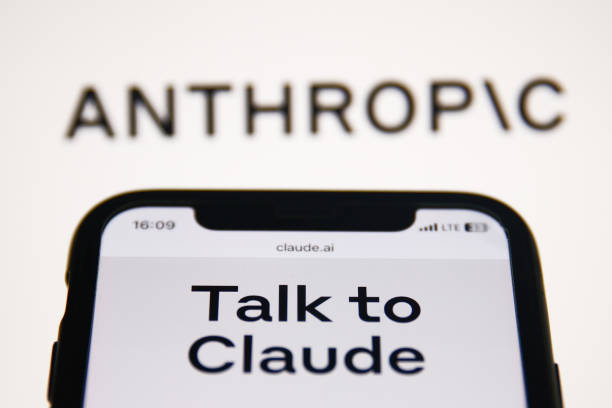
    Photo by Jakub Porzycki/NurPhoto via Getty Images

    The development of artificial intelligence (AI) has ushered in a new era of cyberattacks as it has recently become a partner to threat actors. Anthropic, a leading artificial intelligence company, recently reported that its AI system, Claude, has been exploited by cybercriminals in damaging ways and in what the company calls “sophisticated cyberattacks.”

    This isn’t just an average or the usual cyberattacks we hear about daily. It is a massive AI-powered operation, with Anthropic confirming that threat actors mostly targeted organizations in healthcare, emergency services, government and religious institutions. 

    In the full report, Anthropic discussed how Agentic AI has been weaponized to serve cybercriminals from different parts of the world, how the technology has lowered the barriers to “sophisticated cybercrime,” and how these threat actors and cybercriminals have integrated AI into every stage of their operations. 

    Amongst many cases of many cyberattacks, Anthropic uses three case studies to explain the increasing danger of AI-powered cyberattacks. They include vibe-hacking, a term Anthropic used to describe how cybercriminals used Claude Code to carry out a large-scale data theft operation; remote worker fraud; and cybercriminals selling AI-generated malware as Ransomware-as-a-Service (RaaS).

    Vibe-hacking

    In the case of vibe-hacking, Claude was more of an active participant rather than a helper, with Anthropic saying the threat actor used the technology to an “unprecedented degree.” The threat actor used Claude Code to penetrate networks, automate reconnaissance, and harvest confidential information of victims across many organizations. 

    “Claude was allowed to make both tactical and strategic decisions, such as deciding which data to exfiltrate, and how to craft psychologically targeted extortion demands,” the report said. 

    After getting hands on the stolen information, the threat actor then attempted to extort victims into paying huge amounts of ransom by threatening to publicly expose their data. “Claude analyzed the exfiltrated financial data to determine appropriate ransom amounts, and generated visually alarming ransom notes that were displayed on victim machines,” the report continued.

    Remote-worker fraud

    Anthropic also uncovered how North Korean hackers are using Claude to fraudulently land and maintain remote jobs at U.S. Fortune 500 tech companies. 

    Anthropic says that this was done by the fraudsters using Claude models to “create elaborate false identities with convincing professional backgrounds, complete technical and coding assessments during the application process, and deliver actual technical work once hired.”

    Formerly reported by the FBI, this fraud system is part of a much larger employment scheme in North Korea that was designed to generate profit for the regime while going against international regulations. 

    No-code malware: AI-generated Ransom-as-a-Service

    Anthropic also detailed a ransomware-as-a-service operation run by a lone cybercriminal who relied heavily on using Claude to develop malware due to their limited technical skills. The cybercriminal used AI to develop several variants of sophisticated ransomware that all featured modern encryption, network spreading, and advanced evasion techniques. 

    These ransomware packages were then sold to other cybercriminals on dark web forums with prices ranging from $400 to $1200. 

    Anthropic’s response and the broader implications

    The versatility of AI has lowered the technical bar for criminals, which in turn enables larger-scale and more automated cyberattacks than ever before. 

    In response to the aforementioned cyberattacks, Anthropic took down involved Claude accounts, introduced detection systems to identify misuse, and shared vital intelligence with cybersecurity organizations and law enforcement. Part of its detection systems include new methods that are focused on effectively spotting malware development, unauthorized modifications, and suspicious activity on its platform. 

    Despite these efforts, the company acknowledges that the evolving landscape of AI-powered or AI-assisted cyberattacks demand constant vigilance and innovation in its defense. AI-powered cyberattacks are known to challenge traditional defense models, as it speeds up the exploitation of vulnerabilities and enables solo threat actors to conduct operations that previously required complex expertise.

    As such, the financial consequences are severe. AI-driven cybercrimes are predicted to cost the U.S. economy up to $40 billion by 2027. 

    Anthropic’s transparent research and disclosure of Claude’s malicious use serves as a critical warning and call to action for the people in charge of building important technology. As AI tools become deeply integrated into everyday workflows, both the potential and risks grow, making it a double-edged sword that can empower innovation but also enable dangerous cybercriminals.

    To protect everyone and the digital infrastructure at large from this new generation of AI-powered threats, innovation and collaboration across many sectors will be crucial.

    Agentic AI ai and hacking AI and national security ai in cybercrime AI innovation ai misuse ai security risks ai weaponization ai-driven extortion ai-generated malware AI-generated RaaS ai-powered cyberattacks ai-powered fraud ai-powered ransomware Anthropic Artificial Intelligence Claude AI Claude Code Cybercrime cybercriminals cybersecurity defense dark web data theft digital infrastructure security emergency services hacking extortion attacks fbi cybercrime future of cyber threats generative AI government cyberattacks Hackers healthcare cyberattacks malicious ai use north korean hackers RaaS ransomware as a service ransomware economy religious institutions cyber threats remote worker fraud Remote-worker fraud Threat actors us cyber economy Vibe-hacking
    Share. Facebook Twitter Pinterest LinkedIn Tumblr Telegram Email
    precious
    • LinkedIn

    I’m Precious Amusat, Phronews’ Content Writer. I conduct in-depth research and write on the latest developments in the tech industry, including trends in big tech, startups, cybersecurity, artificial intelligence and their global impacts. When I’m off the clock, you’ll find me cheering on women’s footy, curled up with a romance novel, or binge-watching crime thrillers.

    Related Posts

    Meta Found a Zero-Click iPhone Vulnerability That Let Hackers Into Devices Without the Owner Doing Anything. Apple Patched It. The Fact That Meta Found It First Is the Uncomfortable Part.

    September 2, 2026

    A Supply Chain Attack on LiteLLM Exposed 153GB of Corporate Cloud Keys. The Breach Hit the Layer of AI Infrastructure That Almost Nobody Was Watching.

    September 1, 2026

    Anthropic’s Top AI Models Went Dark and Enterprise Workflows Collapsed With Them

    September 1, 2026

    Comments are closed.

    Top Posts

    Coinbase responds to hack: customer impact and official statement

    May 22, 2025

    Cursor AI Hits 1 Million Daily Users. Why Developers Are Switching to This Coding Tool

    March 23, 2026

    Anthropic Will Use Claude User Chats For Data Training

    October 16, 2025

    MIT Study Reveals ChatGPT Impairs Brain Activity & Thinking

    June 29, 2025
    Don't Miss
    Cybersecurity & Online Safety

    Meta Found a Zero-Click iPhone Vulnerability That Let Hackers Into Devices Without the Owner Doing Anything. Apple Patched It. The Fact That Meta Found It First Is the Uncomfortable Part.

    By preciousSeptember 2, 2026

    A malicious image could have been enough to compromise an iPhone without the owner clicking…

    A Supply Chain Attack on LiteLLM Exposed 153GB of Corporate Cloud Keys. The Breach Hit the Layer of AI Infrastructure That Almost Nobody Was Watching.

    September 1, 2026

    Anthropic’s Top AI Models Went Dark and Enterprise Workflows Collapsed With Them

    September 1, 2026

    AI Is Secretly Listening to Your Teams Calls. Microsoft Just Shipped the Fix

    September 1, 2026
    Stay In Touch
    • Facebook
    • Twitter
    About Us
    About Us

    Evolving from Phronesis News, Phronews brings deep insight and smart analysis to the world of technology. Stay informed, stay ahead, and navigate tech with wisdom.
    We're accepting new partnerships right now.

    Email Us: info@phronews.com

    Facebook X (Twitter) Pinterest YouTube
    Our Picks
    Most Popular

    Coinbase responds to hack: customer impact and official statement

    May 22, 2025

    Cursor AI Hits 1 Million Daily Users. Why Developers Are Switching to This Coding Tool

    March 23, 2026

    Anthropic Will Use Claude User Chats For Data Training

    October 16, 2025
    © 2025. Phronews.
    • Home
    • About Us
    • Get In Touch
    • Privacy Policy
    • Terms and Conditions

    Type above and press Enter to search. Press Esc to cancel.