


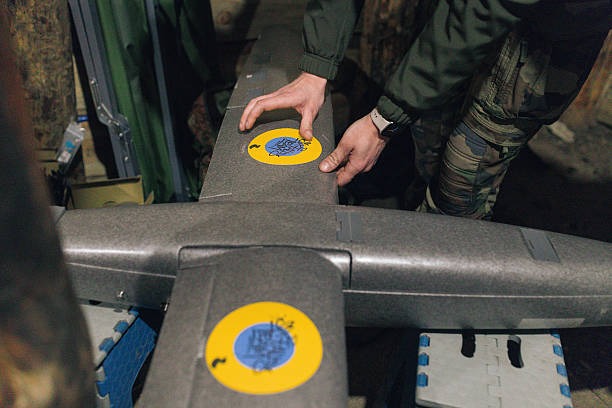
A drone losing contact with its operator used to mean the mission was probably over. But in Ukraine, that is no longer the case.
Ukrainian forces are now deploying drones that can identify and track a selected target using onboard cameras, allowing them to continue their final approach even after electronic warfare disrupts the connection to their operators. The technology is giving Ukraine a way to keep drones effective in one of the world’s most heavily jammed battlefields.
AI Is Taking Over the Hardest Part
Traditional FPV drones depend heavily on a live connection between the pilot and the aircraft. And Russian electronic warfare systems can interfere with that connection, as well as GPS and other navigation signals, making it difficult for operators to control drones as they approach their targets.
But AI-guided systems approach the problem differently. Once a human operator identifies a target and gives the command to engage, onboard software can recognise the target through the drone’s camera and adjust its flight path without requiring continuous input from the pilot.
Ukraine’s Ministry of Defence says one system developed through the Brave1 defence innovation cluster has automated about 95% of the interception process. The operator selects the target, authorises the engagement, and the system then guides the interceptor, identifies the incoming aircraft and tracks it through the final engagement. The technology has already undergone combat testing in the Kharkiv region.
Some Drones Can Keep Going After the Link Breaks
The same principle is appearing in strike drones.
Ukrainian developers have introduced systems that use computer vision to maintain a lock on a target after the communication link is disrupted, with recent reports identifying systems that include the Hornet and LITAVR among the platforms using different levels of automation.
LITAVR, developed by Ukrainian company F-Drones, uses an automatic terminal guidance system called Last Mile or Pixel Lock. During the final stage of flight, the system identifies the target and guides the drone toward it automatically, while the operator retains control over speed and can remain involved in the engagement. The drone also has navigation technology that does not depend on GPS.
This distinction matters because Ukraine’s battlefield is also a live test of electronic warfare. GPS signals can be jammed or spoofed, while radio links between drones and operators can be disrupted. AI-based guidance gives some drones another way to navigate and complete the mission.
Ukraine Is Compressing the Development Cycle
The battlefield is also accelerating how quickly these technologies move from development to deployment.
The Fourth Law, a Ukrainian defence technology company, has developed AI autonomy systems for FPV drones, while other companies are working on autonomous interceptors, computer vision and GPS-independent navigation. Some of these technologies have moved from prototypes to battlefield use within months rather than years.
Ukraine’s defence ministry says drones accounted for more than 90% of enemy targets hit by Ukrainian forces during the first part of 2026, showing how central unmanned systems have become to the war.
The result is a battlefield where AI systems are being tested against real jamming, moving targets and rapidly changing tactics. For the technology industry, Ukraine is providing something laboratories cannot easily reproduce. And developers are getting immediate feedback on whether autonomous systems can actually work when communications fail and conditions change.
The technology is still developing, and human control remains part of several of the systems already reported in combat. But Ukraine’s direction is clear, as the country is moving more of the drone’s decision-making and flight control onto the aircraft itself, reducing how much the operator needs to do in real time.
This could make autonomous systems a much larger part of warfare long after the current conflict ends.
