


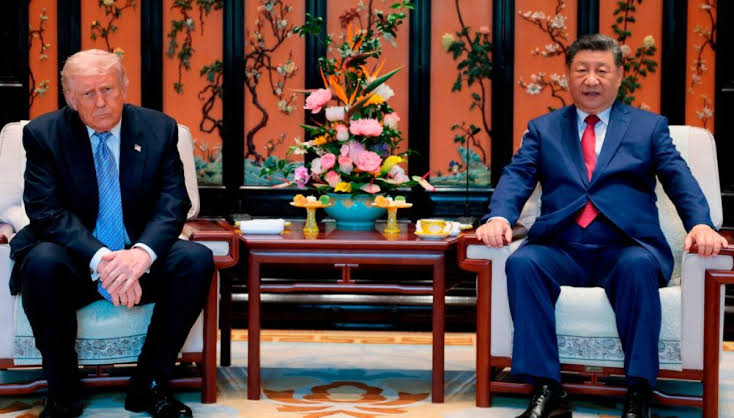
The US-China AI talks will begin in September under the Trump administration. This marks the first formal artificial intelligence dialogue between both governments since President Donald Trump returned to office.
Although the officials have not published an agenda, both countries have agreed to meet.
Why is this happening?
Artificial intelligence has become a defining issue in relations between Washington and Beijing. Hence, both governments view advanced AI as a strategic resource with economic, technological, and national security importance. Consequently, disagreements now extend beyond trade into semiconductor access, computing power, cybersecurity, and military development.
At the same time, recent diplomatic engagement opened the door for direct discussions. Officials agreed to hold formal AI talks before President Trump and Chinese President Xi Jinping meet later in September. Therefore, the dialogue represents an effort to maintain communication despite continuing rivalry.
Even without a public agenda, both governments recognize that direct discussions can reduce misunderstandings while preserving opportunities for future cooperation.
What are frontier AI models?
Frontier AI models are the world’s most advanced artificial intelligence systems. Unlike traditional chatbots, they solve complex problems, write software, analyze scientific information, and perform sophisticated reasoning across many subjects.
As developers improve their capabilities, governments increasingly classify frontier models as strategic assets. Stronger systems promise scientific discoveries, business innovation, and higher productivity.
However, they also raise concerns about security, misuse, and international competition because powerful models could influence military planning, cyber operations, and critical infrastructure.
What will the two countries discuss?
Officials have not released detailed discussion topics. However, reporting suggests several important issues will shape the meeting.
First, military AI will likely receive significant attention. Both governments continue exploring artificial intelligence for planning, intelligence analysis, logistics, and operational support. Therefore, officials may discuss safeguards and the importance of maintaining meaningful human oversight.
Next, cybersecurity remains another priority. Artificial intelligence strengthens digital defenses, yet attackers also exploit advanced tools to launch increasingly sophisticated cyberattacks. Both governments therefore share an interest in reducing risks from malicious AI use.
In addition, negotiators will likely examine access to advanced AI models, export controls on high-performance chips, and restrictions affecting computing infrastructure. Also, intellectual property protection and unauthorized model copying could appear during discussions because both sides want to protect valuable AI technology.
Finally, officials may exchange views on AI safety, including testing practices, transparency, and approaches for reducing risks from increasingly capable systems.
Why does it matter?
At the moment, the outcome could influence governments, technology companies, businesses, and consumers worldwide. AI developers closely monitor policy because export restrictions and access rules affect research, investment, and international partnerships. Businesses also need greater certainty before expanding AI services across global markets.
Meanwhile, governments continue developing AI regulations. Even limited progress could encourage future cooperation, reduce uncertainty, and improve communication between the world’s two leading AI powers. Everyday users may also benefit if stable policies support safer and more reliable AI services.
What’s next?
Attention will now shift toward developments before September. Observers will watch for delegate confirmations, policy announcements, and any indication of planned discussion topics.
After the meeting, attention will focus on possible follow-up talks, working groups, or shared principles. Even without major agreements, regular communication could shape future AI governance and help prevent unnecessary tensions between Washington and Beijing.
