


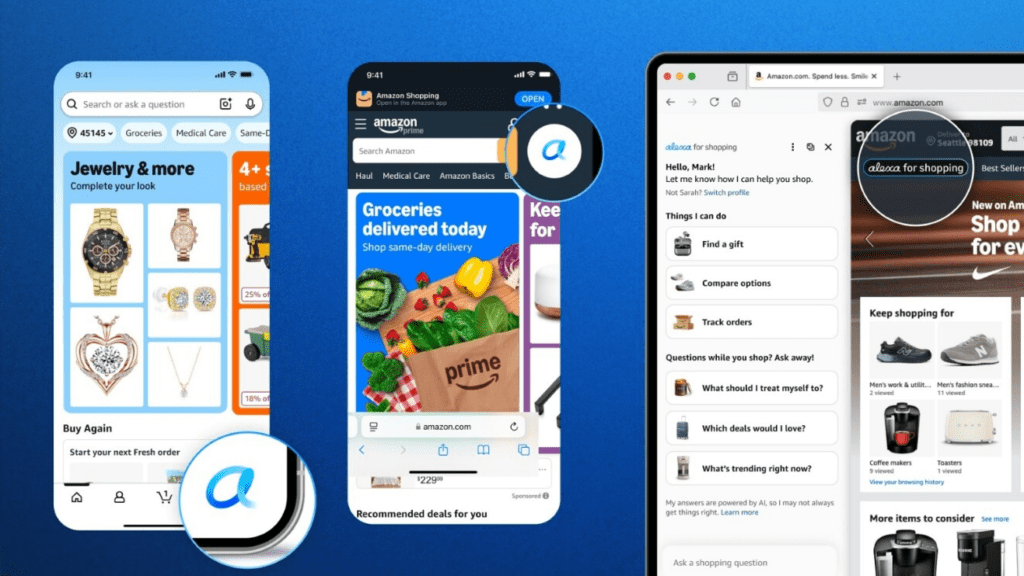
The introduction of an AI shopping agent marks Amazon’s biggest step toward autonomous online shopping. Instead of browsing products yourself, the tool can search websites, compare options, and place orders on your behalf.
Amazon designed the feature to reduce shopping effort while keeping users inside its ecosystem. However, convenience also requires trust. Before enabling the feature, you should understand how it works, what information it uses, and the responsibilities you still carry.
How the AI Shopping Agent Actually Works
Amazon’s AI shopping agent does more than recommend products. It can visit selected third-party retail websites when Amazon does not offer a requested item. The agent searches available products, compares options, fills purchase forms, and submits orders after receiving user authorization.
In addition, Amazon also encrypts payment credentials and shipping information before transmitting them to participating retailers. Consequently, shoppers avoid entering personal details repeatedly across multiple websites.
At the same time, Amazon keeps the experience connected to its shopping platform, even when purchases happen elsewhere. The feature also supports Amazon’s wider push toward agentic AI across its consumer services.
What Data You Are Handing Over Behind the Scenes
Every autonomous purchase requires personal information. Therefore, Amazon’s AI shopping agent needs payment details, shipping addresses, product preferences, and purchase instructions to complete transactions successfully.
Amazon says encrypted payment information protects sensitive financial data during purchases. However, participating retailers still receive the information needed to process orders and arrange deliveries. Their own privacy policies continue to govern any information they collect while fulfilling purchases.
In addition, Amazon can use shopping interactions to improve recommendations and refine future AI experiences. Therefore, shoppers should understand both Amazon’s practices and each retailer’s privacy terms before enabling autonomous shopping.
The Hidden Trade-Offs of the AI Shopping Agent
However, convenience does not eliminate every risk. Although AI agents perform repetitive tasks quickly, they still rely on accurate product listings and clear instructions.
For example, vague prompts may produce unwanted product variations. Prices may also change before checkout completes. Also, outdated inventory or incorrect product descriptions can affect purchasing decisions on third-party websites.
Security also deserves attention. Amazon protects payment information through encryption. Nevertheless, users should check every completed order carefully. Regular monitoring helps identify unexpected purchases or ordering mistakes before problems become costly.
Why Amazon Wants You to Trust Autonomous Shopping
Currently, Amazon views autonomous shopping as part of its long-term AI strategy. Instead of serving only as an online marketplace, the company wants AI assistants to complete entire shopping journeys with minimal customer effort.
Competition also shapes Amazon’s approach. OpenAI, Google, and other technology companies continue developing AI agents capable of performing increasingly complex online tasks. Therefore, Amazon wants its ecosystem to remain central as AI transforms digital commerce.
If adoption grows, shoppers may spend less time comparing products manually. Instead, AI agents could handle routine purchasing while people focus on final decisions.
Should You Let an AI Spend Your Money?
The answer depends on your buying habits and comfort level. Routine household purchases may benefit from automation because buying decisions rarely change. Expensive electronics, luxury goods, and specialized equipment still deserve direct human review.
Before enabling autonomous shopping, review Amazon’s permissions carefully. Confirm what information the agent can access. Read participating retailers’ privacy policies before placing orders. Finally, monitor every completed purchase instead of assuming the AI always makes the best choice.
Ultimately, Amazon’s AI shopping agent offers genuine convenience and saves valuable time. Even so, every automated purchase involves informed consent. Understanding the agreement behind the technology helps you decide when automation deserves your confidence.
