


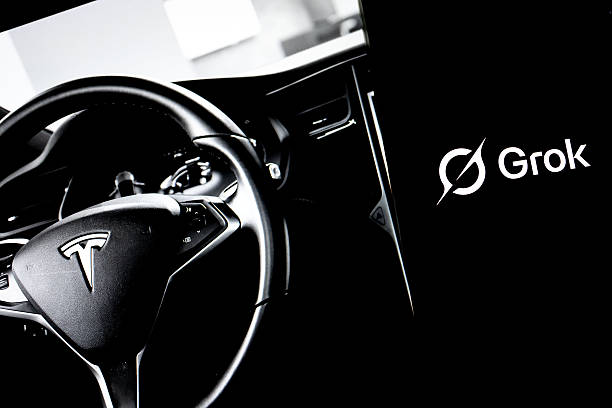
Before developers, businesses, and the wider AI community could try xAI’s Grok 4.5, the model had already spent ten days inside two of Elon Musk’s biggest companies – SpaceX and Tesla.
These companies became the first testing grounds for xAI’s newest model, giving employees early access while the rest of the industry waited. This decision was more than a product test, as it showed a pattern of how Musk is increasingly treating his companies as one connected ecosystem where AI models are developed, tested, refined, and deployed before reaching the public.
SpaceX and Tesla Became Grok 4.5’s First Users
On June 28, Musk announced that Grok 4.5 had entered private beta at SpaceX and Tesla. According to him, the model was built on xAI’s 1.5 trillion parameter V9 foundation model and received additional training using data from Cursor, the AI coding startup that xAI is acquiring.
Musk said early internal evaluations showed Grok 4.5 performing close to, and in some cases above, Anthropic’s Opus model. He also noted that reinforcement learning was still improving the system while its coding tools were being refined every day. Those performance claims came from xAI and were not independently verified before the public launch.
The model remained exclusive to employees at SpaceX and Tesla for roughly ten days before becoming available to customers on July 8.
Internal Testing Shaped the Public Launch
When Grok 4.5 was released, Musk said on X the decision followed “strong positive feedback” from customers in the beta testing program.
xAI introduced the model as a system designed for coding, research, writing, engineering work, and other knowledge tasks. The company also highlighted lower operating costs, saying the model delivers higher token efficiency than many competing systems.
Pricing reflected this strategy. xAI set Grok 4.5 at $2 per million input tokens and $6 per million output tokens, making it cheaper than several leading frontier models while positioning it as a high performance alternative.
A Growing AI Strategy Across Musk’s Companies
The early deployment inside SpaceX and Tesla fits a broader pattern across Musk’s businesses. Instead of treating xAI as a separate AI lab, he appears to be using his industrial companies as large scale testing environments where engineers can identify problems before products reach external users.
This approach has continued even after Grok 4.5 became public. Reports show Musk has encouraged Tesla employees to move to Grok where practical because of its lower operating costs, while also telling staff they should continue using other AI models whenever those perform better for a specific task.
At the same time, Musk has shifted more engineering talent toward AI. He recently said top engineers from SpaceX’s Starlink and Starship programs are contributing to Grok’s development alongside engineers from Cursor as xAI works toward reportedly releasing new foundation models every month through the end of 2026.
What It Says About Musk’s AI Playbook
The ten day headstart for SpaceX and Tesla employees revealed more than a testing schedule. It highlighted a development model where AI is first proven inside companies that already build rockets, electric vehicles, satellites, and advanced software before being offered to the wider market.
As competition among OpenAI, Anthropic, Google, and xAI accelerates and intensifies, Musk appears to be relying on one advantage that few rivals can easily match – that he can test frontier AI models across multiple large operating companies before anyone outside his ecosystem gets access.
