


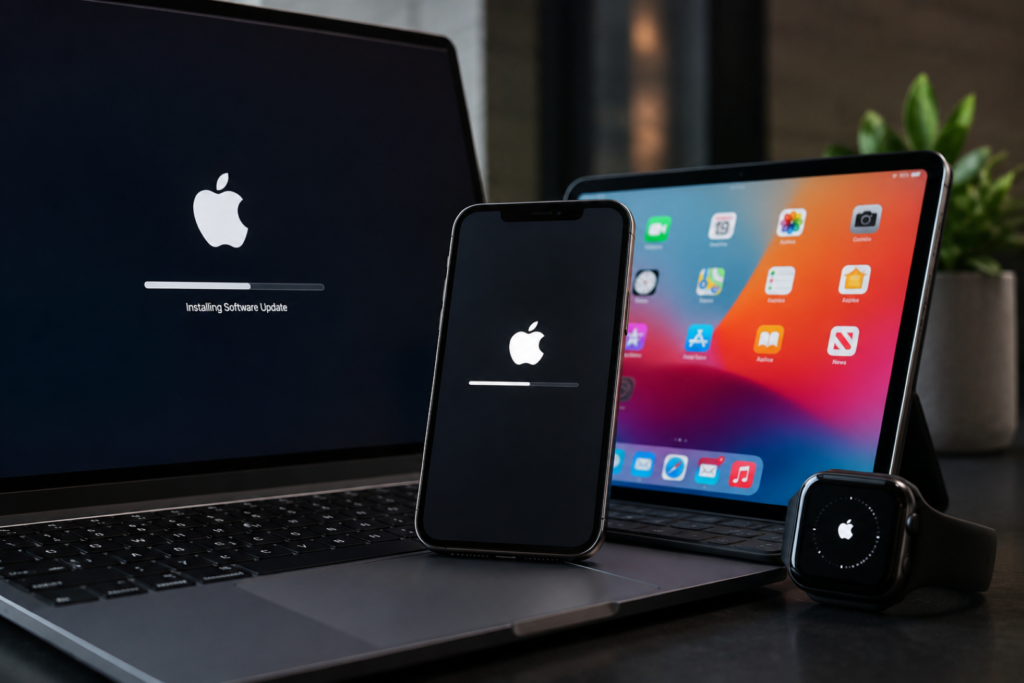
Apple has issued an unscheduled “Apple security update” in response to the growing pace of AI-powered cyber threats. Instead of waiting for its regular software release, the company pushed critical fixes as soon as they became ready.
The decision reflects a broader shift across the technology industry. As artificial intelligence helps attackers identify vulnerabilities more quickly, software vendors must now respond with equal speed.
Why the Apple Security Update Couldn’t Wait
Apple normally delivers security fixes through scheduled updates for iOS, macOS, iPadOS, watchOS, and other platforms. However, the company decided immediate protection mattered more than following its usual release timetable.
According to Apple, advances in artificial intelligence have changed how software vulnerabilities are discovered. AI tools can analyze vast amounts of code in a fraction of the time traditional methods require. Consequently, security researchers identify weaknesses sooner. Unfortunately, attackers can also use similar technology to accelerate their own investigations.
As a result, the gap between discovering a vulnerability and attempting to exploit it continues shrinking. Apple responded by releasing important security fixes as soon as they became ready. The company believes quicker updates reduce opportunities for attackers to target unpatched devices.
How AI Is Making Cyberattacks Faster Than Ever
Currently, artificial intelligence has become a powerful tool across modern cybersecurity. Security teams use it to detect suspicious activity, investigate incidents, and improve threat detection. Meanwhile, cybercriminals increasingly rely on similar capabilities to automate reconnaissance and identify potential targets.
Therefore, attackers can complete tasks that once required days in far less time. Faster vulnerability analysis also speeds exploit development. Because of this, software vendors face greater pressure to shorten their response times.
Furthermore, cybersecurity experts have repeatedly urged technology companies to release critical patches more quickly. Apple’s response reflects that wider industry shift. Instead of relying only on predictable release schedules, vendors increasingly distribute important fixes whenever serious risks emerge.
What the Apple Security Update Fixes
The emergency release closes multiple security vulnerabilities across Apple’s software ecosystem. The update covers supported iPhone, iPad, Mac, Apple Watch, and other Apple devices.
Importantly, Apple said it found no evidence showing attackers actively exploited the patched vulnerabilities before the update became available. Even so, releasing fixes early reduces future risks and limits the time vulnerable devices remain exposed.
In addition, Apple continues publishing technical details through its official security release documentation. As a result, security researchers, developers, and enterprise administrators can review every addressed vulnerability after deploying the update.
Why Emergency Patches May Become Apple’s New Standard
Apple’s latest decision suggests flexibility could become a permanent part of its security strategy. Rather than waiting for scheduled software releases, the company may increasingly distribute critical fixes whenever significant threats appear.
The approach gives users faster protection while reducing opportunities for attackers to exploit newly discovered vulnerabilities.
At the same time, it reflects a broader industry response to AI-assisted cyber threats. Other technology companies continue strengthening rapid patch deployment as artificial intelligence reshapes digital security.
What Apple Users Should Do Right Now
Install the latest update as soon as it becomes available. Users should also enable automatic updates across every supported Apple device. Together, both steps reduce exposure to newly discovered vulnerabilities and improve long-term device security.
Ultimately, Apple’s latest response shows how quickly cybersecurity is evolving alongside artificial intelligence. As AI-powered attacks continue accelerating, faster security updates could become the new standard across the technology industry.
