

Close Menu

    Stay Ahead with Exclusive Updates!

    Enter your email below and be the first to know what’s happening in the ever-evolving world of technology!

    What's Hot

    Sterling Bank. Remita. FCMB. One Hacker. Nigeria’s Financial Sector Might Be Under Coordinated Attack — Here’s Everything We Know

    April 3, 2026

    Big Tech’s $635 Billion AI Spending Plan Faces an Energy Reality Check

    April 3, 2026

    Nvidia-backed Starcloud Wants Data Centers in Space as Earth’s Power Problem Worsens

    April 3, 2026
    Facebook X (Twitter) Instagram
    Facebook X (Twitter)
    PhronewsPhronews
    • Home
    • Big Tech & Startups

      Big Tech’s $635 Billion AI Spending Plan Faces an Energy Reality Check

      April 3, 2026

      Nvidia-backed Starcloud Wants Data Centers in Space as Earth’s Power Problem Worsens

      April 3, 2026

      The Sora Shutdown and the Disney Exit: Why AI-Generated Content Just Hits Its Biggest Wall Yet

      April 3, 2026

      Tinder’s New AI Scans Your Photos to Build a Personality Profile

      April 2, 2026

      OpenAI 2026: Moving from Research Lab to Enterprise “Operating Layer”

      April 1, 2026
    • Crypto

      Quantum Computing Advances Force Coinbase and Institutional Custodians to Rethink Crypto Security

      March 8, 2026

      AI Assisted Hacking Groups Target Crypto Firms With Multi-Layered Social Engineering

      February 18, 2026

      Global Crypto Regulations Expand as 2026 Begins With New Data Collection Frameworks and National Laws

      January 16, 2026

      Coinbase Bets on Stablecoin and On-Chain Growth as Key Market Drivers in 2026 Strategy

      January 10, 2026

      Tether Faces Ongoing Transparency Questions and Reserve Scrutiny Amid Massive Bitcoin Accumulation

      January 5, 2026
    • Gadgets & Smart Tech
      Featured

      AirPods Max 2: USB-C, Live Translation, and the H2 Upgrade

      By preciousMarch 26, 2026
      Recent

      AirPods Max 2: USB-C, Live Translation, and the H2 Upgrade

      March 26, 2026

      How ABB and Nvidia are Perfecting Industrial Robotics using AI Simulation

      March 20, 2026

      Neura Robotics Reaches €4B Valuation With Tether Backing

      March 12, 2026
    • Cybersecurity & Online Safety

      Sterling Bank. Remita. FCMB. One Hacker. Nigeria’s Financial Sector Might Be Under Coordinated Attack — Here’s Everything We Know

      April 3, 2026

      Zero-Day Alert: CISA Warns of Active Attacks on Microsoft SharePoint

      March 31, 2026

      3 Million Device Botnet Taken Down: What You Need to Know

      March 27, 2026

      Can AI Hack You Before Hackers Do? How RunSybil Is Changing Cyber Defense

      March 25, 2026

      Why Investors Just Put $120M Into Non-Human Identity Security — A Growing Cybersecurity Gap

      March 23, 2026
    PhronewsPhronews
    Home»Artificial Intelligence & The Future»Big Tech’s $635 Billion AI Spending Plan Faces an Energy Reality Check
    Artificial Intelligence & The Future

    Big Tech’s $635 Billion AI Spending Plan Faces an Energy Reality Check

    preciousBy preciousApril 3, 2026No Comments
    Facebook Twitter Pinterest LinkedIn WhatsApp Reddit Tumblr Email
    Share
    Facebook Twitter LinkedIn Pinterest Email
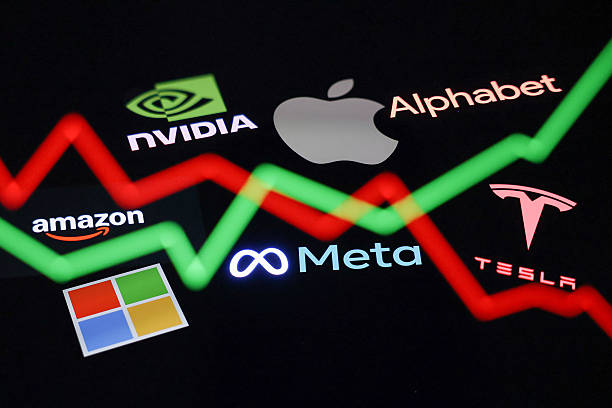
    Photo Credit: Jakub Porzycki/NurPhoto via Getty Images

    Big Tech including Amazon, Microsoft, Alphabet, and Meta have collectively committed around $635 billion in capital expenditure for 2026, with the bulk of that going toward AI data centers. 

    The scale of this investment is historically unprecedented. But as billions pour into chips, servers, and infrastructure, a more pressing question is surfacing – where is the power to run all of it actually going to come from?

    S&P Global estimates that the leading U.S. tech platforms had mapped out around $635 billion of combined spending on data centers, chips and other AI infrastructure for 2026, up from $383 billion in 2025. In fact, these companies are now raising tens of billions in bonds to fund this buildout, given that the speed and scale of AI infrastructure has outpaced their operating cash flows.

    Alphabet, for instance, recently raised roughly $20 billion in a single bond offering in February 2026 to fund its $185 billion AI infrastructure plan. And much of that money is going into building highly specialized AI data centers, packed with advanced chips from suppliers such as Nvidia. 

    However, S&P Global research leaders have warned that this spending boom now faces a major hurdle as energy and power costs rise, especially in the wake of the ongoing conflict between the U.S. and Iran. 

    Energy Costs And Grid Limits

    Data centers have already caused an increase in the U.S. power demand. The International Energy Agency (IEA) has highlighted AI as one of the main new drivers of data center electricity demand worldwide, projecting that this worldwide demand is to quadruple by 2030.

    The electricity demand that comes with data centers buildout is putting pressure on grids that were not designed to absorb it. In the U.S. alone, average electricity prices have gone up by around 13% since 2022.

    As such, lawmakers and the U.S government have started questioning tech companies including Alphabet, Microsoft, Amazon and Meta over the grid constraints their growth is causing for utilities and citizens to handle. 

    How Tech Giants Are Responding

    Faced with these pressures, Big Tech are beginning to adjust how and where they run their most energy‑intensive AI workloads. Some firms are exploring shifting processing to regions with more available capacity or cleaner energy, while others are turning more often to backup power and flexible demand programs so they draw less from the grid. 

    Google, for instance, has signed contracts with utility companies like AES Corp and Xcel Energy to secure dedicated, large-scale supplies of clean energy.

    Chipmakers and AI companies are also exploring how power and energy can be harnessed in space. Nvidia-backed Starcloud recently raised $170 million in a Series A round to build orbital data centers that run on uninterrupted solar power in space. 

    What It Means For The AI Boom

    For now, there is a wide acknowledgement of energy as a key risk factor that might affect the AI boom, especially given the dire situation going on in Iran. 

    Melissa Otto, head of research at S&P Global Visible Alpha, has warned that very high oil prices could force the hands of Big Tech to revise their AI spending in the first and second quarters of this year. This, Otto says, may bring a “really meaningful correction in all equity markets.” 

    What this means is that if the conflict between the U.S. and Iran keeps going, energy prices will remain high and grid constraints will worsen, which means parts of the $635 billion spending plan could be delayed, reshaped or diverted into efficiency and power projects instead of only AI compute expansion. 

    For Big Tech, the race to scale their AI ambitions has now become a test of who can secure the energy to match said ambitions.

    $635 billion AI infrastructure plan AI data center energy crisis AI infrastructure AI innovation AI power grid constraints Alphabet Amazon Artificial Intelligence Big Tech Big Tech AI capex 2026 Big Tech debt for AI buildout Clean energy for data centers Impact of U.S.-Iran conflict on tech stocks Meta Microsoft S&P global AI spending forecast Starcloud orbital data centers
    Share. Facebook Twitter Pinterest LinkedIn Tumblr Telegram Email
    precious
    • LinkedIn

    I’m Precious Amusat, Phronews’ Content Writer. I conduct in-depth research and write on the latest developments in the tech industry, including trends in big tech, startups, cybersecurity, artificial intelligence and their global impacts. When I’m off the clock, you’ll find me cheering on women’s footy, curled up with a romance novel, or binge-watching crime thrillers.

    Related Posts

    Nvidia-backed Starcloud Wants Data Centers in Space as Earth’s Power Problem Worsens

    April 3, 2026

    The Sora Shutdown and the Disney Exit: Why AI-Generated Content Just Hits Its Biggest Wall Yet

    April 3, 2026

    How Cursor’s 2.2 Debug Mode Changes Everything For Agentic Coding

    April 2, 2026

    Comments are closed.

    Top Posts

    Coinbase responds to hack: customer impact and official statement

    May 22, 2025

    MIT Study Reveals ChatGPT Impairs Brain Activity & Thinking

    June 29, 2025

    From Ally to Adversary: What Elon Musk’s Feud with Trump Means for the EV Industry

    June 6, 2025

    Coinbase Hack 2025: Everything we know so far.

    May 21, 2025
    Don't Miss
    Cybersecurity & Online Safety

    Sterling Bank. Remita. FCMB. One Hacker. Nigeria’s Financial Sector Might Be Under Coordinated Attack — Here’s Everything We Know

    By fariehanApril 3, 2026

    A single hacker named “ByteToBreach” has claimed three cyberattacks on the Nigerian financial sector within…

    Big Tech’s $635 Billion AI Spending Plan Faces an Energy Reality Check

    April 3, 2026

    Nvidia-backed Starcloud Wants Data Centers in Space as Earth’s Power Problem Worsens

    April 3, 2026

    The Sora Shutdown and the Disney Exit: Why AI-Generated Content Just Hits Its Biggest Wall Yet

    April 3, 2026
    Stay In Touch
    • Facebook
    • Twitter
    About Us
    About Us

    Evolving from Phronesis News, Phronews brings deep insight and smart analysis to the world of technology. Stay informed, stay ahead, and navigate tech with wisdom.
    We're accepting new partnerships right now.

    Email Us: info@phronews.com

    Facebook X (Twitter) Pinterest YouTube
    Our Picks
    Most Popular

    Coinbase responds to hack: customer impact and official statement

    May 22, 2025

    MIT Study Reveals ChatGPT Impairs Brain Activity & Thinking

    June 29, 2025

    From Ally to Adversary: What Elon Musk’s Feud with Trump Means for the EV Industry

    June 6, 2025
    © 2025. Phronews.
    • Home
    • About Us
    • Get In Touch
    • Privacy Policy
    • Terms and Conditions

    Type above and press Enter to search. Press Esc to cancel.