

Close Menu

    Stay Ahead with Exclusive Updates!

    Enter your email below and be the first to know what’s happening in the ever-evolving world of technology!

    What's Hot

    The API That Powered GIFs Across Every App You Use Just Disappeared. Here Is the Scramble It Left Behind and What Fills the Gap

    July 16, 2026

    Japan Is Running Out of Workers and Has Decided Robots Are the Only Realistic Answer. The Plan to Deploy 10 Million of Them by 2040 Is the Most Ambitious Industrial Policy Any Country Has Announced This Decade

    July 16, 2026

    Google Just Launched Gemini Omni Flash and It Can Create and Edit Video in Real Time. Here Is What That Changes About AI Video Tools

    July 16, 2026
    Facebook X (Twitter) Instagram
    Facebook X (Twitter)
    PhronewsPhronews
    • Home
    • Big Tech & Startups

      The API That Powered GIFs Across Every App You Use Just Disappeared. Here Is the Scramble It Left Behind and What Fills the Gap

      July 16, 2026

      China Just Ordered ByteDance and Alibaba to Shut Down Personalized AI Companion Features by July 15. The Regulation Behind the Ban Is the Most Restrictive AI Law Any Government Has Passed This Year.

      July 15, 2026

      Gemini 3.5 Pro Missed Its June Deadline and Is Now Pointing to July. For Google’s Most Anticipated Model of the Year, Every Week of Delay Has a Cost.

      July 15, 2026

      Meta Is Planning to Sell Its Excess AI Compute to Outside Customers. The Company That Was Rationed Gemini Access by Google Just Positioned Itself to Become a Cloud Provider.

      July 15, 2026

      Tesla Just Launched Its Robotaxi in Miami with No Safety Monitor Inside the Car

      July 14, 2026
    • Crypto

      Market Collapse: What Happened to NFTs?

      April 23, 2026

      Quantum Computing Advances Force Coinbase and Institutional Custodians to Rethink Crypto Security

      March 8, 2026

      AI Assisted Hacking Groups Target Crypto Firms With Multi-Layered Social Engineering

      February 18, 2026

      Global Crypto Regulations Expand as 2026 Begins With New Data Collection Frameworks and National Laws

      January 16, 2026

      Coinbase Bets on Stablecoin and On-Chain Growth as Key Market Drivers in 2026 Strategy

      January 10, 2026
    • Gadgets & Smart Tech
      Featured

      Tesla Just Launched Its Robotaxi in Miami with No Safety Monitor Inside the Car

      By preciousJuly 14, 2026
      Recent

      Tesla Just Launched Its Robotaxi in Miami with No Safety Monitor Inside the Car

      July 14, 2026

      Google’s New Smart Speaker Has Gemini Built In and Works With Everything. Here Is Whether It Is Finally Worth Switching From Amazon Echo or Apple HomePod

      July 4, 2026

      Tesla Is Teaching Its Self-Driving AI With Millions of Fake Crashes. Here Is Why That Might Make Real Roads Safer

      June 30, 2026
    • Cybersecurity & Online Safety

      Hackers Stole 630GB of Apple and Tesla Manufacturing Secrets from Tata Electronics. The Breach Confirms Everything Supply Chain Security Experts Have Warned About for Years.

      July 9, 2026

      Apple Just Pushed an Unscheduled Security Update Because AI-Powered Attacks Are Moving Faster Than Its Normal Patch Cycle Can Handle

      July 6, 2026

      Buying World Cup Tickets Online? Scammers Are Already Waiting. Here Is How to Protect Yourself for the Rest of the Tournament.

      July 4, 2026

      Researchers Found an Attack Spreading Through GitHub Like a Parasite. They Named It Cordyceps and It Is Already in 300+ Repositories

      July 4, 2026

      AI Is Now Writing Phishing Emails Good Enough to Fool Your Best Employees. Here Is How to Spot Them

      July 4, 2026
    PhronewsPhronews
    Home»Big Tech & Startups»NVIDIA AI Chip Demand Continues Driving Cloud Strategy Changes at AWS, Azure, and Google Cloud
    Big Tech & Startups

    NVIDIA AI Chip Demand Continues Driving Cloud Strategy Changes at AWS, Azure, and Google Cloud

    fariehanBy fariehanMarch 1, 2026No Comments
    Facebook Twitter Pinterest LinkedIn WhatsApp Reddit Tumblr Email
    Share
    Facebook Twitter LinkedIn Pinterest Email

    Nvidia is now in control of roughly 80% of the AI data center chip market and that dominance is forcing the world’s largest cloud providers to go back to the drawing board. In 2026, AWS, Microsoft Azure and Google Cloud are collectively planning to spend $660-690 billion on AI infrastructure and Nvidia is at the center of this budget. 

    The company’s grip on AI silicon gives it a huge advantage over how hyperscalers allocate capital, architect platforms, and plan their next moves. As demand for AI workloads keeps surging, the ripple effects are reshaping cloud strategy across the board.

    How Nvidia Positioned Itself at the Center of Every Hyperscaler Budget
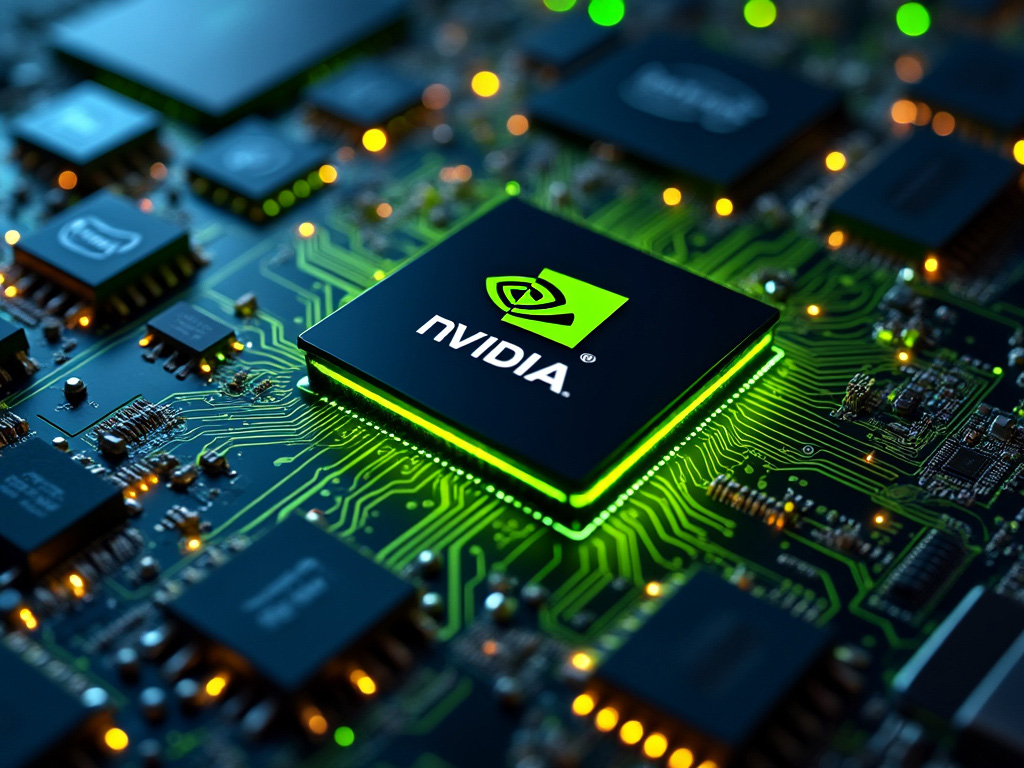
    Nvidia made a smart, calculated move that tightened its grip on cloud providers rather than compete with them. In 2025, the company stepped back from its public-facing DGX Cloud ambitions, repositioning the platform as an internal research and developer tool instead of a managed cloud service. 

    Consequently, that seemingly small decision made a huge difference. It removed the friction of competing with AWS, Azure and Google cloud and opened the door to a deeper partnership with them. 

    At GTC 2025, CEO Jensen Huang reinforced this positioning by framing the AI network itself as the computer, a philosophy that explains why hyperscalers keep choosing NVIDIA silicon over alternatives and why the company now functions as backbone infrastructure rather than a market rival.

    AWS, Azure, and Google Cloud Race to Deepen NVIDIA Integrations

    Each cloud service provider responded to Nvidia’s chip demand differently but all three have increased their hardware investment significantly. 

    Firstly, Microsoft Azure grew 39% year-over-year in Q4 2025, with management repeatedly stating that customer demand continues to exceed GPU supply. To close that gap, Azure deployed NVIDIA’s latest GPU clusters and committed to deploying Vera Rubin NVL72 rack-scale systems as part of its next-generation AI data centers.

    Meanwhile, AWS announced its projected $200 billion CapEx spend for 2026, with the majority marked for AI infrastructure. Even as it develops its own Trianium 2 chips, AWS still relies on Nvidia hardware for its heavy AI workloads. 

    Also, Google cloud posted 48% year-over-year growth in Q4 2025, holding the record of the fastest acceleration amongst all three. It was driven by a dual investment strategy combining Nvidia GPUs with its internal TPU program. 

    The Vera Rubin Platform Locks In Cloud Providers for the Next Generation

    Nvidia launched the Vera Rubin platform in January 2026. As a result, it significantly increased dependency and locked in every major hyperscaler. 

    The platform packages six co-designed chips including the Vera CPU, Rubin GPU, and NVLink 6 Switch into a unified system built to slash training time and reduce inference costs at scale. Notably, early benchmarks suggest Rubin delivers up to five times the efficiency of prior generations, a critical advantage as energy costs continue increasing.

    In response, AWS, Google Cloud, Microsoft Azure, and Oracle Cloud all committed to Vera Rubin deployments in 2026. Microsoft specifically plans to integrate NVL72 rack-scale systems into its Fairwater AI superfactory sites. This is a clear signal that Nvidia will continue leading hyperscaler AI infrastructure roadmap well into 2030. 

    Why Cloud Providers Still Pursue Custom Chips Despite NVIDIA’s Dominance

    Despite their dependence, these cloud providers are not placing their eggs in one basket. AWS continues to build its Trianium 2 chip which offers a 30-40%  better price performance than competing GPUs for inference workloads. 

    Similarly, Google keeps scaling its TPU ecosystem for internal use and Omdia research confirms that custom ASICs are gaining real traction across the market. Nevertheless, analysts at CES 2026 still called Nvidia the “de-facto AI index” for hyperscaler AI spending. 

    Ultimately, custom chip programs function less as replacements and more as a tool to give cloud service providers a leverage in specific workloads without affecting Nvidia’s first-core infrastructure that powers most of their critical AI workloads. 

    For now, both strategies coexist and will continue to do so with no sign of Nvidia’s dominance softening any time soon. 

    AI chip market share AI chips AI chips alternatives AI data centers AI hardware AI infrastructure AI innovation AI silicon AI woorkloads Artificial Intelligence AWS Cloud AI infrastructure Cloud AI spending Cloud capex 2026 cloud computing Cloud revenue growth custom AI chips Data center strategy DGX cloud GB300 NVL72 Google Google Cloud GPU demand hyperscalers Hypescaler budgets Jensen Huange Machine learning infrastructure Microsoft Azure Next-generation AI platforms Nvidia Nvidia GPU clusters Nvidia parterships Nvidia Vera Rubin NVLink 6 Rubin GPU
    Share. Facebook Twitter Pinterest LinkedIn Tumblr Telegram Email
    fariehan

    Related Posts

    The API That Powered GIFs Across Every App You Use Just Disappeared. Here Is the Scramble It Left Behind and What Fills the Gap

    July 16, 2026

    Japan Is Running Out of Workers and Has Decided Robots Are the Only Realistic Answer. The Plan to Deploy 10 Million of Them by 2040 Is the Most Ambitious Industrial Policy Any Country Has Announced This Decade

    July 16, 2026

    Google Just Launched Gemini Omni Flash and It Can Create and Edit Video in Real Time. Here Is What That Changes About AI Video Tools

    July 16, 2026

    Comments are closed.

    Top Posts

    Coinbase responds to hack: customer impact and official statement

    May 22, 2025

    Anthropic Will Use Claude User Chats For Data Training

    October 16, 2025

    Cursor AI Hits 1 Million Daily Users. Why Developers Are Switching to This Coding Tool

    March 23, 2026

    MIT Study Reveals ChatGPT Impairs Brain Activity & Thinking

    June 29, 2025
    Don't Miss
    Big Tech & Startups

    The API That Powered GIFs Across Every App You Use Just Disappeared. Here Is the Scramble It Left Behind and What Fills the Gap

    By fariehanJuly 16, 2026

    Tenor’s API shutdown marks the end of an internet service millions relied on without realizing…

    Japan Is Running Out of Workers and Has Decided Robots Are the Only Realistic Answer. The Plan to Deploy 10 Million of Them by 2040 Is the Most Ambitious Industrial Policy Any Country Has Announced This Decade

    July 16, 2026

    Google Just Launched Gemini Omni Flash and It Can Create and Edit Video in Real Time. Here Is What That Changes About AI Video Tools

    July 16, 2026

    China Just Ordered ByteDance and Alibaba to Shut Down Personalized AI Companion Features by July 15. The Regulation Behind the Ban Is the Most Restrictive AI Law Any Government Has Passed This Year.

    July 15, 2026
    Stay In Touch
    • Facebook
    • Twitter
    About Us
    About Us

    Evolving from Phronesis News, Phronews brings deep insight and smart analysis to the world of technology. Stay informed, stay ahead, and navigate tech with wisdom.
    We're accepting new partnerships right now.

    Email Us: info@phronews.com

    Facebook X (Twitter) Pinterest YouTube
    Our Picks
    Most Popular

    Coinbase responds to hack: customer impact and official statement

    May 22, 2025

    Anthropic Will Use Claude User Chats For Data Training

    October 16, 2025

    Cursor AI Hits 1 Million Daily Users. Why Developers Are Switching to This Coding Tool

    March 23, 2026
    © 2025. Phronews.
    • Home
    • About Us
    • Get In Touch
    • Privacy Policy
    • Terms and Conditions

    Type above and press Enter to search. Press Esc to cancel.