

Close Menu

    Stay Ahead with Exclusive Updates!

    Enter your email below and be the first to know what’s happening in the ever-evolving world of technology!

    What's Hot

    Why Mistral is Borrowing for Data Centers Instead of Raising Equity. What It Signals About the AI Funding Landscape

    April 5, 2026

    DeepSeek’s Longest Outage Might Be A Sign The Chinese Company Isn’t Ready to Compete Globally

    April 5, 2026

    Google Is Warning Us About The Encryption Protecting Your Data Today. It May Not Survive Quantum Computing

    April 5, 2026
    Facebook X (Twitter) Instagram
    Facebook X (Twitter)
    PhronewsPhronews
    • Home
    • Big Tech & Startups

      Why Mistral is Borrowing for Data Centers Instead of Raising Equity. What It Signals About the AI Funding Landscape

      April 5, 2026

      DeepSeek’s Longest Outage Might Be A Sign The Chinese Company Isn’t Ready to Compete Globally

      April 5, 2026

      Google Is Warning Us About The Encryption Protecting Your Data Today. It May Not Survive Quantum Computing

      April 5, 2026

      Big Tech’s $635 Billion AI Spending Plan Faces an Energy Reality Check

      April 3, 2026

      Nvidia-backed Starcloud Wants Data Centers in Space as Earth’s Power Problem Worsens

      April 3, 2026
    • Crypto

      Quantum Computing Advances Force Coinbase and Institutional Custodians to Rethink Crypto Security

      March 8, 2026

      AI Assisted Hacking Groups Target Crypto Firms With Multi-Layered Social Engineering

      February 18, 2026

      Global Crypto Regulations Expand as 2026 Begins With New Data Collection Frameworks and National Laws

      January 16, 2026

      Coinbase Bets on Stablecoin and On-Chain Growth as Key Market Drivers in 2026 Strategy

      January 10, 2026

      Tether Faces Ongoing Transparency Questions and Reserve Scrutiny Amid Massive Bitcoin Accumulation

      January 5, 2026
    • Gadgets & Smart Tech
      Featured

      AirPods Max 2: USB-C, Live Translation, and the H2 Upgrade

      By preciousMarch 26, 2026
      Recent

      AirPods Max 2: USB-C, Live Translation, and the H2 Upgrade

      March 26, 2026

      How ABB and Nvidia are Perfecting Industrial Robotics using AI Simulation

      March 20, 2026

      Neura Robotics Reaches €4B Valuation With Tether Backing

      March 12, 2026
    • Cybersecurity & Online Safety

      Google Is Warning Us About The Encryption Protecting Your Data Today. It May Not Survive Quantum Computing

      April 5, 2026

      Accenture and Anthropic Team Up on AI-powered Cybersecurity

      April 4, 2026

      Your BVN, Passport, and Bank Account May Already Be on the Dark Web. What Every Nigerian Must Do Right Now After the Banking Breaches

      April 4, 2026

      Sterling Bank. Remita. FCMB. One Hacker. Nigeria’s Financial Sector Might Be Under Coordinated Attack — Here’s Everything We Know

      April 3, 2026

      Zero-Day Alert: CISA Warns of Active Attacks on Microsoft SharePoint

      March 31, 2026
    PhronewsPhronews
    Home»Artificial Intelligence & The Future»Edge AI Revolution: Tiny Reasoning Models on Smartphones
    Artificial Intelligence & The Future

    Edge AI Revolution: Tiny Reasoning Models on Smartphones

    fariehanBy fariehanFebruary 10, 2026No Comments
    Facebook Twitter Pinterest LinkedIn WhatsApp Reddit Tumblr Email
    Share
    Facebook Twitter LinkedIn Pinterest Email
    Photo Credit: MediaTek.

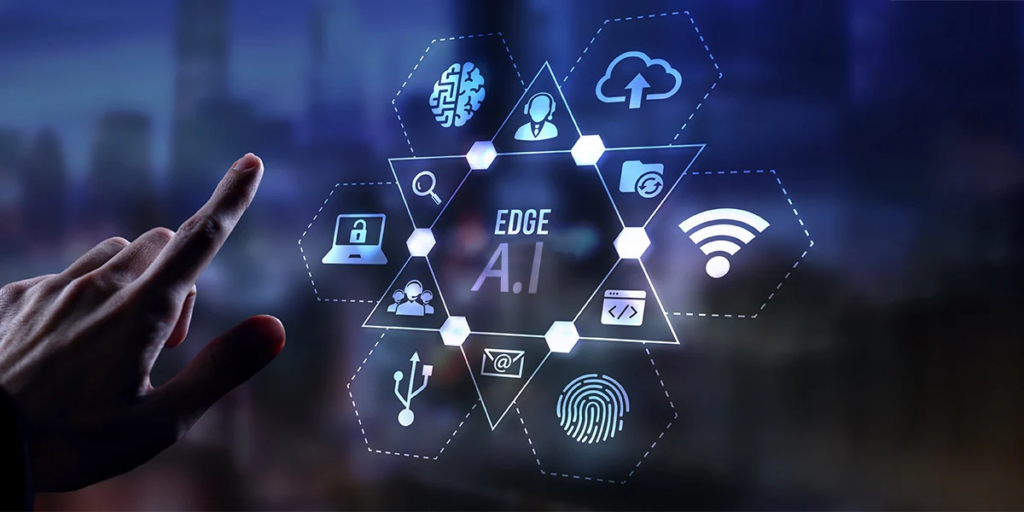
    The Edge AI revolution is shifting focus from large language models to small, specialized reasoning models that run directly on smartphones, smart watches and IoT devices (Vehicles or appliances with sensors). 

    Edge AI refers to the deployment of Artificial Intelligence models or algorithms to perform machine learning tasks directly on Edge devices like smartphones or IoT devices. It enables real-time data processing and analysis without having to rely on cloud infrastructure. 

    What is Edge AI and Why it Matters for Smartphones

    To put it simply, edge AI or AI on the “edge” refers to the combination of edge computing and artificial intelligence to perform machine learning tasks directly on interconnected edge devices like smartphones.  

    Edge computing allows data to be stored close to the device location and AI algorithms process the data right on the network edge, with or without an internet connection. This capability allows data processing within seconds and provides real-time responses. 

    This shift is important because users want instant results when using their smartphones. They expect zero lag irrespective of the app and edge AI delivers that responsiveness. 

    Additionally, industry forecasts frame 2026 as a defining year for distributed intelligence. Arms predicts that edge AI computing will power the next generation of consumer devices and reduce reliance on cloud infrastructure across mobile platforms. 

    At the same time, analysts describe edge AI as a broader local AI shift where companies prioritise device autonomy and stronger privacy controls. 

    In essence, edge AI turns smartphones into independent AI engines, rather than just devices connected to the cloud. 

    How Tiny Reasoning Models are Powering On-Device AI

    Tiny reasoning models are often referred to as Small Language Models (SLMs). Compared to Large Language Models (LLMs) that require powerful servers, these models use compact systems like pruning and compression to operate within smartphone power and memory limits. 

    Despite their smaller size, these models are capable of more sophisticated conversation, analysis and problem solving compared to large models like ChatGPT, Grok and ClaudeAI. They translate natural language into system actions, process structured commands and support multimodal features like combining image and text understanding. 

    In December 2025, Google released FunctionGemma, a compact reasoning model designed for translating natural language user commands into structured code that apps and devices can execute without connecting to the cloud. 

    Moreover, this release marked a significant milestone in the world of language models. It showed that practical reasoning no longer requires complete reliance on the cloud. Developers can now build mobile devices that think and act locally. 

    Edge AI in 2025-2026: From Local Processing to What Comes Next

    The widespread adoption of AI on the edge accelerated in late 2025 and has maintained its pace into 2026. 

    In late 2025, smartphone chipmakers significantly upgraded Neural processing units (NPUs) inside flagship processors. These dedicated accelerators were added to perform AI tasks like image recognition, language processing and voice detection directly on devices. According to reports, next generation Snapdragon chips show how these improvements enable faster and more efficient local inference. 

    By January 2026, reports claimed that Samsung’s upcoming galaxy s26 lineup will include EdgeFusion, an on-device image generation feature capable of producing results in seconds without connection to the cloud. This rumor further pushes edge AI as the standard flagship feature. 

    Together, these developments show a clear progression. First, smartphone chipmakers improved hardware to handle AI workloads efficiently. Next, consumer devices began integrating generative AI directly at the system level, signaling a shift away from experimental features towards built in intelligence on the device. 

    As a result of this shift, Smartphones respond faster without network delays and cloud round trips. At the same time, they protect user privacy by keeping sensitive data on the device. In addition, local processing allows AI features to work offline, improving reliability and accessibility across devices. 

    However, there are still challenges associated with these tiny models. They lack the ability to bear heavy workloads because of battery and temperature problems. Nevertheless, these gaps are closing with new chip improvements and smarter model designs. 

    Ultimately, edge AI balances cloud infrastructure rather than erase it. More smartphones will produce, reason, and make decisions locally, improving performance, enhancing privacy, and reducing reliance on remote servers.

    AI chip evolution AI innovation AI latency reduction AI Natural language processing AI on the Edge Arms 2026 prediction Artificial Intelligence Cloud to Edge shift Device autonomy Edge AI Edge AI and the Cloud edge AI computing Edge AI revolution edge computing FunctionGemma Generative AI mobile phones Google AI IoT devices Local AI Local generative AI Local inference Mobile computing Mobile machine learning multimodal AI NPU performance on-device AI on-device generative AI On-device processing AI Real-time data processing reasoning models AI Samsung Samsung edge ai Samsung galaxy s26 edge ai Small language models smartphone AI Smartphones innovation Tech trends 2026 Tiny reasoning models What is Edge AI?
    Share. Facebook Twitter Pinterest LinkedIn Tumblr Telegram Email
    fariehan

    Related Posts

    Why Mistral is Borrowing for Data Centers Instead of Raising Equity. What It Signals About the AI Funding Landscape

    April 5, 2026

    DeepSeek’s Longest Outage Might Be A Sign The Chinese Company Isn’t Ready to Compete Globally

    April 5, 2026

    Accenture and Anthropic Team Up on AI-powered Cybersecurity

    April 4, 2026

    Comments are closed.

    Top Posts

    Coinbase responds to hack: customer impact and official statement

    May 22, 2025

    MIT Study Reveals ChatGPT Impairs Brain Activity & Thinking

    June 29, 2025

    From Ally to Adversary: What Elon Musk’s Feud with Trump Means for the EV Industry

    June 6, 2025

    Coinbase Hack 2025: Everything we know so far.

    May 21, 2025
    Don't Miss
    Artificial Intelligence & The Future

    Why Mistral is Borrowing for Data Centers Instead of Raising Equity. What It Signals About the AI Funding Landscape

    By preciousApril 5, 2026

    Mistral AI is taking on a large debt package to secure chips and build artificial…

    DeepSeek’s Longest Outage Might Be A Sign The Chinese Company Isn’t Ready to Compete Globally

    April 5, 2026

    Google Is Warning Us About The Encryption Protecting Your Data Today. It May Not Survive Quantum Computing

    April 5, 2026

    Accenture and Anthropic Team Up on AI-powered Cybersecurity

    April 4, 2026
    Stay In Touch
    • Facebook
    • Twitter
    About Us
    About Us

    Evolving from Phronesis News, Phronews brings deep insight and smart analysis to the world of technology. Stay informed, stay ahead, and navigate tech with wisdom.
    We're accepting new partnerships right now.

    Email Us: info@phronews.com

    Facebook X (Twitter) Pinterest YouTube
    Our Picks
    Most Popular

    Coinbase responds to hack: customer impact and official statement

    May 22, 2025

    MIT Study Reveals ChatGPT Impairs Brain Activity & Thinking

    June 29, 2025

    From Ally to Adversary: What Elon Musk’s Feud with Trump Means for the EV Industry

    June 6, 2025
    © 2025. Phronews.
    • Home
    • About Us
    • Get In Touch
    • Privacy Policy
    • Terms and Conditions

    Type above and press Enter to search. Press Esc to cancel.