


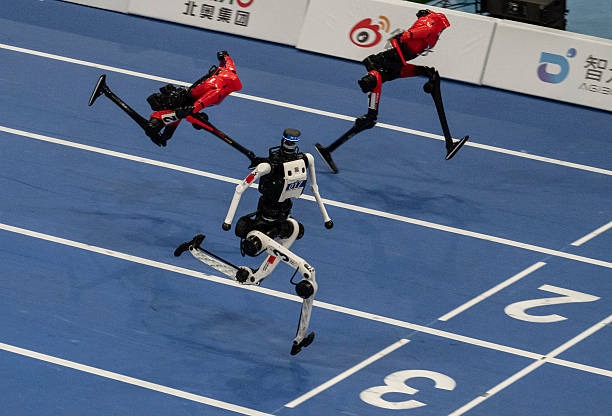
Usain Bolt’s 100-metre world record stood for 17 years. Now, a Chinese humanoid robot has run the distance almost a second faster.
Tiangong Ultra, developed by the Beijing Humanoid Robot Innovation Center, completed the 100 metres in 8.64 seconds at the World Humanoid Robot Games in Beijing last week, August 26. The time broke the robot’s own record of 8.86 seconds, set the previous day, and went well inside Bolt’s 9.58-second human world record from 2009.
The achievement came at the end of a five-day competition that brought together more than 2,000 robots from 666 teams. The event included sprinting, football, boxing, and practical challenges designed to test what humanoid machines can actually do.
The Robot Kept Getting Faster
Tiangong Ultra’s improvement over the competition was remarkable. It first ran 100 metres in 9.39 seconds during a preliminary heat on August 22, beating Bolt’s 9.58 seconds. Honor’s humanoid robot Lightning finished that race in 9.47 seconds. Lightning had also reportedly recorded 9.32 seconds in a preparatory test.
Three days later, Tiangong Ultra lowered the robot record to 8.86 seconds. It then went even faster in the final, finishing in 8.64 seconds.
This means the machine improved its official race time by 0.75 seconds in less than a week. It also improved dramatically compared with last year, when Tiangong won the 100-metre event with a much slower time of 21.50 seconds.
The Run Was Far From Perfect
The speed came with some very visible limitations.
After crossing the finish line, Tiangong Ultra crashed into the padded barrier placed at the end of the track. Several other robots also fell or suffered mechanical problems during the races, with some requiring staff to carry them away from the track.
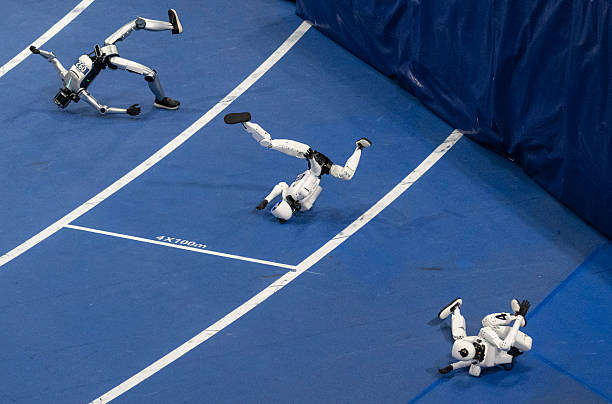
This is worth noting because running quickly on a controlled track is only one measure of what a humanoid robot can do.
The same competition included tasks involving housework, hotel services, and emergency response, with these events testing abilities that are closer to the environments where companies ultimately want humanoid robots to operate.
China Is Pushing Humanoid Robotics Hard
The sprint record is also part of a much larger push by China to develop humanoid robots for industrial and service applications.
The Beijing Humanoid Robot Innovation Center said its Tiangong robots had already surpassed four human world records at the games, including marks in the 400 metres, 1,500 metres and high jump. Chinese policymakers have also identified humanoid robotics as a strategic emerging industry as companies work to bring robots into manufacturing, logistics, and other sectors.
For now, Tiangong Ultra’s 8.64 seconds is a robot competition record rather than a new athletics world record. And Bolt’s 9.58-second mark remains the official human 100-metre world record.
Still, watching a machine cross the same 100 metres faster than the fastest human ever recorded is a striking measure of how quickly humanoid robotics has advanced. The bigger test will now be whether these machines can take the same progress from the track into factories, warehouses, and everyday work.
