


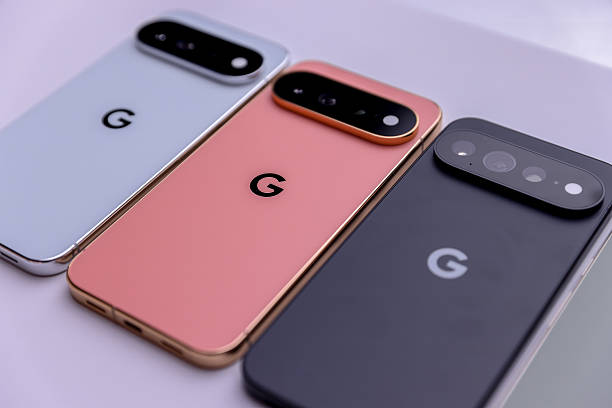
Google has once again put artificial intelligence (AI) at the centre of its latest smartphone, and the Pixel 11 is the clearest example yet of how far the company wants Gemini to reach inside Android.
The new Pixel 11, Pixel 11 Pro and Pixel 11 Pro XL recently launched with Google’s Tensor G6 chip, upgraded cameras, and a new set of Gemini features designed to anticipate what users need and help complete tasks across the phone.
Gemini Is Becoming Part Of The Phone
Google has designed the Pixel 11 around what it calls Gemini Intelligence. Instead of keeping Gemini inside a standalone chatbot, the search giant is now integrating it into more parts of the Android experience.
As such, the phone will now be able to surface information in apps based on what the user is doing. For example, a conversation about an upcoming trip can trigger a card showing flight information, while other situations can prompt actions such as adding an event to Calendar or saving a location to Maps. Gemini can also handle multistep tasks across supported apps, although availability varies by device, app, and region.
Other features extend the same approach. Rambler uses AI to turn spoken thoughts into more polished text, while Magic Capture uses on-device intelligence to identify useful moments while recording. Live Translate can also translate video and audio in real time using generative AI models powered by Tensor G6.
Tensor G6 Is Built For That Workload
Tensor G6 is Google’s new processor for the Pixel 11 lineup. Google says it is its fastest and most powerful Tensor chip yet and that it runs the latest Gemini Nano model on the device.
The hardware has also received practical upgrades. The standard Pixel 11 starts with 256GB of storage and uses 12GB of RAM, while the phone adds a larger main camera sensor and support for faster wireless charging through Qi2. The Pixel 11 starts at $899, while the Pro and Pro XL start at $1,099 and $1,299 respectively.
The Performance Gap Is Still Visible
Early testing suggests Tensor G6 is faster than its predecessor, but Google has not closed the performance gap with the leading smartphone chips.
PhoneArena’s testing found roughly a 20% CPU improvement, while noting that Snapdragon and Apple’s chips remain significantly ahead, particularly in gaming. Android Authority’s testing also found that Tensor G6 continues to struggle with sustained performance, with its CPU and GPU falling behind competing flagship hardware.
So, Does The Hardware Match The AI Ambition?
The answer depends on what the phone is being asked to do. For Gemini-powered features, Tensor G6 gives Google the hardware foundation it needs to push AI deeper into everyday phone functions. But independent testing shows that the chip still trails the best competing processors in demanding workloads such as gaming.
And that leaves the Pixel 11 in an interesting position, as Google’s biggest upgrade should not be a dramatic leap in conventional hardware performance; it should be an evidence of the seamless way the processor, Android tech, and Gemini Intelligence work together and provide a smartphone that competes.
