

Close Menu

    Stay Ahead with Exclusive Updates!

    Enter your email below and be the first to know what’s happening in the ever-evolving world of technology!

    What's Hot

    Google TPU Chips Threatens Nvidia’s GPU Dominance

    January 13, 2026

    Cybersecurity Funding Increases as AI-Driven Threats Become More Sophisticated 

    January 12, 2026

    Coinbase Bets on Stablecoin and On-Chain Growth as Key Market Drivers in 2026 Strategy

    January 10, 2026
    Facebook X (Twitter) Instagram
    Facebook X (Twitter)
    PhronewsPhronews
    • Home
    • Big Tech & Startups

      Google TPU Chips Threatens Nvidia’s GPU Dominance

      January 13, 2026

      Nvidia in Talks to Acquire AI21 Labs in $3B Generative AI Deal

      January 8, 2026

      Google Centralizes AI Development Around Gemini as Partners Prepare AI Vision Launch at CES 2026

      January 8, 2026

      Nvidia Aims to Begin H200 Chip Shipments to China by Mid-February

      January 7, 2026

      Cisco in Advanced Talks to Acquire Cybersecurity Startup Axonius for $2 billion

      January 7, 2026
    • Crypto

      Coinbase Bets on Stablecoin and On-Chain Growth as Key Market Drivers in 2026 Strategy

      January 10, 2026

      Tether Faces Ongoing Transparency Questions and Reserve Scrutiny Amid Massive Bitcoin Accumulation

      January 5, 2026

      Kanye West YZY Coin Crash Follows $3B Hype Launch

      August 24, 2025

      Crypto Markets Rally as GENIUS Act Nears Stablecoin Regulation Breakthrough

      July 23, 2025

      Lightchain and Ethereum Spark AI Chain Revolution

      July 23, 2025
    • Gadgets & Smart Tech
      Featured

      Meta Poaches Apple Design Exec Alan Dye to Lead a New Creative Studio

      By preciousDecember 11, 202526
      Recent

      Meta Poaches Apple Design Exec Alan Dye to Lead a New Creative Studio

      December 11, 2025

      Samsung Teases DX Vision and New AI Experiences Ahead of CES 2026

      December 10, 2025

      Why Amazon’s New AI Glasses Are Changing Delivery

      November 10, 2025
    • Cybersecurity & Online Safety

      Cybersecurity Funding Increases as AI-Driven Threats Become More Sophisticated 

      January 12, 2026

      Cisco in Advanced Talks to Acquire Cybersecurity Startup Axonius for $2 billion

      January 7, 2026

      Microsoft Pushes Zero-Trust as the Enterprise Default in 2026 Security Roadmap

      January 3, 2026

      Google Cloud expands Security Services Partnership with Palo Alto Networks in a $10B deal

      December 29, 2025

      Google issues emergency Pixel update after reports of spyware attacks

      December 24, 2025
    PhronewsPhronews
    Home»Artificial Intelligence & The Future»Why the U.S. is cracking down on Chinese Tech in 2025
    Artificial Intelligence & The Future

    Why the U.S. is cracking down on Chinese Tech in 2025

    preciousBy preciousJuly 6, 2025Updated:July 12, 2025No Comments5 Views
    Facebook Twitter Pinterest LinkedIn WhatsApp Reddit Tumblr Email
    Share
    Facebook Twitter LinkedIn Pinterest Email
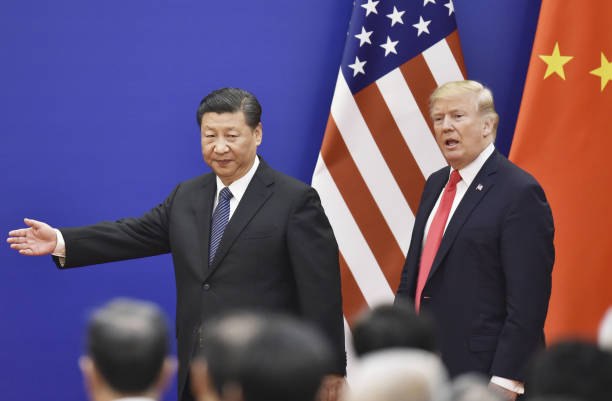
    China’s President Xi Jinping and U.S. President Donald Trump. Photo Credit: Kyodo News Stills via Getty Images

    The United States has taken its toughest stance yet against Chinese technology, by rolling out sweeping restrictions that affect everything from artificial intelligence (AI) to advanced computer chips. This crackdown, starting out from trade and economics, has now shifted to the U.S. doing every possible thing to secure its security, global influence, and the country’s future innovation.

    The relationship between the U.S. and China has always been complex. In recent years, however, it has shifted from cooperation, albeit a subtle one, to sordid competition, especially in the technology sector. The Trump-led U.S. government sees China’s rapid progress in fields like AI and quantum computing as a direct challenge to America’s hegemony in said sectors. As such, U.S. government officials and bodies worry that if China gains an edge in these areas, it could use that advantage to advance its military system, as well as control key parts of the global technology supply chain.

    Here’s why the U.S. is making these moves and what it means for the tech industry worldwide:

    National Security at the Forefront

    One of the main reasons for the crackdown, if not the most important reason, is the U.S. wanting to protect her national security. The world’s biggest economy is concerned that Chinese companies and her state-sponsored threat actors are developing technologies that could be used to strengthen China’s military. For example, Chinese military developers have been working on integrating artificial intelligence into their defense systems, by developing autonomous drones and enhancing their surveillance capabilities. 

    The U.S. fears that advanced AI chips and software could help China build smarter weapons, improve battlefield intelligence, and even launch coordinated drone attacks.

    Consumed by this threat and with the need to prevent the Asian country from beating them at the game, the U.S imposed strict export controls on select industries earlier in the year. These export controls were imposed on companies who were producing innovative, advanced semiconductors and AI technologies. Case in point: the addition of over 80 new companies located in different countries into the U.S.’s Entity List, with Chinese companies having the highest representation on the list.

    Unofficially known as the “American Blacklist,” these Chinese companies were added for various reasons, a major one being: “For acquiring or attempting to acquire U.S.-origin items in support of China’s military modernization, including the development of hypersonic weapons and the design and modeling of vehicles in hypersonic flight,” according to the U.S.’s Bureau of Industry and Security (BIS).

    Blocking China’s Tech Ambitions

    China’s government has made no secret of its ambitions. Its “Made in China 2025” plan aims to make the country self-sufficient in high-tech industries as well as a global leader in sectors like AI, robotics, and advanced manufacturing. The Trump-led administration sees this move as a state-driven effort to overtake American technology and dominate the global market. To slow down China’s progress, the U.S. then targeted its economy. 

    Another example is the trade war that ensued between both countries at the beginning of the year, with the U.S. slapping humongous tariffs on Chinese imports. According to the U.S. President Trump, this was done to reduce overreliance on foreign products and, in turn, encourage domestic production in the country. But for China, it threatened her economic standing as a result of the country being the largest exporter of goods to the U.S.

    In addition to this is the recent ban on Electronic Design Automation (EDA) software that prevents leading American and European companies from supplying this technology to China without getting an export license. So, for instance, U.S.-based Cadence and Synopsys, who are both leading global EDA suppliers, as well as Germany’s Siemens EDA, all have to seek licenses to sell anything to China, and these licenses are also subjected to a case-by-case review by the U.S. government.

    China’s Response

    China has not taken these aggressive moves lightly. It has also imposed its own restrictions, with the country going for a tit-for-tat tariff war with the U.S. earlier in the year. It went on for months and disrupted the global supply chains with both countries losing billions of dollars. However, in May 2025, representatives of both countries reached a consensus to bring the trade war to a 90-day halt, which will be lasting until August 12, 2025.

    For the Chinese government, they are more focused on doubling down on their own technology development. Chinese companies and researchers are racing to create homegrown alternatives to American chips and software, thereby hoping to reduce their dependence on foreign technology in the long run. 

    A Divided Tech World

    The U.S. crackdown on Chinese Technology in 2025 is more than just a policy shift. It is reshaping the global tech industry, where two separate technology ecosystems already exist — one led by the U.S. and its allies, and the other led by China. 

    With both powerful countries investing heavily in innovation and working to block each other’s progress, the race for technological supremacy is only set to intensify. The outcome will definitely shape the future of the global tech industry and the balance of power in the world for years to come.

    Advanced Chip Sanctions China AI Arms Race USA China AI Export Restrictions USA AI Military Threat China AI Surveillance Drones China American Tech Blockade China China Tariff Retaliation 2025 China vs USA Tech Cold War Dual Tech Ecosystems US China EDA Software Ban China Foreign Policy Innovation Clash Global Tech Supply Chain Risk Hypersonic Weapons China Made in China 2025 Crackdown National Security and AI Quantum Computing Race US China Semiconductor War US China Silicon Supremacy Battle Tech Decoupling US China Technology Protectionism 2025 Trump Administration China Policy Trump China Trade Tariffs 2025 US China Tech War 2025 US China Trade War Truce US Chips Act Enforcement US Entity List Blacklist US Export Control Measures US National Security AI Ban
    Share. Facebook Twitter Pinterest LinkedIn Tumblr Telegram Email
    precious
    • LinkedIn

    I’m Precious Amusat, Phronews’ Content Writer. I conduct in-depth research and write on the latest developments in the tech industry, including trends in big tech, startups, cybersecurity, artificial intelligence and their global impacts. When I’m off the clock, you’ll find me cheering on women’s footy, curled up with a romance novel, or binge-watching crime thrillers.

    Related Posts

    Google TPU Chips Threatens Nvidia’s GPU Dominance

    January 13, 2026

    Cybersecurity Funding Increases as AI-Driven Threats Become More Sophisticated 

    January 12, 2026

    Nvidia in Talks to Acquire AI21 Labs in $3B Generative AI Deal

    January 8, 2026

    Comments are closed.

    Top Posts

    MIT Study Reveals ChatGPT Impairs Brain Activity & Thinking

    June 29, 2025131

    From Ally to Adversary: What Elon Musk’s Feud with Trump Means for the EV Industry

    June 6, 202587

    Coinbase Hack 2025: Everything we know so far.

    May 21, 202583

    Coinbase responds to hack: customer impact and official statement

    May 22, 202579
    Don't Miss
    Artificial Intelligence & The Future

    Google TPU Chips Threatens Nvidia’s GPU Dominance

    By preciousJanuary 13, 20263

    Google’s Tensor Processing Units (TPUs) pose a growing challenge to Nvidia’s dominance in AI hardware…

    Cybersecurity Funding Increases as AI-Driven Threats Become More Sophisticated 

    January 12, 2026

    Coinbase Bets on Stablecoin and On-Chain Growth as Key Market Drivers in 2026 Strategy

    January 10, 2026

    Nvidia in Talks to Acquire AI21 Labs in $3B Generative AI Deal

    January 8, 2026
    Stay In Touch
    • Facebook
    • Twitter
    About Us
    About Us

    Evolving from Phronesis News, Phronews brings deep insight and smart analysis to the world of technology. Stay informed, stay ahead, and navigate tech with wisdom.
    We're accepting new partnerships right now.

    Email Us: info@phronews.com

    Facebook X (Twitter) Pinterest YouTube
    Our Picks
    Most Popular

    MIT Study Reveals ChatGPT Impairs Brain Activity & Thinking

    June 29, 2025131

    From Ally to Adversary: What Elon Musk’s Feud with Trump Means for the EV Industry

    June 6, 202587

    Coinbase Hack 2025: Everything we know so far.

    May 21, 202583
    © 2025. Phronews.
    • Home
    • About Us
    • Get In Touch
    • Privacy Policy
    • Terms and Conditions

    Type above and press Enter to search. Press Esc to cancel.