

Close Menu

    Stay Ahead with Exclusive Updates!

    Enter your email below and be the first to know what’s happening in the ever-evolving world of technology!

    What's Hot

    Google TPU Chips Threatens Nvidia’s GPU Dominance

    January 13, 2026

    Cybersecurity Funding Increases as AI-Driven Threats Become More Sophisticated 

    January 12, 2026

    Coinbase Bets on Stablecoin and On-Chain Growth as Key Market Drivers in 2026 Strategy

    January 10, 2026
    Facebook X (Twitter) Instagram
    Facebook X (Twitter)
    PhronewsPhronews
    • Home
    • Big Tech & Startups

      Google TPU Chips Threatens Nvidia’s GPU Dominance

      January 13, 2026

      Nvidia in Talks to Acquire AI21 Labs in $3B Generative AI Deal

      January 8, 2026

      Google Centralizes AI Development Around Gemini as Partners Prepare AI Vision Launch at CES 2026

      January 8, 2026

      Nvidia Aims to Begin H200 Chip Shipments to China by Mid-February

      January 7, 2026

      Cisco in Advanced Talks to Acquire Cybersecurity Startup Axonius for $2 billion

      January 7, 2026
    • Crypto

      Coinbase Bets on Stablecoin and On-Chain Growth as Key Market Drivers in 2026 Strategy

      January 10, 2026

      Tether Faces Ongoing Transparency Questions and Reserve Scrutiny Amid Massive Bitcoin Accumulation

      January 5, 2026

      Kanye West YZY Coin Crash Follows $3B Hype Launch

      August 24, 2025

      Crypto Markets Rally as GENIUS Act Nears Stablecoin Regulation Breakthrough

      July 23, 2025

      Lightchain and Ethereum Spark AI Chain Revolution

      July 23, 2025
    • Gadgets & Smart Tech
      Featured

      Meta Poaches Apple Design Exec Alan Dye to Lead a New Creative Studio

      By preciousDecember 11, 202526
      Recent

      Meta Poaches Apple Design Exec Alan Dye to Lead a New Creative Studio

      December 11, 2025

      Samsung Teases DX Vision and New AI Experiences Ahead of CES 2026

      December 10, 2025

      Why Amazon’s New AI Glasses Are Changing Delivery

      November 10, 2025
    • Cybersecurity & Online Safety

      Cybersecurity Funding Increases as AI-Driven Threats Become More Sophisticated 

      January 12, 2026

      Cisco in Advanced Talks to Acquire Cybersecurity Startup Axonius for $2 billion

      January 7, 2026

      Microsoft Pushes Zero-Trust as the Enterprise Default in 2026 Security Roadmap

      January 3, 2026

      Google Cloud expands Security Services Partnership with Palo Alto Networks in a $10B deal

      December 29, 2025

      Google issues emergency Pixel update after reports of spyware attacks

      December 24, 2025
    PhronewsPhronews
    Home»Big Tech & Startups»US Secures Powerful AI Chip Revenue Share from Nvidia, AMD
    Big Tech & Startups

    US Secures Powerful AI Chip Revenue Share from Nvidia, AMD

    oluchiBy oluchiAugust 13, 2025Updated:August 20, 2025No Comments12 Views
    Facebook Twitter Pinterest LinkedIn WhatsApp Reddit Tumblr Email
    Share
    Facebook Twitter LinkedIn Pinterest Email
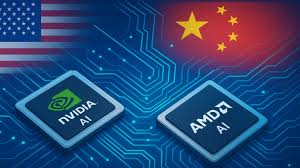
    Image Generated from MSN

    The US has secured a 15% AI chip revenue share from Nvidia and AMD as part of the deal to secure export licenses to China. Exports of chips to China had previously been banned due to national security concerns until the ban was lifted on July 14.

    The Deal: A 15% Revenue Share for Market Access

    On Monday, 11 August, Trump held a meeting with Nvidia and AMD to discuss revenue share with their trade with China. Chip sales to China had been previously halted during the US-China trade war that started in April 2025. And only last month was the ban lifted.

    The meeting held on Monday was the final aspect to lifting the ban and also giving official export licenses to Nvidia and AMD. However, it didn’t go without a price. According to Reuters, the initial negotiation for market shares started at 20% before the final agreement for 15% was reached.

    Under the agreement, both companies will individually remit 15% of their AI chip sales to the US government. The chips in question are Nvidia’s H20 chip and AMD’s MI308 chips, which are specifically designed for the Chinese market. 

    For Nvidia, which earned $17 billion from China in its last fiscal year (13% of total sales), and AMD, with $6.2 billion (24% of total revenue), this deal could mean the inflow of millions of dollars to the U.S. government.

    Nvidia and AMD have confirmed their compliance with the deal. Nvidia stated, “We obey the rules the US government sets for our participation in worldwide markets.” While AMD has not directly addressed the revenue-sharing agreement, its spokesperson commented on the U.S. approval to export their chips.

    Why This Matters: Balancing National Security and Economic Gain

    Let’s digress a little by talking about the main reason behind the chip ban. According to reports, the U.S. government had suspicions about China using the chips they bought for military purposes. And as a result, it became a concern for national security.

    Using the premise of a national security threat and the trade war as a base for the ban, it was pretty much put into effect without much deliberation. However, this isn’t the only way the U.S. has tried to suppress China’s technological prowess. 

    Years before the ban, trade restrictions had already been put into place to limit the capacity of chips that can be sold to China. And that’s why Nvidia and AMD had to come up with lesser chips to maintain trade with China.

    China, on the other hand, had no choice but to comply, as they couldn’t locally make chips that were on par with the kind they bought from the U.S. However, during the period of the trade ban, they have been forced to come face-to-face and find solutions to this reality.

    The limitation, however, lies with the fact that even if China makes a breakthrough with AI chips, they might not be able to meet up with the local demand. And the U.S. is very aware of this fact, which set up the basis of the deal.

    The 15% revenue share approach for the U.S. is a way to not only gain extra revenue but to make China reliant on U.S. technology. This way the U.S. can also indirectly control the level of tech China has access to.

    Economic Implications for AMD and Nvidia

    For AMD and Nvidia, this deal is like a double-edged sword. On one hand, it gives them access to resume trade with China, a market responsible for a significant part of their revenue, and on the other, they are liable to lose/remit 15% of their revenue from those sales to the U.S. Government.

    News of this deal has caused a mixed reaction among investors and stakeholders alike. During the pre-trading period on August 11, both companies experienced slight stock dips, with Nvidia down 1.16% and AMD down 2.3%. 

    The Chinese market, however, is not one that can be let go of entirely. Hence, both companies have more to gain by resuming trade, albeit at a cost.

    What’s Next?

    It is not totally certain how the resumed trade with China will go in the long run. China’s foreign ministry has previously accused the U.S. of using technology and trade measures to “maliciously contain and suppress China.”

    Also, there are mixed reactions as to the legality of the 15% revenue share. “Regardless of whether you think Nvidia should be able to sell H20s in China, charging a fee in exchange for relaxing national security export controls is a terrible precedent,” wrote Peter Harrell, a leading expert on US economic statecraft. 

    “In addition to the policy problems with just charging Nvidia and AMD a 15% share of revenues to sell advanced chips in China, the US Constitution flatly forbids export taxes,” he added.

    Whichever way this deal turns out, a new precedent will be set, which will influence both sides. Should the deal hold, it will redefine how tech giants navigate global markets. And if it doesn’t, the world will be on the lookout for what breakthrough China will come up with.

    AI chip revenue share AI chips AIarmsrace AIchips AIeconomy AIhardware AIInfrastructure AIRegulation AMD AMDMI308 ArtificialIntelligence ChinaTech ChipBan ChipMarket EmergingTech Export controls and revenue share ExportControls GlobalTech National security vs tech exports NationalSecurity Nvidia Nvidia AMD China exports NvidiaH20 RevenueShare SemiconductorIndustry TechGeopolitics TechPolicy TechStrategy TechWar TradeWar U.S. government chip deal USChinaRelations USChinaTrade USGovernment USPolitics
    Share. Facebook Twitter Pinterest LinkedIn Tumblr Telegram Email
    oluchi
    • X (Twitter)
    • LinkedIn

    I am a content writer with over three years of experience. I specialize in creating clear, engaging, and value-driven content across diverse niches, and I’m now focused on the tech and business space. My strong research skills, paired with a natural storytelling ability, enable me to break down complex topics into compelling, reader-friendly articles. As an avid reader and music lover, I bring creativity, insight, and a sharp eye for detail to every piece I write.

    Related Posts

    Google TPU Chips Threatens Nvidia’s GPU Dominance

    January 13, 2026

    Nvidia in Talks to Acquire AI21 Labs in $3B Generative AI Deal

    January 8, 2026

    Google Centralizes AI Development Around Gemini as Partners Prepare AI Vision Launch at CES 2026

    January 8, 2026

    Comments are closed.

    Top Posts

    MIT Study Reveals ChatGPT Impairs Brain Activity & Thinking

    June 29, 2025131

    From Ally to Adversary: What Elon Musk’s Feud with Trump Means for the EV Industry

    June 6, 202587

    Coinbase Hack 2025: Everything we know so far.

    May 21, 202583

    Coinbase responds to hack: customer impact and official statement

    May 22, 202579
    Don't Miss
    Artificial Intelligence & The Future

    Google TPU Chips Threatens Nvidia’s GPU Dominance

    By preciousJanuary 13, 20263

    Google’s Tensor Processing Units (TPUs) pose a growing challenge to Nvidia’s dominance in AI hardware…

    Cybersecurity Funding Increases as AI-Driven Threats Become More Sophisticated 

    January 12, 2026

    Coinbase Bets on Stablecoin and On-Chain Growth as Key Market Drivers in 2026 Strategy

    January 10, 2026

    Nvidia in Talks to Acquire AI21 Labs in $3B Generative AI Deal

    January 8, 2026
    Stay In Touch
    • Facebook
    • Twitter
    About Us
    About Us

    Evolving from Phronesis News, Phronews brings deep insight and smart analysis to the world of technology. Stay informed, stay ahead, and navigate tech with wisdom.
    We're accepting new partnerships right now.

    Email Us: info@phronews.com

    Facebook X (Twitter) Pinterest YouTube
    Our Picks
    Most Popular

    MIT Study Reveals ChatGPT Impairs Brain Activity & Thinking

    June 29, 2025131

    From Ally to Adversary: What Elon Musk’s Feud with Trump Means for the EV Industry

    June 6, 202587

    Coinbase Hack 2025: Everything we know so far.

    May 21, 202583
    © 2025. Phronews.
    • Home
    • About Us
    • Get In Touch
    • Privacy Policy
    • Terms and Conditions

    Type above and press Enter to search. Press Esc to cancel.