

Close Menu

    Stay Ahead with Exclusive Updates!

    Enter your email below and be the first to know what’s happening in the ever-evolving world of technology!

    What's Hot

    NVIDIA AI Chip Demand Continues Driving Cloud Strategy Changes at AWS, Azure, and Google Cloud

    March 1, 2026

    Google DeepMind and OpenAI Intensify Competition as Coding AI Models Target Software Developers

    March 1, 2026

    Google Expands AI-Generated Audio Tools, Signaling a Major Shift in Digital Advertising Strategy

    March 1, 2026
    Facebook X (Twitter) Instagram
    Facebook X (Twitter)
    PhronewsPhronews
    • Home
    • Big Tech & Startups

      NVIDIA AI Chip Demand Continues Driving Cloud Strategy Changes at AWS, Azure, and Google Cloud

      March 1, 2026

      Google DeepMind and OpenAI Intensify Competition as Coding AI Models Target Software Developers

      March 1, 2026

      Google Expands AI-Generated Audio Tools, Signaling a Major Shift in Digital Advertising Strategy

      March 1, 2026

      Amazon Announces $12 Billion Louisiana Data Center Investment to Boost AI and Cloud Capacity

      February 27, 2026

      Hyperscalers Including Microsoft and Amazon Build Private Energy Systems to Power AI Data Centers

      February 27, 2026
    • Crypto

      AI Assisted Hacking Groups Target Crypto Firms With Multi-Layered Social Engineering

      February 18, 2026

      Global Crypto Regulations Expand as 2026 Begins With New Data Collection Frameworks and National Laws

      January 16, 2026

      Coinbase Bets on Stablecoin and On-Chain Growth as Key Market Drivers in 2026 Strategy

      January 10, 2026

      Tether Faces Ongoing Transparency Questions and Reserve Scrutiny Amid Massive Bitcoin Accumulation

      January 5, 2026

      Kanye West YZY Coin Crash Follows $3B Hype Launch

      August 24, 2025
    • Gadgets & Smart Tech
      Featured

      Tesla Launches China AI Training Center for Full Self-Driving Development

      By preciousFebruary 18, 2026
      Recent

      Tesla Launches China AI Training Center for Full Self-Driving Development

      February 18, 2026

      Samsung to Unveil AI-powered Galaxy S26 on February 25 Unpacked Event

      February 13, 2026

      Meta Introduces its Neural Wristband to the World

      February 4, 2026
    • Cybersecurity & Online Safety

      OpenAI Benchmarks AI Models for Smart Contract Security Testing in Blockchain Applications

      February 27, 2026

      Cybersecurity Stocks Drop as Anthropic Launches Claude Code Security Tool

      February 26, 2026

      AI Assisted Hacking Groups Target Crypto Firms With Multi-Layered Social Engineering

      February 18, 2026

      SentinelOne Warns Hackers are Targeting AI in Physical World Systems like Self-Driving Cars

      February 18, 2026

      Deepfake Zoom Calls Used in Corporate Fraud Attacks: Inside the Latest AI Social Engineering Scheme

      February 17, 2026
    PhronewsPhronews
    Home»Business and Investments»Tariff Truce: China-U.S. Agree to a 90-Day Halt in Trade Hostilities
    Business and Investments

    Tariff Truce: China-U.S. Agree to a 90-Day Halt in Trade Hostilities

    preciousBy preciousMay 13, 2025Updated:May 17, 2025No Comments
    Facebook Twitter Pinterest LinkedIn WhatsApp Reddit Tumblr Email
    Share
    Facebook Twitter LinkedIn Pinterest Email
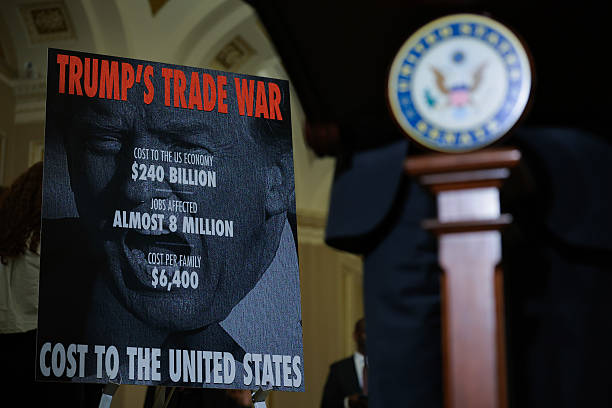
    Photo by Kayla Bartkowski via Getty Images

    Representatives from China and the United States announced a near breakthrough in their ongoing trade dispute this Monday, where both countries agreed to substantially reduce tariffs for a 90-day period. This was as a result of intensive talks and negotiations in Geneva, where both economic powerhouses consented and agreed to slash their respective tariff rates, with the U.S. lowering its imposition from 145% to 30%, and China reducing its rates from 125% to 10%.

    Inasmuch as this truce doesn’t necessarily mean to resolve the fundamental issues that ignited the trade hostilities, the agreement between the two countries makes an effort to establish a framework for continued dialogue during this short period. As such, analysts and investors remain cautious about the prospects of achieving a comprehensive and lasting trade agreement.

    The pathway to the current trade war began with a rapid escalation of tariffs imposition in early 2025. In April, U.S. President Trump initiated what he called “Liberation Day,” where he imposed a 34% reciprocal tariff on Chinese imports under the International Emergency Economic Powers Act (IEEPA). It was this event that set off a series of tit-for-tat measures, where China was forced to immediately retaliate, thereby threatening to destabilize the global supply chain and economy.

    Then as tensions continued to mount, Trump increased the tariffs placed on Chinese imports to a staggering 145%, also forcing the hands of Beijing to quickly implement a comparable levy of 125% on American goods. These extreme numbers, according to Reuters, immediately and effectively halted the over $500 billion bilateral trade relationship between the world’s two largest economies, causing severe disruptions to global supply chains and raising fears of an impending economic collapse.

    It then got worse as China’s response to Trump 145% tariffs went beyond conventional duty increases (its 125%). The Asian country imposed export restrictions on critical rare earth material that are essential components for many high-tech products, as well as added numerous U.S. defense and technology firms to the country’s Export Control List and Unreliable Entity List. 

    As a result of these harrowing measures, the economies of both countries began to suffer measurable damage. The U.S. experienced its first quarterly decline in gross domestic product since early 2022, as importers scrambled to bring products ahead of the implementation of the tariff rates. Simultaneously, China’s exports to the U.S. dropped dramatically, where it adversely affected the country’s giant manufacturing sector, thus, allowing for intense levels of pressure to be mounted on Beijing to implement new economic measures that’d turn everything around.

    These pressures on both economies forced the hands of their governments to initiate negotiations that’d de-escalate the hostilities before it exploded. As such, U.S. Treasury Secretary Scott Bessent and U.S. Trade Representative Jamieson Greer engaged in talks in Geneva with a Chinese delegation led by Vice Premier He Lifeng.

    The adjustments agreed upon by both countries – U.S.’s tariff drop from 145% to 30% and China’s drop from 125% to 10% – are scheduled to take effect by May 14, 2025, and will remain in place for the 90-day period through August 12, 2025. It is worth noting that part of U.S’s 30% current tariff is the 20% tariffs on fentanyl-related products from China that was implemented by the Trump administration, and it will remain in place despite the big reduction in levies.

    The speed at which the agreement was reached surprised many observers, including some of the negotiators themselves. “It’s crucial to recognize how swiftly we reached an agreement, which suggests that perhaps the disparities were not as significant as previously believed,” Greer said.

    Also, this breakthrough, albeit a temporary one, triggered an immediate and positive response across global financial markets. For example, the dollar experienced its largest increase (1%) in almost a month against a range of major currencies, while traditionally safe-haven assets such as the yen, Swiss franc, gold, and government bonds fell as risk appetite improved. 

    Futures for the S&P 500 also surged nearly 3%, indicating expectations of a substantial rally when markets opened.

    However, despite the positive initial reaction, investors and analysts still maintain a cautious outlook regarding the prospects for a comprehensive resolution to the trade war, as there are still concerns about the temporary nature of the agreement as well as the challenges that lie ahead in negotiating a more permanent solution. But it can be said that the countries agreeing to

    reduce reciprocal tariffs created a window of opportunity to pursue more constructive engagement on the issue. 

    The next 90 days will be critical in determining whether the U.S.-China economic relationship can be stabilized or whether the world’s two largest economies will resume their war-like confrontations.

    China retaliation Economic Diplomacy Economic Sanctions Economic Uncertainty Export Control List Fentanyl Tariffs Financial Markets Reaction Geneva Talks Global Supply Chain Disruption Global Trade War He Lifeng international trade tensions Jamieson Greer Liberation Day Tariffs Rare Earth Export Ban S&P 500 Rally Scott Bessent Tariff Reduction 2025 Tariff Suspension Trade Agreement 2025 Trade Negotiations trade policy Trump tariffs Unreliable Entity List US China Relations US China Trade Truce
    Share. Facebook Twitter Pinterest LinkedIn Tumblr Telegram Email
    precious
    • LinkedIn

    I’m Precious Amusat, Phronews’ Content Writer. I conduct in-depth research and write on the latest developments in the tech industry, including trends in big tech, startups, cybersecurity, artificial intelligence and their global impacts. When I’m off the clock, you’ll find me cheering on women’s footy, curled up with a romance novel, or binge-watching crime thrillers.

    Related Posts

    Amazon Announces $12 Billion Louisiana Data Center Investment to Boost AI and Cloud Capacity

    February 27, 2026

    Alphabet, Amazon, Microsoft and Meta Plan $650 Billion AI Infrastructure Spending for 2026

    February 25, 2026

    February 2026 VC Data Shows Capital Shifting From Pure GenAI to Robotics and Defense Tech

    February 24, 2026

    Comments are closed.

    Top Posts

    MIT Study Reveals ChatGPT Impairs Brain Activity & Thinking

    June 29, 2025

    From Ally to Adversary: What Elon Musk’s Feud with Trump Means for the EV Industry

    June 6, 2025

    Coinbase responds to hack: customer impact and official statement

    May 22, 2025

    Coinbase Hack 2025: Everything we know so far.

    May 21, 2025
    Don't Miss
    Big Tech & Startups

    NVIDIA AI Chip Demand Continues Driving Cloud Strategy Changes at AWS, Azure, and Google Cloud

    By fariehanMarch 1, 2026

    Nvidia is now in control of roughly 80% of the AI data center chip market…

    Google DeepMind and OpenAI Intensify Competition as Coding AI Models Target Software Developers

    March 1, 2026

    Google Expands AI-Generated Audio Tools, Signaling a Major Shift in Digital Advertising Strategy

    March 1, 2026

    Amazon Announces $12 Billion Louisiana Data Center Investment to Boost AI and Cloud Capacity

    February 27, 2026
    Stay In Touch
    • Facebook
    • Twitter
    About Us
    About Us

    Evolving from Phronesis News, Phronews brings deep insight and smart analysis to the world of technology. Stay informed, stay ahead, and navigate tech with wisdom.
    We're accepting new partnerships right now.

    Email Us: info@phronews.com

    Facebook X (Twitter) Pinterest YouTube
    Our Picks
    Most Popular

    MIT Study Reveals ChatGPT Impairs Brain Activity & Thinking

    June 29, 2025

    From Ally to Adversary: What Elon Musk’s Feud with Trump Means for the EV Industry

    June 6, 2025

    Coinbase responds to hack: customer impact and official statement

    May 22, 2025
    © 2025. Phronews.
    • Home
    • About Us
    • Get In Touch
    • Privacy Policy
    • Terms and Conditions

    Type above and press Enter to search. Press Esc to cancel.