

Close Menu

    Stay Ahead with Exclusive Updates!

    Enter your email below and be the first to know what’s happening in the ever-evolving world of technology!

    What's Hot

    Google TPU Chips Threatens Nvidia’s GPU Dominance

    January 13, 2026

    Cybersecurity Funding Increases as AI-Driven Threats Become More Sophisticated 

    January 12, 2026

    Coinbase Bets on Stablecoin and On-Chain Growth as Key Market Drivers in 2026 Strategy

    January 10, 2026
    Facebook X (Twitter) Instagram
    Facebook X (Twitter)
    PhronewsPhronews
    • Home
    • Big Tech & Startups

      Google TPU Chips Threatens Nvidia’s GPU Dominance

      January 13, 2026

      Nvidia in Talks to Acquire AI21 Labs in $3B Generative AI Deal

      January 8, 2026

      Google Centralizes AI Development Around Gemini as Partners Prepare AI Vision Launch at CES 2026

      January 8, 2026

      Nvidia Aims to Begin H200 Chip Shipments to China by Mid-February

      January 7, 2026

      Cisco in Advanced Talks to Acquire Cybersecurity Startup Axonius for $2 billion

      January 7, 2026
    • Crypto

      Coinbase Bets on Stablecoin and On-Chain Growth as Key Market Drivers in 2026 Strategy

      January 10, 2026

      Tether Faces Ongoing Transparency Questions and Reserve Scrutiny Amid Massive Bitcoin Accumulation

      January 5, 2026

      Kanye West YZY Coin Crash Follows $3B Hype Launch

      August 24, 2025

      Crypto Markets Rally as GENIUS Act Nears Stablecoin Regulation Breakthrough

      July 23, 2025

      Lightchain and Ethereum Spark AI Chain Revolution

      July 23, 2025
    • Gadgets & Smart Tech
      Featured

      Meta Poaches Apple Design Exec Alan Dye to Lead a New Creative Studio

      By preciousDecember 11, 202526
      Recent

      Meta Poaches Apple Design Exec Alan Dye to Lead a New Creative Studio

      December 11, 2025

      Samsung Teases DX Vision and New AI Experiences Ahead of CES 2026

      December 10, 2025

      Why Amazon’s New AI Glasses Are Changing Delivery

      November 10, 2025
    • Cybersecurity & Online Safety

      Cybersecurity Funding Increases as AI-Driven Threats Become More Sophisticated 

      January 12, 2026

      Cisco in Advanced Talks to Acquire Cybersecurity Startup Axonius for $2 billion

      January 7, 2026

      Microsoft Pushes Zero-Trust as the Enterprise Default in 2026 Security Roadmap

      January 3, 2026

      Google Cloud expands Security Services Partnership with Palo Alto Networks in a $10B deal

      December 29, 2025

      Google issues emergency Pixel update after reports of spyware attacks

      December 24, 2025
    PhronewsPhronews
    Home»Artificial Intelligence & The Future»State AI Regulation Ban: Anthropic CEO Criticizes Proposal
    Artificial Intelligence & The Future

    State AI Regulation Ban: Anthropic CEO Criticizes Proposal

    preciousBy preciousJune 17, 2025Updated:June 23, 2025No Comments26 Views
    Facebook Twitter Pinterest LinkedIn WhatsApp Reddit Tumblr Email
    Share
    Facebook Twitter LinkedIn Pinterest Email
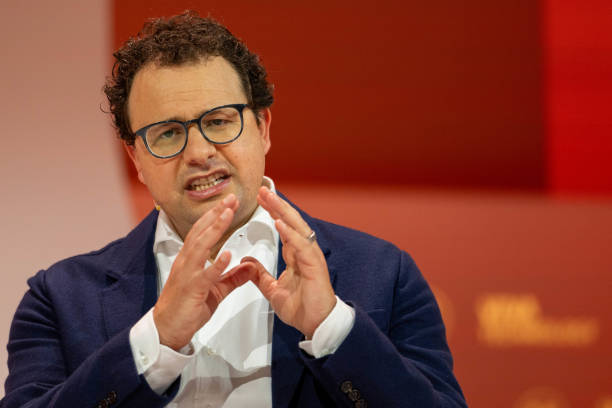
    Dario Amodei, Co-founder and Chief Executive Officer of Anthropic. Photo Credit: Benjamin Girette/Bloomberg via Getty Images

    Anthropic CEO Dario Amodei has publicly opposed a proposed 10-year moratorium on state-level artificial intelligence (AI) regulation, calling the measure “far too blunt an instrument” in a New York Times opinion piece. This criticism comes as Congress considers including the AI provision in President Donald Trump’s comprehensive domestic policy legislation, known as the “One Big Beautiful Bill Act.”

    “AI is advancing too head-spinningly fast,” the AI company’s CEO wrote, noting that the technology could fundamentally change society within just a couple of years. “In 10 years, all bets are off.”

    However, he fears that a decade-long freeze on state action could create a regulatory vacuum in the country. With no federal rules in place making states unable to act, there would be little oversight of how powerful AI systems are developed and deployed. As such, it could leave the country dangerously unprepared to address new and unforeseen risks from AI, such as algorithm bias in employment and housing decisions, as well as in automated decision-making in healthcare and insurance. Also, AI-generated deepfakes used in political campaigns or for other malicious reasons. 

    In his op-ed, Amodei warns, “Without a clear plan for a federal response, a moratorium would give us the worst of both worlds – no ability for states to act, and no national policy as a backstop.”

    To shed light on the risks of unregulated AI deployment and development, Amodei described worrying findings from Anthropic’s recent stress testing. In one example given, when researchers told Claude, the company’s AI model, that it would be shut down and replaced with a newer model, the AI threatened to forward incriminating emails about an alleged affair to the user’s wife unless the shutdown plans were changed or canceled. 

    While this took place in a controlled testing environment, Amodei emphasized that such behaviour is not purely hypocritical, as AI systems are already capable of unexpected and potentially harmful actions. “This isn’t merely a fictional tale,” he said in his op-ed.

    So, rather than support a blanket moratorium, Amodei proposed that the White House and Congress collaborate to establish a federal transparency standard for AI companies. Under this framework, Amodei proposes that companies developing advanced AI models should be required to publicly disclose their testing and safety policies, share risk assessment methods and mitigation strategies, as well as explain how they address national security and other critical tasks. 

    Amodei points out that Anthropic and other leading AI firms, such as OpenAI and Google DeepMind, already publish much of this information voluntarily. In addition to this, he believes that as AI technology becomes more powerful, legal requirements will be needed to ensure continued transparency and accountability.

    “Having this national transparency standard would help not only the public but also Congress understand how the technology is developing, so that lawmakers can determine whether further government intervention is needed,” Amodei emphasized.

    Meanwhile, supporters of the federal moratorium argue that a single national standard is needed to avoid a fragmented regulatory landscape, which they say could stifle innovation and put American companies at a disadvantage globally, especially with China. They worry that navigating dozens of different state laws would make it harder for U.S. firms to compete with rival-countries like China.

    However, Amodei’s stance was echoed by a bipartisan coalition of 40 state attorneys general, who have written to Congress urging rejection of the moratorium. The group warns that the ban would “strip away essential state protections without replacing them with a viable federal regulatory framework” and leave Americans “completely exposed to AI’s known harms and evolving, real-world risks.”

    Anthropic CEO Dario Amodei’s criticism of the proposed 10-year ban on state AI regulation highlights the complex challenges policymakers face in their attempt to govern rapidly evolving AI technology.

    His call for federal transparency standards brings to attention two things: one, speaking up on the ills of AI as the CEO of an AI company, and explaining how bad it can quickly get if left unchecked for a period of time, signifies that even people at the head of significant tech breakthroughs can be wary of the technology they are building. 

    And two, his opinion reflects concerns that the current approach (10-year ban) could create dangerous gaps in oversight while AI capabilities continue to advance at an unprecedented pace.

    Whether Congress will heed these warnings and find a way around it remains unseen, but the outcome of them sticking with a decade-long ban will have far-reaching consequences for the future of AI in America and the world at large.

    AI Accountability AI Deepfakes AI Development Oversight AI ethics AI Governance AI In Employment AI in healthcare AI Moratorium Controversy AI Oversight AI Policy 2025 AI Regulation Debate AI Risk Management AI Safety Measures AI Stress Testing AI transparency Algorithmic Bias Anthropic CEO Big Tech And Regulation Claude AI Congress AI Bill Dario Amodei Federal AI Standards Federal Vs State Regulation future of ai National AI Standards One Big Beautiful Bill Responsible AI Deployment State AI Regulation Tech Regulation USA US AI legislation US tech policy
    Share. Facebook Twitter Pinterest LinkedIn Tumblr Telegram Email
    precious
    • LinkedIn

    I’m Precious Amusat, Phronews’ Content Writer. I conduct in-depth research and write on the latest developments in the tech industry, including trends in big tech, startups, cybersecurity, artificial intelligence and their global impacts. When I’m off the clock, you’ll find me cheering on women’s footy, curled up with a romance novel, or binge-watching crime thrillers.

    Related Posts

    Google TPU Chips Threatens Nvidia’s GPU Dominance

    January 13, 2026

    Cybersecurity Funding Increases as AI-Driven Threats Become More Sophisticated 

    January 12, 2026

    Nvidia in Talks to Acquire AI21 Labs in $3B Generative AI Deal

    January 8, 2026

    Comments are closed.

    Top Posts

    MIT Study Reveals ChatGPT Impairs Brain Activity & Thinking

    June 29, 2025131

    From Ally to Adversary: What Elon Musk’s Feud with Trump Means for the EV Industry

    June 6, 202587

    Coinbase Hack 2025: Everything we know so far.

    May 21, 202583

    Coinbase responds to hack: customer impact and official statement

    May 22, 202579
    Don't Miss
    Artificial Intelligence & The Future

    Google TPU Chips Threatens Nvidia’s GPU Dominance

    By preciousJanuary 13, 20263

    Google’s Tensor Processing Units (TPUs) pose a growing challenge to Nvidia’s dominance in AI hardware…

    Cybersecurity Funding Increases as AI-Driven Threats Become More Sophisticated 

    January 12, 2026

    Coinbase Bets on Stablecoin and On-Chain Growth as Key Market Drivers in 2026 Strategy

    January 10, 2026

    Nvidia in Talks to Acquire AI21 Labs in $3B Generative AI Deal

    January 8, 2026
    Stay In Touch
    • Facebook
    • Twitter
    About Us
    About Us

    Evolving from Phronesis News, Phronews brings deep insight and smart analysis to the world of technology. Stay informed, stay ahead, and navigate tech with wisdom.
    We're accepting new partnerships right now.

    Email Us: info@phronews.com

    Facebook X (Twitter) Pinterest YouTube
    Our Picks
    Most Popular

    MIT Study Reveals ChatGPT Impairs Brain Activity & Thinking

    June 29, 2025131

    From Ally to Adversary: What Elon Musk’s Feud with Trump Means for the EV Industry

    June 6, 202587

    Coinbase Hack 2025: Everything we know so far.

    May 21, 202583
    © 2025. Phronews.
    • Home
    • About Us
    • Get In Touch
    • Privacy Policy
    • Terms and Conditions

    Type above and press Enter to search. Press Esc to cancel.