

Close Menu

    Stay Ahead with Exclusive Updates!

    Enter your email below and be the first to know what’s happening in the ever-evolving world of technology!

    What's Hot

    Google TPU Chips Threatens Nvidia’s GPU Dominance

    January 13, 2026

    Cybersecurity Funding Increases as AI-Driven Threats Become More Sophisticated 

    January 12, 2026

    Coinbase Bets on Stablecoin and On-Chain Growth as Key Market Drivers in 2026 Strategy

    January 10, 2026
    Facebook X (Twitter) Instagram
    Facebook X (Twitter)
    PhronewsPhronews
    • Home
    • Big Tech & Startups

      Google TPU Chips Threatens Nvidia’s GPU Dominance

      January 13, 2026

      Nvidia in Talks to Acquire AI21 Labs in $3B Generative AI Deal

      January 8, 2026

      Google Centralizes AI Development Around Gemini as Partners Prepare AI Vision Launch at CES 2026

      January 8, 2026

      Nvidia Aims to Begin H200 Chip Shipments to China by Mid-February

      January 7, 2026

      Cisco in Advanced Talks to Acquire Cybersecurity Startup Axonius for $2 billion

      January 7, 2026
    • Crypto

      Coinbase Bets on Stablecoin and On-Chain Growth as Key Market Drivers in 2026 Strategy

      January 10, 2026

      Tether Faces Ongoing Transparency Questions and Reserve Scrutiny Amid Massive Bitcoin Accumulation

      January 5, 2026

      Kanye West YZY Coin Crash Follows $3B Hype Launch

      August 24, 2025

      Crypto Markets Rally as GENIUS Act Nears Stablecoin Regulation Breakthrough

      July 23, 2025

      Lightchain and Ethereum Spark AI Chain Revolution

      July 23, 2025
    • Gadgets & Smart Tech
      Featured

      Meta Poaches Apple Design Exec Alan Dye to Lead a New Creative Studio

      By preciousDecember 11, 202526
      Recent

      Meta Poaches Apple Design Exec Alan Dye to Lead a New Creative Studio

      December 11, 2025

      Samsung Teases DX Vision and New AI Experiences Ahead of CES 2026

      December 10, 2025

      Why Amazon’s New AI Glasses Are Changing Delivery

      November 10, 2025
    • Cybersecurity & Online Safety

      Cybersecurity Funding Increases as AI-Driven Threats Become More Sophisticated 

      January 12, 2026

      Cisco in Advanced Talks to Acquire Cybersecurity Startup Axonius for $2 billion

      January 7, 2026

      Microsoft Pushes Zero-Trust as the Enterprise Default in 2026 Security Roadmap

      January 3, 2026

      Google Cloud expands Security Services Partnership with Palo Alto Networks in a $10B deal

      December 29, 2025

      Google issues emergency Pixel update after reports of spyware attacks

      December 24, 2025
    PhronewsPhronews
    Home»Cybersecurity & Online Safety»SmartAttack: New Smartwatch Attack Shows How Air-gapped Systems Can Be Breached
    Cybersecurity & Online Safety

    SmartAttack: New Smartwatch Attack Shows How Air-gapped Systems Can Be Breached

    oluchiBy oluchiJune 24, 2025Updated:July 1, 2025No Comments12 Views
    Facebook Twitter Pinterest LinkedIn WhatsApp Reddit Tumblr Email
    Share
    Facebook Twitter LinkedIn Pinterest Email
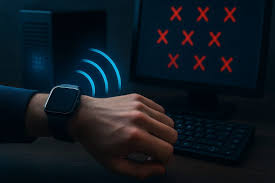
    Image Generated from Medium

    In a startling development that sounds straight out of a spy thriller, cybersecurity experts have unveiled a cutting-edge threat called “SmartAttack,” a novel cyberattack technique using smartwatches to breach air-gapped systems, typically considered impenetrable because they are physically isolated from any network.

    SmartAttack is a novel data exfiltration technique developed by Dr. Mordechai Guri of Ben-Gurion University of Negev, known for its strong cybersecurity research. It demonstrates a side-channel technique that uses the inertial measurement unit (IMU), specifically the accelerometer and gyroscope (both sensors) found in a smartwatch.

    What is SmartAttack?

    Air-gapped Systems

    To understand how SmartAttack works, we must first understand the concept of “air-gapped” systems. An air-gapped system is a security measure that involves isolating a computer or network and preventing it from establishing any external connection. 

    There is a complete physical or logical separation between the secured system and any unsecured network like the internet or other internal networks. Physical separation entails no connections to Ethernet cables, Wi-Fi, Bluetooth, or LAN. Logical separation involves the use of strong firewalls, strict access controls, and network segmentation.

    Air-gapped systems cannot be accessed remotely, which significantly reduces the risk of cyberattacks, malware infections, and data breaches that rely on network connectivity. Transfer of data is done manually and offline through the aid of carefully scanned removable media like USB drives, external hard drives, or magnetic tapes.

    Air-gapped systems are primarily used in government and military systems, nuclear facilities, industrial control systems, financial institutions, and sensitive research materials and to create backups for disaster recovery.

    How SmartAttack Works

    SmartAttack leverages electromagnetic (EM), optical, thermal, and acoustic (sound) channels for data exfiltration. A more effective method, however, according to Mordechai’s research, is via ultrasonic channels.

    The use of ultrasonic channels during data exfiltration is largely preferred due to its stealth and the availability of microphones and speakers present in almost all modern devices. This method requires a transmitter (PC or laptop with a speaker) and a receiver (a device with audio recording capabilities) to capture the signals.

    The transmitter gives off ultrasonic sound at 18 kHz and above that is inaudible to humans and can be encoded with sensitive data like keystrokes, encryption keys, credentials, or confidential documents to covertly transmit them to the receiver without suspicion.

    The first step involves a breach in the air-gapped system through an insider threat, supply chain attacks, or a corrupted removable media that introduces malware into the system. Once this is done, the exfiltrated data is converted into high-frequency ultrasonic signals, which are then transmitted through a receiver like the compromised PC speaker or smartwatch.

    A compromised smartwatch of a person with access to the secure environment serves as a silent data vacuum. With the aid of its built-in microphone, capable of picking up frequencies at 18-22 kHz, the encoded signals are captured, demodulated and decoded, and then sent through the smartwatch’s own Wi-Fi, Bluetooth, or cellular network system.

    Implications for High-Security Environments

    The research carried out by Mordechai on SmartAttack has highlighted a dangerous blind spot in critical infrastructure security. Air-gapped environments that seemed indestructible from wireless leaks and cyberattacks due to their offline nature no longer seem secure.

    Smartwatches have rapidly become a part of everyday wearables and never attract any suspicion, which makes them a dangerous medium for SmartAttack. This discovery begs for a rethink on policies that allow employees to bring their devices into sensitive areas.

    “The belief that an air-gapped computer is 100% secure is becoming obsolete,” said Dr. Mordechi Guri, lead researcher and head of the Cyber-Security Research Center at Ben-Gurion University. “Smartwatch sensors have become powerful enough to function as espionage tools, especially when worn by trusted insiders.”

    Accelerometer Hack Acoustic Side Channels Advanced Persistent Threats Air Gapped Systems Air-Gapped Systems Ben Gurion University Ben-Gurion University Covert Data Transmission Critical Infrastructure Security Cyber Espionage Tools Cyber Threat Detection cybersecurity Cybersecurity Blind Spots cybersecurity research Dr Mordechai Guri EM Side Channel Attack Gyroscope Exploit High Security Breach IMU Exploits Inertial Measurement Unit insider threats Next Gen Cyber Threats Novel Cyberattack Method Secure System Bypass SmartAttack SmartAttack Cyber Threat Smartwatch Data Leak Smartwatch Espionage Smartwatch security Smartwatch Sensors Risk Smartwatch Surveillance Spyware Techniques Ultrasonic Data Exfiltration Ultrasonic Hacking wearable exploits Wearable Tech Vulnerabilities
    Share. Facebook Twitter Pinterest LinkedIn Tumblr Telegram Email
    oluchi
    • X (Twitter)
    • LinkedIn

    I am a content writer with over three years of experience. I specialize in creating clear, engaging, and value-driven content across diverse niches, and I’m now focused on the tech and business space. My strong research skills, paired with a natural storytelling ability, enable me to break down complex topics into compelling, reader-friendly articles. As an avid reader and music lover, I bring creativity, insight, and a sharp eye for detail to every piece I write.

    Related Posts

    Cybersecurity Funding Increases as AI-Driven Threats Become More Sophisticated 

    January 12, 2026

    Cisco in Advanced Talks to Acquire Cybersecurity Startup Axonius for $2 billion

    January 7, 2026

    Microsoft Pushes Zero-Trust as the Enterprise Default in 2026 Security Roadmap

    January 3, 2026

    Comments are closed.

    Top Posts

    MIT Study Reveals ChatGPT Impairs Brain Activity & Thinking

    June 29, 2025131

    From Ally to Adversary: What Elon Musk’s Feud with Trump Means for the EV Industry

    June 6, 202587

    Coinbase Hack 2025: Everything we know so far.

    May 21, 202583

    Coinbase responds to hack: customer impact and official statement

    May 22, 202579
    Don't Miss
    Artificial Intelligence & The Future

    Google TPU Chips Threatens Nvidia’s GPU Dominance

    By preciousJanuary 13, 20263

    Google’s Tensor Processing Units (TPUs) pose a growing challenge to Nvidia’s dominance in AI hardware…

    Cybersecurity Funding Increases as AI-Driven Threats Become More Sophisticated 

    January 12, 2026

    Coinbase Bets on Stablecoin and On-Chain Growth as Key Market Drivers in 2026 Strategy

    January 10, 2026

    Nvidia in Talks to Acquire AI21 Labs in $3B Generative AI Deal

    January 8, 2026
    Stay In Touch
    • Facebook
    • Twitter
    About Us
    About Us

    Evolving from Phronesis News, Phronews brings deep insight and smart analysis to the world of technology. Stay informed, stay ahead, and navigate tech with wisdom.
    We're accepting new partnerships right now.

    Email Us: info@phronews.com

    Facebook X (Twitter) Pinterest YouTube
    Our Picks
    Most Popular

    MIT Study Reveals ChatGPT Impairs Brain Activity & Thinking

    June 29, 2025131

    From Ally to Adversary: What Elon Musk’s Feud with Trump Means for the EV Industry

    June 6, 202587

    Coinbase Hack 2025: Everything we know so far.

    May 21, 202583
    © 2025. Phronews.
    • Home
    • About Us
    • Get In Touch
    • Privacy Policy
    • Terms and Conditions

    Type above and press Enter to search. Press Esc to cancel.