

Close Menu

    Stay Ahead with Exclusive Updates!

    Enter your email below and be the first to know what’s happening in the ever-evolving world of technology!

    What's Hot

    Google TPU Chips Threatens Nvidia’s GPU Dominance

    January 13, 2026

    Cybersecurity Funding Increases as AI-Driven Threats Become More Sophisticated 

    January 12, 2026

    Coinbase Bets on Stablecoin and On-Chain Growth as Key Market Drivers in 2026 Strategy

    January 10, 2026
    Facebook X (Twitter) Instagram
    Facebook X (Twitter)
    PhronewsPhronews
    • Home
    • Big Tech & Startups

      Google TPU Chips Threatens Nvidia’s GPU Dominance

      January 13, 2026

      Nvidia in Talks to Acquire AI21 Labs in $3B Generative AI Deal

      January 8, 2026

      Google Centralizes AI Development Around Gemini as Partners Prepare AI Vision Launch at CES 2026

      January 8, 2026

      Nvidia Aims to Begin H200 Chip Shipments to China by Mid-February

      January 7, 2026

      Cisco in Advanced Talks to Acquire Cybersecurity Startup Axonius for $2 billion

      January 7, 2026
    • Crypto

      Coinbase Bets on Stablecoin and On-Chain Growth as Key Market Drivers in 2026 Strategy

      January 10, 2026

      Tether Faces Ongoing Transparency Questions and Reserve Scrutiny Amid Massive Bitcoin Accumulation

      January 5, 2026

      Kanye West YZY Coin Crash Follows $3B Hype Launch

      August 24, 2025

      Crypto Markets Rally as GENIUS Act Nears Stablecoin Regulation Breakthrough

      July 23, 2025

      Lightchain and Ethereum Spark AI Chain Revolution

      July 23, 2025
    • Gadgets & Smart Tech
      Featured

      Meta Poaches Apple Design Exec Alan Dye to Lead a New Creative Studio

      By preciousDecember 11, 202526
      Recent

      Meta Poaches Apple Design Exec Alan Dye to Lead a New Creative Studio

      December 11, 2025

      Samsung Teases DX Vision and New AI Experiences Ahead of CES 2026

      December 10, 2025

      Why Amazon’s New AI Glasses Are Changing Delivery

      November 10, 2025
    • Cybersecurity & Online Safety

      Cybersecurity Funding Increases as AI-Driven Threats Become More Sophisticated 

      January 12, 2026

      Cisco in Advanced Talks to Acquire Cybersecurity Startup Axonius for $2 billion

      January 7, 2026

      Microsoft Pushes Zero-Trust as the Enterprise Default in 2026 Security Roadmap

      January 3, 2026

      Google Cloud expands Security Services Partnership with Palo Alto Networks in a $10B deal

      December 29, 2025

      Google issues emergency Pixel update after reports of spyware attacks

      December 24, 2025
    PhronewsPhronews
    Home»Artificial Intelligence & The Future»Researchers Uncover Critical RCE Flaws in Meta, Nvidia & Microsoft Inference Engines
    Artificial Intelligence & The Future

    Researchers Uncover Critical RCE Flaws in Meta, Nvidia & Microsoft Inference Engines

    oluchiBy oluchiNovember 27, 2025Updated:November 29, 2025No Comments11 Views
    Facebook Twitter Pinterest LinkedIn WhatsApp Reddit Tumblr Email
    Share
    Facebook Twitter LinkedIn Pinterest Email
    Image Generated from Oligo Security

    Microsoft, Meta, and Nvidia just faced a major wake-up call. Security researchers found critical remote code execution flaws in their AI inference engines. In this article, we explore the recent discovery of serious security flaws in key AI inference engines. 

    We will cover how these remote code execution vulnerabilities spread through code reuse. Then, we detail the affected frameworks and risks. Finally, we look at patches and steps for better security in AI systems.

    The ShadowMQ Vulnerability Pattern

    Security researchers at Oligo Security found a dangerous pattern called ShadowMQ. It started in Meta’s Llama Stack framework. 

    The issue? The unsafe use of ZeroMQ sockets with Python’s pickle deserialization for data handling. Now, pickle can run any code during unpickling. And this opens doors for remote attacks over networks.

    The spread of the flaw was due to copied code. Developers took files from one project to another. This incident happened without full checks, so it moved from one repository to the next.

    ShadowMQ was first spotted in October 2024 during routine scans on Meta’s Llama Stack. Oligo noticed unauthenticated ZMQ sockets and deserializing untrusted data via pickle. Now, teams must watch for these hidden chains.

    Affected Frameworks and Real-World Impact

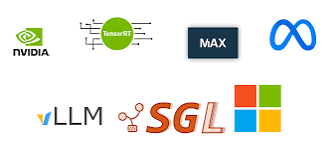
    The bugs hit major players. Meta’s Llama Stack got CVE-2024-50050 with a CVSS score of 8.0. Nvidia’s TensorRT-LLM has CVE-2025-23254 at 9.3 severity. Microsoft’s Sarathi-Serve remains vulnerable without a CVE yet.

    Open-source ones like vLLM and SGLang also suffer. These tools power AI in big setups. Users include xAI, AMD, Intel, and clouds like AWS and Azure. Universities such as MIT and Stanford rely on them too.

    Enterprises are already feeling the heat from ShadowMQ exposures. Oligo’s scan revealed over 4,200 publicly reachable ZeroMQ ports running the vulnerable code. Many belong to Fortune 500 companies and government clouds.

    Attackers could steal models or add miners. Exploits might lead to full takeovers. One bad node could spread harm across clusters. Stats show AI threats rose 40 percent in 2025. This fits a trend where flaws hit development pipelines hard.

    Real-world testing proved the danger in minutes. Oligo researchers gained remote shells on unpatched clusters with a single payload. They extracted full Llama-3.1-70B weights in under 20 minutes. This shows why inference engines now top the list of high-value targets for nation-state actors. 

    Patches Released and Security Lessons

    Good news came with quick fixes. Meta switched to JSON serialization. Nvidia added HMAC checks in version 0.18.2. vLLM now defaults to its safe V1 engine. Modular Max Server uses msgpack instead. 

    Microsoft’s Sarathi-Serve needs urgent review. It’s a research tool but runs in production spots. Oligo urges all users to update now. 

    To avoid repeats of ShadowmMQ, audit copied code. Use safe data formats like JSON or msgpack. Test network exposures often. Don’t use pickle with untrusted data. And educate dev teams on the importance of serialization.

    As engines scale, security must keep pace. Firms now push for vetted reuse. This could shape safer standards ahead.

    See Also: https://phronews.com/nvidia-q3-2025-earnings-ai-bubble-debate/

    AI cluster security AI code reuse risks AI cybersecurity AI inference engine security AI Inference engines AI infrastructure risks AI model security breach AI patch updates AI security flaws AI security vulnerabilities AI supply chain security AI threat rise 2025 AI Vulnerabilities AWS AI systems Azure AI systems cloud AI security CVE-2024-50050 CVE-2025-23254 cybersecurity best practices for AI enterprise AI security Fortune 500 cybersecurity government cloud security JSON vs pickle security Llama Stack vulnerability Meta Meta Llama Stack Meta security patch Microsoft Microsoft Sarathi-Serve model theft risks msgpack security nation-state cyberattacks Nvidia Nvidia security patch Nvidia TensorRT-LLM Oligo security pickle deserialization risk RCE flaws remote code execution remote shell exploit Sarathi-Serve vulnerability secure AI development secure serialization SGLang vulnerability ShadowMQ TensorRT-LLM vulnerability vLLM engine update vLLM vulnerability vulnerable AI frameworks ZeroMQ exposed ports ZeroMQ vulnerability
    Share. Facebook Twitter Pinterest LinkedIn Tumblr Telegram Email
    oluchi
    • X (Twitter)
    • LinkedIn

    I am a content writer with over three years of experience. I specialize in creating clear, engaging, and value-driven content across diverse niches, and I’m now focused on the tech and business space. My strong research skills, paired with a natural storytelling ability, enable me to break down complex topics into compelling, reader-friendly articles. As an avid reader and music lover, I bring creativity, insight, and a sharp eye for detail to every piece I write.

    Related Posts

    Google TPU Chips Threatens Nvidia’s GPU Dominance

    January 13, 2026

    Cybersecurity Funding Increases as AI-Driven Threats Become More Sophisticated 

    January 12, 2026

    Nvidia in Talks to Acquire AI21 Labs in $3B Generative AI Deal

    January 8, 2026

    Comments are closed.

    Top Posts

    MIT Study Reveals ChatGPT Impairs Brain Activity & Thinking

    June 29, 2025131

    From Ally to Adversary: What Elon Musk’s Feud with Trump Means for the EV Industry

    June 6, 202587

    Coinbase Hack 2025: Everything we know so far.

    May 21, 202583

    Coinbase responds to hack: customer impact and official statement

    May 22, 202579
    Don't Miss
    Artificial Intelligence & The Future

    Google TPU Chips Threatens Nvidia’s GPU Dominance

    By preciousJanuary 13, 20263

    Google’s Tensor Processing Units (TPUs) pose a growing challenge to Nvidia’s dominance in AI hardware…

    Cybersecurity Funding Increases as AI-Driven Threats Become More Sophisticated 

    January 12, 2026

    Coinbase Bets on Stablecoin and On-Chain Growth as Key Market Drivers in 2026 Strategy

    January 10, 2026

    Nvidia in Talks to Acquire AI21 Labs in $3B Generative AI Deal

    January 8, 2026
    Stay In Touch
    • Facebook
    • Twitter
    About Us
    About Us

    Evolving from Phronesis News, Phronews brings deep insight and smart analysis to the world of technology. Stay informed, stay ahead, and navigate tech with wisdom.
    We're accepting new partnerships right now.

    Email Us: info@phronews.com

    Facebook X (Twitter) Pinterest YouTube
    Our Picks
    Most Popular

    MIT Study Reveals ChatGPT Impairs Brain Activity & Thinking

    June 29, 2025131

    From Ally to Adversary: What Elon Musk’s Feud with Trump Means for the EV Industry

    June 6, 202587

    Coinbase Hack 2025: Everything we know so far.

    May 21, 202583
    © 2025. Phronews.
    • Home
    • About Us
    • Get In Touch
    • Privacy Policy
    • Terms and Conditions

    Type above and press Enter to search. Press Esc to cancel.