


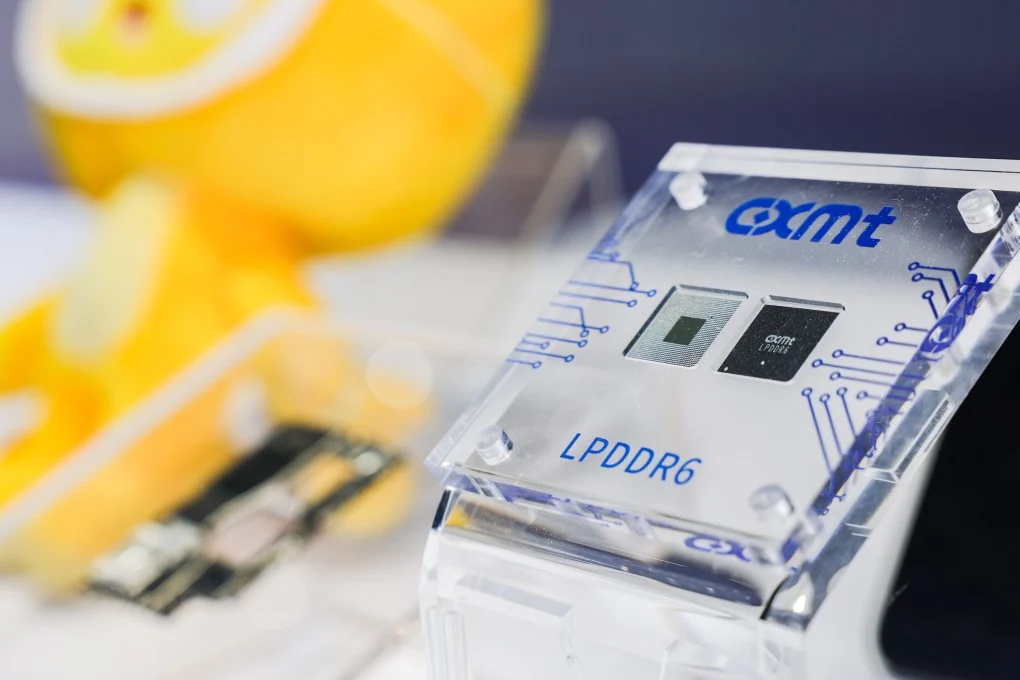
AI chips require fast, high-capacity memory, and rising demand is reshaping competition across the industry. Chinese memory maker ChangXin Memory Technologies (CXMT) is expanding conventional DRAM production.
Meanwhile, South Korean leaders Samsung Electronics and SK hynix are focusing on advanced memory. This shift is bringing Chinese suppliers into closer competition with Korea’s established chipmakers.
China’s Memory-Chip Push Gains Ground
CXMT’s market share shows why Korean firms face new pressure. It captured 10% of global DRAM revenue in the second quarter, up from 4% a year earlier. Building on that growth, it plans to raise monthly capacity from about 300,000 wafers to as many as 600,000 by 2028.
If CXMT reaches that target, it could supply more domestic customers and compete for business abroad. However, planned capacity does not equal operating output.
In addition, the company says its newest DRAM platform has entered mass production. It claims the process fits more memory on each chip and increases the number of chips produced per wafer. That could support lower costs and greater output.
Yet, wafer counts exclude defective chips. Therefore, yields and reliability will determine whether the technology can compete at scale.
AI Chips Reshape the Memory Market
This expansion coincides with rising demand for AI chips. Data centers use high-bandwidth memory (HBM) to move information quickly into processors. To meet that demand, Samsung, SK hynix and US rival Micron have shifted production toward HBM and server memory.
As a result, supplies of conventional memory for phones and computers have tightened, creating room for suppliers such as CXMT. That supply gap gives China a route to grow beyond domestic demand. By serving conventional DRAM buyers, CXMT can build production experience and customer relationships.
In contrast, Korean firms are investing in HBM, where they retain a stronger position. SK hynix held half the HBM market in the second quarter. Thus, AI chips strengthen Korean firms in HBM even as shifting production creates openings for Chinese suppliers of conventional memory.
Still, the two sides have different strengths. Industry estimates place CXMT several generations behind Korean firms in conventional DRAM technology. It also remains at an earlier stage in HBM.
Consequently, a rising DRAM market share does not mean China has caught up across memory products. Korean firms still lead in advanced memory for AI chips, although they must keep developing products and maintaining reliable supply to preserve that edge.
Rising Stakes for South Korea
The competitive pressure reaches beyond chipmakers. Samsung and SK hynix account for a large share of South Korea’s exports, so lost market share could affect the wider economy. At the same time, high prices and tight supply give Chinese producers more revenue to fund expansion. In turn, added capacity could intensify competition and put further pressure on Korean suppliers.
However, technology announcements alone do not prove a commercial threat. CXMT must show it can produce reliable memory at scale and win sustained customer orders. Even so, buyers will judge actual yields, quality, delivery and price before committing to a supplier.
Ultimately, those results will determine what comes next. Shipments, factory yields, customer contracts and HBM progress will show whether China can turn investment into lasting competition.
