

Close Menu

    Stay Ahead with Exclusive Updates!

    Enter your email below and be the first to know what’s happening in the ever-evolving world of technology!

    What's Hot

    NVIDIA AI Chip Demand Continues Driving Cloud Strategy Changes at AWS, Azure, and Google Cloud

    March 1, 2026

    Google DeepMind and OpenAI Intensify Competition as Coding AI Models Target Software Developers

    March 1, 2026

    Google Expands AI-Generated Audio Tools, Signaling a Major Shift in Digital Advertising Strategy

    March 1, 2026
    Facebook X (Twitter) Instagram
    Facebook X (Twitter)
    PhronewsPhronews
    • Home
    • Big Tech & Startups

      NVIDIA AI Chip Demand Continues Driving Cloud Strategy Changes at AWS, Azure, and Google Cloud

      March 1, 2026

      Google DeepMind and OpenAI Intensify Competition as Coding AI Models Target Software Developers

      March 1, 2026

      Google Expands AI-Generated Audio Tools, Signaling a Major Shift in Digital Advertising Strategy

      March 1, 2026

      Amazon Announces $12 Billion Louisiana Data Center Investment to Boost AI and Cloud Capacity

      February 27, 2026

      Hyperscalers Including Microsoft and Amazon Build Private Energy Systems to Power AI Data Centers

      February 27, 2026
    • Crypto

      AI Assisted Hacking Groups Target Crypto Firms With Multi-Layered Social Engineering

      February 18, 2026

      Global Crypto Regulations Expand as 2026 Begins With New Data Collection Frameworks and National Laws

      January 16, 2026

      Coinbase Bets on Stablecoin and On-Chain Growth as Key Market Drivers in 2026 Strategy

      January 10, 2026

      Tether Faces Ongoing Transparency Questions and Reserve Scrutiny Amid Massive Bitcoin Accumulation

      January 5, 2026

      Kanye West YZY Coin Crash Follows $3B Hype Launch

      August 24, 2025
    • Gadgets & Smart Tech
      Featured

      Tesla Launches China AI Training Center for Full Self-Driving Development

      By preciousFebruary 18, 2026
      Recent

      Tesla Launches China AI Training Center for Full Self-Driving Development

      February 18, 2026

      Samsung to Unveil AI-powered Galaxy S26 on February 25 Unpacked Event

      February 13, 2026

      Meta Introduces its Neural Wristband to the World

      February 4, 2026
    • Cybersecurity & Online Safety

      OpenAI Benchmarks AI Models for Smart Contract Security Testing in Blockchain Applications

      February 27, 2026

      Cybersecurity Stocks Drop as Anthropic Launches Claude Code Security Tool

      February 26, 2026

      AI Assisted Hacking Groups Target Crypto Firms With Multi-Layered Social Engineering

      February 18, 2026

      SentinelOne Warns Hackers are Targeting AI in Physical World Systems like Self-Driving Cars

      February 18, 2026

      Deepfake Zoom Calls Used in Corporate Fraud Attacks: Inside the Latest AI Social Engineering Scheme

      February 17, 2026
    PhronewsPhronews
    Home»Big Tech & Startups»China Slams Nvidia Over Law Violation Probe
    Big Tech & Startups

    China Slams Nvidia Over Law Violation Probe

    oluchiBy oluchiOctober 11, 2025Updated:October 22, 2025No Comments
    Facebook Twitter Pinterest LinkedIn WhatsApp Reddit Tumblr Email
    Share
    Facebook Twitter LinkedIn Pinterest Email
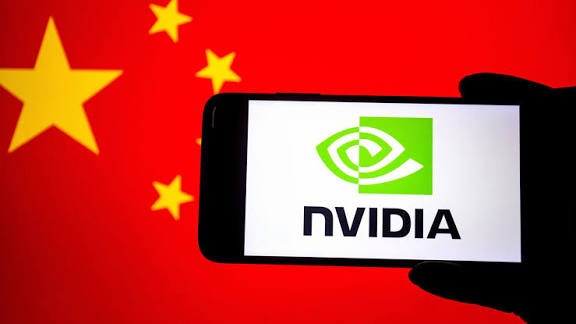
    Image Generated from CNBC

    On September 15, China announced that a preliminary probe held by its State Administration for Market Regulation (SAMR) found Nvidia guilty of violating China’s anti-monopoly laws. This involves its acquisition of Mellanox Technologies in 2020.

    The US-China trade war escalates, placing Nvidia, America’s tech dominace poster child in the crosshairs over a deal from five years back.

    The Backstory: How a 2020 Deal Sparked a Firestorm

    Back in 2020, Nvidia, with the go-ahead of China, purchased an Israeli firm, Mellanox Technologies, for $6.9B. The firm was a leading supplier of end-to-end InfiniBand and Ethernet interconnect solutions and services for data centers.

    Simply put, Mellanox specialized in high-speed networking gear for data centers, and its acquisition was a smart move by Nvidia to bolster its edge in AI and cloud computing. 

    Why There Was a Need to Get Approval from China

    Economic and geopolitical factors connected Mellanox, Israeli firm headquartered in Yokneam, Israel, to China. Let’s break it down.

    Before Nvidia acquired Mellanox, the comapny maintained a significant market presence in China, where tech giants like Alibaba, Tencent, and Baidu, used its products, generating a substantial portion of its Asia-Pacific region revenue.

    The relationship between Mellanox and the Chinese firms it supplied wasn’t limited to a seller-customer relationship. For instance, it collaborated with companies like Huawei to develop solutions for cloud computing and high-bandwidth, low-latency applications.

    Also, China relied heavily on Mellanox’s products, as they were critical for its data centers, and any disruption could hamstring Chinese companies. 

    Due to the nature of this market presence, any change in Mellanox’s ownership could disrupt China’s tech ecosystem, and this prompted scrutiny from regulators. 

    For a successful acquisition of the firm, China’s State Administration for Market Regulation (SAMR) required approval for Nvidia’s acquisition of Mellanox under the 2008 Anti-Monopoly Law of China (AML).

    The law applies to potential monopolistic conduct both within and outside China that has the effect of eliminating or redistricting competition in its domestic market. 

    Although Mellanox operated outside China’s territory, its acquisition by Nvidia (a tech titan) raised concerns about potential monopolistic control over AI and data center infrastructure, where Chinese firms compete. 

    This led to a “strings attached” agreement, which entailed the following:

    • A continuous supply of Mellanox’s networking products and Nvidia’s GPUs to the Chinese market on fair, reasonable, and non-discriminatory terms.
    • Fair pricing and terms.
    • Compliance with Chinese market regulations.

    Fast forward to late 2024, the SAMR kicked off an investigation into Nvidia to check if they conformed to the prior agreement. On September 15, the regulator confirmed that Nvidia had breached China’s anti-monopoly laws, albeit without specifying the specific violation.

    “The SAMR decided to conduct further investigation into it in accordance with the law,” the regulator said.

    Nvidia’s Response

    “We comply with the law in all respects,” an Nvidia spokesperson said in a statement. “We will continue to cooperate with all relevant government agencies as they evaluate the impact of export controls on competition in the commercial markets.”

    Implications for Nvidia, China-US Relations

    Nvidia has found itself caught in the middle of the escalating trade tensions between China and the US. 

    The US imposed trade restrictions that prohibited sales of the H20 chips and China urged its tech giants to refrain from patronizing Nvidia even after the trade ban was lifted. So far it has been a rollercoaster of trade disasters. 

    Investigations are still ongoing, and all eyes are on SAMR for full reports and any potential fines. However, one thing has been made clear so far: even trillion-dollar tech titans are not immune to geopolitical tensions.

    The ever-rising tension between China and the US as a result of this case might lead to more restrictions on export controls between both countries and stricter enforcement of trade laws. 

    AI and cloud computing AI chip regulation AI chips AI dominance AI hardware market Alibaba anti-monopoly law anti-monopoly violations anti-trust enforcement Antimonopoly law China Baidu China antitrust investigation China Antitrust probe China market regulation China tech policy China-US tech rivalry Chinese market dynamics Chinese tech market Chip Supply Chain cross-border acquisition data center infrastructure export controls fair competition law fair pricing terms geopolitical tech conflict Global AI competition global regulatory oversight global tech regulation Huawei partnerships international trade law Market Fairness Mellanox Acquisition Mellanox networking products Nvidia Nvidia China relations Nvidia compliance Nvidia corporate response Nvidia fine speculation Nvidia H20 chips Nvidia legal challenges Nvidia Mellanox deal Nvidia monopoly case Nvidia regulatory scrutiny Nvidia sanctions risk Nvidia trade restrictions SAMR SAMR investigation SAMR investigation 2024 Semiconductor Geopolitics semiconductor industry tech sovereignty Tencent trade tensions US tech sanctions US-China tech war US-China trade war
    Share. Facebook Twitter Pinterest LinkedIn Tumblr Telegram Email
    oluchi
    • X (Twitter)
    • LinkedIn

    I am a content writer with over three years of experience. I specialize in creating clear, engaging, and value-driven content across diverse niches, and I’m now focused on the tech and business space. My strong research skills, paired with a natural storytelling ability, enable me to break down complex topics into compelling, reader-friendly articles. As an avid reader and music lover, I bring creativity, insight, and a sharp eye for detail to every piece I write.

    Related Posts

    NVIDIA AI Chip Demand Continues Driving Cloud Strategy Changes at AWS, Azure, and Google Cloud

    March 1, 2026

    Google DeepMind and OpenAI Intensify Competition as Coding AI Models Target Software Developers

    March 1, 2026

    Google Expands AI-Generated Audio Tools, Signaling a Major Shift in Digital Advertising Strategy

    March 1, 2026

    Comments are closed.

    Top Posts

    MIT Study Reveals ChatGPT Impairs Brain Activity & Thinking

    June 29, 2025

    From Ally to Adversary: What Elon Musk’s Feud with Trump Means for the EV Industry

    June 6, 2025

    Coinbase responds to hack: customer impact and official statement

    May 22, 2025

    Coinbase Hack 2025: Everything we know so far.

    May 21, 2025
    Don't Miss
    Big Tech & Startups

    NVIDIA AI Chip Demand Continues Driving Cloud Strategy Changes at AWS, Azure, and Google Cloud

    By fariehanMarch 1, 2026

    Nvidia is now in control of roughly 80% of the AI data center chip market…

    Google DeepMind and OpenAI Intensify Competition as Coding AI Models Target Software Developers

    March 1, 2026

    Google Expands AI-Generated Audio Tools, Signaling a Major Shift in Digital Advertising Strategy

    March 1, 2026

    Amazon Announces $12 Billion Louisiana Data Center Investment to Boost AI and Cloud Capacity

    February 27, 2026
    Stay In Touch
    • Facebook
    • Twitter
    About Us
    About Us

    Evolving from Phronesis News, Phronews brings deep insight and smart analysis to the world of technology. Stay informed, stay ahead, and navigate tech with wisdom.
    We're accepting new partnerships right now.

    Email Us: info@phronews.com

    Facebook X (Twitter) Pinterest YouTube
    Our Picks
    Most Popular

    MIT Study Reveals ChatGPT Impairs Brain Activity & Thinking

    June 29, 2025

    From Ally to Adversary: What Elon Musk’s Feud with Trump Means for the EV Industry

    June 6, 2025

    Coinbase responds to hack: customer impact and official statement

    May 22, 2025
    © 2025. Phronews.
    • Home
    • About Us
    • Get In Touch
    • Privacy Policy
    • Terms and Conditions

    Type above and press Enter to search. Press Esc to cancel.