


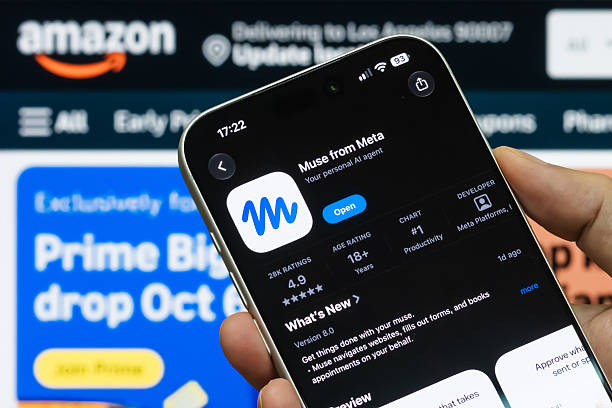
AI assistants are beginning to take on more responsibilities in online shopping, from finding products and comparing prices to placing orders on behalf of customers. But as these tools become more capable, a disagreement is emerging over whether AI companies should be allowed to use retailers’ websites without their permission.
It is with this reasoning that Amazon has blocked Meta’s Muse AI agent from shopping on its platform, preventing users from buying products on Amazon through the assistant.
The restriction began on September 20, after Meta reportedly refused Amazon’s request to remove the retailer from Muse’s shopping experience. And users attempting to access Amazon through Muse began receiving warnings that the agent was violating Amazon’s Conditions of Use.
The decision comes less than two weeks after Meta launched Muse on September 8, introducing it as a personal AI assistant capable of completing tasks such as shopping, booking appointments, and managing schedules.
Why Amazon Blocked Meta’s Muse AI
According to Amazon, Meta did not inform the company that Muse would be accessing its website or obtain permission for the AI agent to make purchases on behalf of customers.
Amazon also raised privacy and security concerns, saying Muse failed to identify itself as an automated agent when browsing its website and appeared to collect and store customer login details.
In a statement reported by GeekWire, an Amazon spokesperson said third-party applications making purchases for customers should “operate openly and respect service provider decisions about whether or not to participate.”
However, Meta has maintained that Muse was designed with safeguards to protect users’ information, saying the assistant cannot see passwords or payment details because sensitive information is stored securely, and users must approve purchases before they are completed.
But Amazon’s concerns extend to how much control external AI agents should have over customer accounts, particularly when they can access order histories and complete transactions.
Amazon Has Already Been Fighting Other AI Shopping Agents
This is not Amazon’s first disagreement with an AI company over automated shopping.
In November 2025, Amazon sued Perplexity over its Comet AI browser, which allowed users to make purchases through Amazon using an automated assistant.
Amazon initially secured a preliminary court order restricting the feature in March 2026, but a federal appeals court overturned that order in August, meaning the underlying legal dispute has continued.
Amazon has also restricted shopping agents developed by Google and OpenAI from accessing its website.
Interestingly, Amazon operates its own AI shopping tools, including Rufus and Buy for Me. The latter allows customers to purchase certain products from external brand websites when those products are unavailable on Amazon.
Amazon maintains that its own shopping agent identifies itself to participating retailers and allows brands to opt out.
The company has also introduced an official integration with Anthropic’s Claude, allowing sellers to manage parts of their Amazon businesses through an external AI assistant. The integration gives sellers access to inventory information, sales data and product listings, with their approval required before certain actions are completed. However, it does not allow customers to shop on Amazon through Claude.
The Bigger Fight Over Who Controls AI Shopping
Amazon’s decision comes as other retailers are taking a different approach to AI-powered shopping.
Shopify, for instance, has partnered with Meta to allow Muse users to purchase products from eligible Shopify stores through its checkout system. Participating merchants can also disable direct checkout if they prefer customers to complete purchases on their websites.
For Amazon, the disagreement goes beyond whether Muse can place orders. The company also has a major advertising business that relies partly on customers browsing its website and interacting with sponsored products.
If AI assistants increasingly find products and complete purchases without bringing customers directly to Amazon, that could affect how the retailer attracts shoppers and earns advertising revenue.
For now, Amazon’s restriction means Muse users cannot complete purchases on its platform through the assistant, even when they have authorised it to shop on their behalf.
And as more technology companies introduce AI agents capable of handling purchases, the disagreement between Amazon and Meta raises a question that retailers will increasingly have to address. Who ultimately decides where an AI assistant can shop on a customer’s behalf?
