






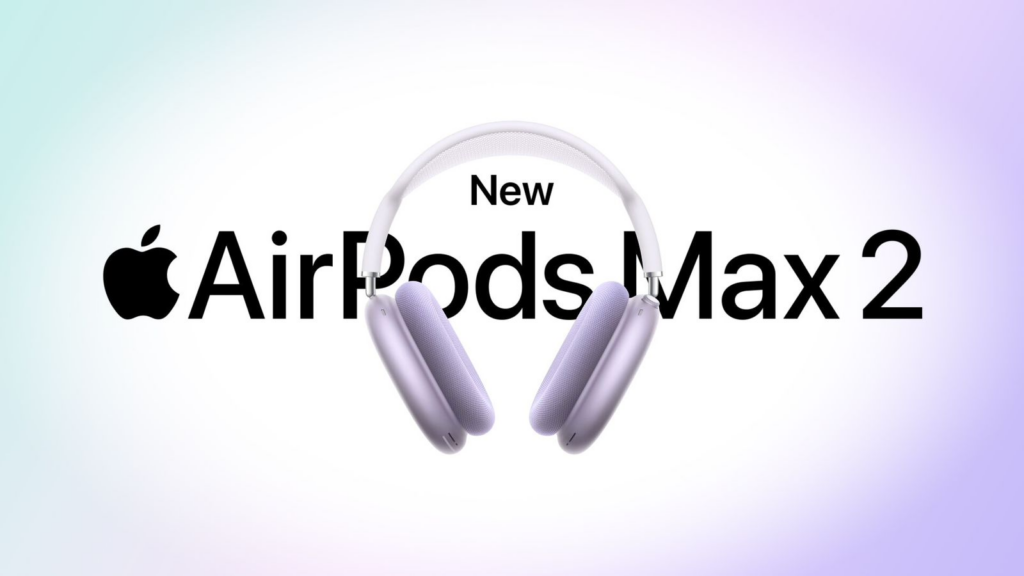
Apple has launched the AirPods Max 2, a significant update to its premium over-ear headphones since the original model debuted in December 2020.
The new headphones carry the same physical design as before but are built around Apple’s H2 chip, the same processor found in the AirPods Pro 2 and 3. The upgrade delivers stronger Active Noise Cancellation (ANC), improved audio quality, and a set of new software features.
The H2 Chip Does the Heavy Lifting for AirPods Max 2
The original AirPods Max ran on Apple’s H1 chip. A minor hardware refresh in September 2024 added USB-C and new color options but kept the H1 intact, which drew criticism from users who expected more. The AirPods Max 2 addresses the criticism by adopting the H2 chip, with most of the new capabilities flowing directly from that adoption.
Apple says the new ANC is up to 1.5 times more effective than the previous generation, and that the H2 chip uses new computational audio algorithms to detect and counter outside noise more precisely. Transparency Mode has also been improved, now described by Apple as sounding more natural than before.
Additionally, adaptive Audio, a feature that automatically blends ANC and Transparency based on the listener’s environment, is making its debut on the AirPods Max lineup with this release.
Live Translation Powered by Apple Intelligence
One of the most important new additions is Live Translation, a feature that enables real-time language translation during in-person conversations. It works by pressing and holding the listening mode button, after which the AirPods Max 2 translates what the other person is saying into the user’s preferred language. The feature is powered by Apple Intelligence and requires a compatible device to function.
Conversation Awareness, another H2-enabled addition, automatically lowers audio playback and reduces background noise when the user starts speaking. Voice Isolation, which uses the H2 chip to prioritize the speaker’s voice on phone calls while filtering out surrounding noise, also arrives on the AirPods Max for the first time.
Audio Quality and Lossless Audio via USB-C
Apple also added a new high dynamic range amplifier to the AirPods Max 2, which the company says delivers cleaner audio with more consistent bass, more natural mids and highs, as well as improved instrument localization in the soundstage. Spatial Audio has also been refined to produce more accurate sound positioning.
When connected via the included USB-C cable, the headphones support 24-bit, 48 kHz lossless audio with ultra-low latency. Apple describes the AirPods Max 2 as the only headphones that allow musicians to both create and mix in Personalized Spatial Audio with head tracking through that wired connection.
The earlier Lightning-based models did not support true lossless audio.
Features for Creators and Professionals
The AirPods Max 2 introduces studio-quality audio recording, which Apple says will allow podcasters, interviewers, singers, and other creators to capture higher-quality audio with more natural vocal texture. The Digital Crown also now functions as a camera remote, letting users take photos or start and stop video recording from a distance when using the iPhone or iPad Camera app.
AirPods Max 2 starts selling for $549 in the U.S., with availability starting March 25, 2026.
For users already on recent iPhone and iPad hardware, the combination of USB‑C, H2, and Apple Intelligence features makes AirPods Max 2 a more sustainable option in Apple’s audio family.
What This Update Means for the Hardware Industry
AirPods Max 2 lands in a premium headphone market that is growing steadily and getting more crowded, with brands like Sony, Bose, and Sennheiser pushing advanced noise cancellation and wireless audio features at lower price points. The industry expects the premium headphones segment to keep expanding through the next decade, which puts more pressure on brands like Apple to justify high-end pricing with clear performance gains and software-driven experiences.
By centering the upgrade on the H2 chip, AI-enabled features such as Adaptive Audio and Live Translation, and most importantly, its Apple Intelligence, Apple is leaning further into custom-produced and tight hardware-software integration to maintain its lead in the market. This approach mirrors what the company has already done with the M‑series chips in Macs and the H2 in AirPods Pro.


