

Close Menu

    Stay Ahead with Exclusive Updates!

    Enter your email below and be the first to know what’s happening in the ever-evolving world of technology!

    What's Hot

    How Cursor’s 2.2 Debug Mode Changes Everything For Agentic Coding

    April 2, 2026

    Tinder’s New AI Scans Your Photos to Build a Personality Profile

    April 2, 2026

    OpenAI 2026: Moving from Research Lab to Enterprise “Operating Layer”

    April 1, 2026
    Facebook X (Twitter) Instagram
    Facebook X (Twitter)
    PhronewsPhronews
    • Home
    • Big Tech & Startups

      Tinder’s New AI Scans Your Photos to Build a Personality Profile

      April 2, 2026

      OpenAI 2026: Moving from Research Lab to Enterprise “Operating Layer”

      April 1, 2026

      Microsoft MAI-Image-2 Review: How It Compares to DALL-E & Midjourney

      March 31, 2026

      The Hairdryer Heist: How Supermicro’s Co-Founder Allegedly Smuggled Nvidia Chips

      March 31, 2026

      Why Jensen Huang is Rebranding Data Centers as “Token Factories”

      March 31, 2026
    • Crypto

      Quantum Computing Advances Force Coinbase and Institutional Custodians to Rethink Crypto Security

      March 8, 2026

      AI Assisted Hacking Groups Target Crypto Firms With Multi-Layered Social Engineering

      February 18, 2026

      Global Crypto Regulations Expand as 2026 Begins With New Data Collection Frameworks and National Laws

      January 16, 2026

      Coinbase Bets on Stablecoin and On-Chain Growth as Key Market Drivers in 2026 Strategy

      January 10, 2026

      Tether Faces Ongoing Transparency Questions and Reserve Scrutiny Amid Massive Bitcoin Accumulation

      January 5, 2026
    • Gadgets & Smart Tech
      Featured

      AirPods Max 2: USB-C, Live Translation, and the H2 Upgrade

      By preciousMarch 26, 2026
      Recent

      AirPods Max 2: USB-C, Live Translation, and the H2 Upgrade

      March 26, 2026

      How ABB and Nvidia are Perfecting Industrial Robotics using AI Simulation

      March 20, 2026

      Neura Robotics Reaches €4B Valuation With Tether Backing

      March 12, 2026
    • Cybersecurity & Online Safety

      Zero-Day Alert: CISA Warns of Active Attacks on Microsoft SharePoint

      March 31, 2026

      3 Million Device Botnet Taken Down: What You Need to Know

      March 27, 2026

      Can AI Hack You Before Hackers Do? How RunSybil Is Changing Cyber Defense

      March 25, 2026

      Why Investors Just Put $120M Into Non-Human Identity Security — A Growing Cybersecurity Gap

      March 23, 2026

      Beyond the Firewall: Why Google’s Purchase of Wiz is a Wake-Up Call for Enterprise Security

      March 19, 2026
    PhronewsPhronews
    Home»Software, Coding & Development»How Cursor’s 2.2 Debug Mode Changes Everything For Agentic Coding
    Software, Coding & Development

    How Cursor’s 2.2 Debug Mode Changes Everything For Agentic Coding

    preciousBy preciousApril 2, 2026No Comments
    Facebook Twitter Pinterest LinkedIn WhatsApp Reddit Tumblr Email
    Share
    Facebook Twitter LinkedIn Pinterest Email
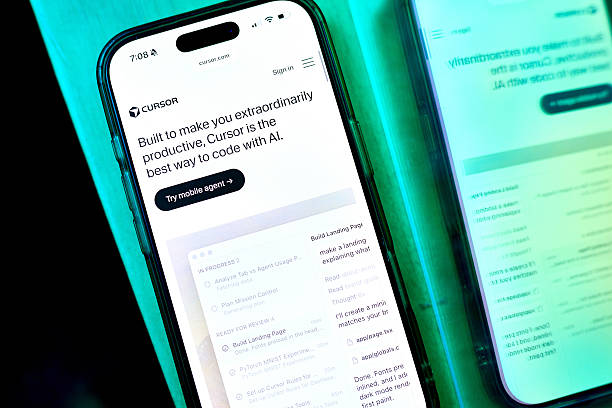
    Photo Credit: Gabby Jones/Bloomberg via Getty Images

    Debugging has always been one of the tasks that AI coding agents can not properly handle. They only read code, make educated guesses, and generate fixes without ever running the program. 

    But Cursor’s 2.2 Debug Mode takes a different approach entirely as it instruments code with runtime logs, collects live data during bug reproduction, and brings the developer back into the loop before committing to any fix.

    The result of this process is that bugs which were previously out of reach for even the most capable models can now be resolved through a structured and evidence-based process.

    How Debug Mode Actually Works

    Cursor’s 2.2 Debug Mode process runs in three stages – describe, reproduce, and verify.

    To get started, a developer describes the bug in as much detail as possible. Rather than immediately generating a fix, the agent reads through the codebase and produces multiple hypotheses about what could be causing the problem, including approaches the developer might not have considered on their own. The agent then instruments the code with logging statements designed to test those hypotheses, preparing itself to receive concrete runtime data.

    In the reproduction stage, the developer triggers the bug while the agent collects the runtime logs. The agent can observe variable states, execution paths, and timing information as they actually occur. With that data, it discovers the root cause and generates a targeted fix, which are often a precise two or three line change rather than the hundreds of lines of speculative code a standard agent interaction would typically produce.

    The final stage is verification. Debug Mode asks the developer to reproduce the bug one more time with the proposed fix in place. If the bug is gone, the developer marks it as fixed and the agent removes all the instrumentation, leaving a clean, minimal change that’s ready to ship. 

    If the bug persists, the agent adds more logging, the developer reproduces again, and the cycle continues until the problem is actually resolved.

    The Role of Human Judgment

    What makes Debug Mode different from a fully automated fix is that it keeps the developer in the loop at every decision point. Human-in-the-loop verification is critical because some bugs fall into a gray area where a fix might work technically but not feel right and the agent cannot make that call on its own. 

    Cursor’s approach here is deliberate in the sense that the agent handles the repetitive, time-consuming work of instrumenting code and collecting logs, while the developer makes the judgment calls that require human contribution or supervision.

    Debug Mode works across stacks, languages, and models, which means it is not limited to specific frameworks or tied to a single underlying AI model. This broad compatibility makes it applicable to a wide range of real-world codebases.

    What This Means for Developers

    The practical value of Debug Mode is that it brings a category of bug that previously required significant developer time into a territory that an agent can now reliably address. 

    By grounding the debugging process in actual runtime data rather than static code analysis, Cursor has made agentic coding more useful for the hard cases and not just the easy ones. 

    This is a step forward for developers who have already integrated AI coding tools into their daily workflows and are looking for them to handle more of the heavy lifting.

    Why This Matters for Agentic Coding

    Agentic Integrated Development Environments (IDEs) are agents that can plan, act, and evaluate across large codebases. Until now, most of that work has been static. But Debug Mode now adds a new pillar by treating runtime logs as first‑class input to the agent loop.

    Cursor already positioned itself as an agentic coding environment with features like its Composer model, embedded browser, and long‑running refactors. With 2.2, the Debug Mode stood because it aligned with a broader industry trend of Agentic IDEs that feel like teammates and a standard part of how developers track down and resolve their hardest issues.

    Agentic IDEs AI-powered software development Artificial Intelligence Autonomous bug fixing tools Cursor 2.2 Debug Mode Cursor AI Future of software engineering Software engineering
    Share. Facebook Twitter Pinterest LinkedIn Tumblr Telegram Email
    precious
    • LinkedIn

    I’m Precious Amusat, Phronews’ Content Writer. I conduct in-depth research and write on the latest developments in the tech industry, including trends in big tech, startups, cybersecurity, artificial intelligence and their global impacts. When I’m off the clock, you’ll find me cheering on women’s footy, curled up with a romance novel, or binge-watching crime thrillers.

    Related Posts

    Tinder’s New AI Scans Your Photos to Build a Personality Profile

    April 2, 2026

    OpenAI 2026: Moving from Research Lab to Enterprise “Operating Layer”

    April 1, 2026

    Zero-Day Alert: CISA Warns of Active Attacks on Microsoft SharePoint

    March 31, 2026

    Comments are closed.

    Top Posts

    Coinbase responds to hack: customer impact and official statement

    May 22, 2025

    MIT Study Reveals ChatGPT Impairs Brain Activity & Thinking

    June 29, 2025

    From Ally to Adversary: What Elon Musk’s Feud with Trump Means for the EV Industry

    June 6, 2025

    Coinbase Hack 2025: Everything we know so far.

    May 21, 2025
    Don't Miss
    Software, Coding & Development

    How Cursor’s 2.2 Debug Mode Changes Everything For Agentic Coding

    By preciousApril 2, 2026

    Debugging has always been one of the tasks that AI coding agents can not properly…

    Tinder’s New AI Scans Your Photos to Build a Personality Profile

    April 2, 2026

    OpenAI 2026: Moving from Research Lab to Enterprise “Operating Layer”

    April 1, 2026

    Microsoft MAI-Image-2 Review: How It Compares to DALL-E & Midjourney

    March 31, 2026
    Stay In Touch
    • Facebook
    • Twitter
    About Us
    About Us

    Evolving from Phronesis News, Phronews brings deep insight and smart analysis to the world of technology. Stay informed, stay ahead, and navigate tech with wisdom.
    We're accepting new partnerships right now.

    Email Us: info@phronews.com

    Facebook X (Twitter) Pinterest YouTube
    Our Picks
    Most Popular

    Coinbase responds to hack: customer impact and official statement

    May 22, 2025

    MIT Study Reveals ChatGPT Impairs Brain Activity & Thinking

    June 29, 2025

    From Ally to Adversary: What Elon Musk’s Feud with Trump Means for the EV Industry

    June 6, 2025
    © 2025. Phronews.
    • Home
    • About Us
    • Get In Touch
    • Privacy Policy
    • Terms and Conditions

    Type above and press Enter to search. Press Esc to cancel.