


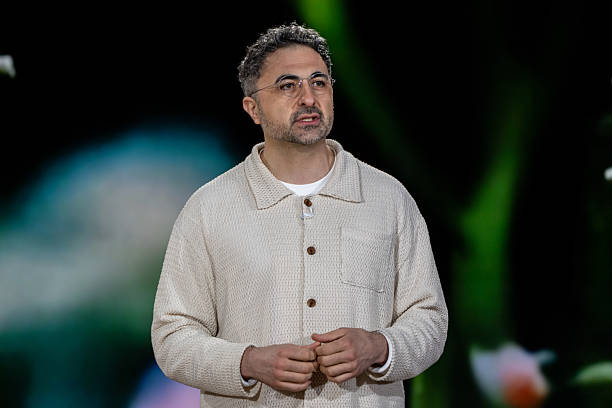
Microsoft AI CEO Mustafa Suleyman has set a clear boundary for the company’s artificial intelligence (AI) development, stating that the tech giant will make sure to abandon the further development of any AI system that risks being uncontrollable or that isn’t really human-centered.
Suleyman, who joined Microsoft in March 2024 after co-founding DeepMind and Inflection AI, made these remarks in a recent interview with Bloomberg, where he profoundly explained that Microsoft’s aim is to build “Humanist Superintelligence,” a deviation from the popular artificial general intelligence (AGI) many tech companies are pursuing.
Microsoft’s Humanist Superintelligence takes shape with Mustafa Suleyman “Red-Lines”
When asked what superintelligence meant to Suleyman, the tech giant’s AI CEO responded with “Superintelligence in the industry today means an AI system that can learn any new task and perform better than all humans combined, at all tasks.” He further admits that pursuing superintelligence as a goal “is a very high bar” that “comes with a great deal of risk.”
“It’s very uncertain how we would contain and align a system that is so much more powerful than us,” Suleyman said. “The framing I prefer is one of a Humanist Superintelligence.”
For Suleyman, Humanist Superintelligence means AI “that is always in our corner, on our team, aligned to human interests.” He further touts that these systems are built with the aim to amplify human work rather than replace it, especially in the medicine and healthcare field.
However, with this goal of achieving Human Superintelligence comes Suleyman drawing a “red line” on this booming technology, acknowledging that AI needs regulation to be able to move forward with less harm.
This comes amid major concerns of AI replacing human jobs in droves, people’s over-reliance on the technology, and the overall harm it poses. More importantly, Suleyman’s warning comes amid the intense AI arms race going on between tech giants and countries who are very well determined to achieve the highest level of the technology.
For Microsoft, aiming at Humanist Superintelligence means they have to be careful as they’ve got a 50-years, highly trusted “reputation” as Suleyman put it, which was garnered as a result of the careful technology they have provided so far and one they intend to maintain.
Additionally, another part of building Humanist Superintelligence is for Microsoft to avoid building systems that “will run away from us,” as Suleyman put it, which again reinforces the “red line” placed on the development of fast-paced technologies like AI.
In this case, Suleyman’s “red lines” means a commitment to safety over unchecked development of technologies. This includes more defined regulatory control and alignment.
What this means for the broader AI industry
The timing of Suleyman’s stance comes amid increasing and intensifying global scrutiny on AI risks, as well as the widely known circular financing going on amongst AI giants.
For instance, regulators in the EU and U.S. are debating oversight frameworks, while incidents of AI misuse that includes deepfakes and biased decision-making also fuels public controversy and unease about the continuous use and over-reliance on AI.
The broader significance of Suleyman’s convictions is that it challenges industry consensus. As OpenAI accelerates toward superintelligence and competitors compete on scale, Microsoft’s willingness to stake its reputation on containment and controllability suggests that the AI industry’s future governance structures remain ridded with potholes. It also suggests that while not every company is thinking about safety and speed, it need not be mutually exclusive especially if work is put behind developing a structured system.
Now what remains to be seen is whether Microsoft will honor and stick to its Humanist Superintelligence goal.
