

Close Menu

    Stay Ahead with Exclusive Updates!

    Enter your email below and be the first to know what’s happening in the ever-evolving world of technology!

    What's Hot

    Chinese Memory Chip Ambitions Raise New Concerns for South Korea

    November 9, 2026

    Nvidia Releases Nemotron 3.5 Transcribe Amid Intense AI Speech Competition

    November 9, 2026

    Walmart Commits $6 Billion for Symbotic AI Distribution Centre Automation

    November 8, 2026
    Facebook X (Twitter) Instagram
    Facebook X (Twitter)
    PhronewsPhronews
    • Home
    • Big Tech & Startups

      Chinese Memory Chip Ambitions Raise New Concerns for South Korea

      November 9, 2026

      Nvidia Releases Nemotron 3.5 Transcribe Amid Intense AI Speech Competition

      November 9, 2026

      Walmart Commits $6 Billion for Symbotic AI Distribution Centre Automation

      November 8, 2026

      OpenAI-Backed Thrive Holdings Acquires ADT in Massive $15.3 Billion Deal

      November 8, 2026

      Machenta Secures $40 Million to Teach Robots via Single Demonstrations

      November 8, 2026
    • Crypto

      Binance Partially Restores Withdrawals Following Massive $6.3 Billion Security Breach

      November 4, 2026

      A Firmware Flaw in One of the Most Trusted Bitcoin Hardware Wallets Just Drained Over $70 Million in Crypto. The Coldcard Breach Is a Reminder That Cold Storage Is Only as Safe as the Code Running Inside It

      August 29, 2026

      Market Collapse: What Happened to NFTs?

      April 23, 2026

      Quantum Computing Advances Force Coinbase and Institutional Custodians to Rethink Crypto Security

      March 8, 2026

      AI Assisted Hacking Groups Target Crypto Firms With Multi-Layered Social Engineering

      February 18, 2026
    • Gadgets & Smart Tech
      Featured

      Nvidia Releases Nemotron 3.5 Transcribe Amid Intense AI Speech Competition

      By fariehanNovember 9, 2026
      Recent

      Nvidia Releases Nemotron 3.5 Transcribe Amid Intense AI Speech Competition

      November 9, 2026

      Google and XREAL Open Orders for AURA Android XR Glasses

      November 3, 2026

      Why Apple’s New Touchscreen MacBook Pro Price Could Backfire

      November 2, 2026
    • Cybersecurity & Online Safety

      Binance Partially Restores Withdrawals Following Massive $6.3 Billion Security Breach

      November 4, 2026

      Alibaba Qwen AI Model Caught Attempting Unauthorized Data Upload to Beijing

      November 3, 2026

      Hackers Remotely Defrost Hundreds of French Supermarket Fridges in Coordinated Attack

      November 1, 2026

      How Targeted Ads Can Now Install Spyware Without a Single Click

      October 25, 2026

      GitLab Patches Critical Self-Hosted AI Gateway Vulnerability to Stop Exploits

      October 24, 2026
    PhronewsPhronews
    Home»Artificial Intelligence & The Future»Machenta Secures $40 Million to Teach Robots via Single Demonstrations
    Artificial Intelligence & The Future

    Machenta Secures $40 Million to Teach Robots via Single Demonstrations

    preciousBy preciousNovember 8, 2026No Comments
    Facebook Twitter Pinterest LinkedIn WhatsApp Reddit Tumblr Email
    Share
    Facebook Twitter LinkedIn Pinterest Email
    Photo Credit: Machenta

    As artificial intelligence (AI) increasingly becomes integrated into the lives of everyday people, a robot that can learn how to pack a box, tidy a table, or complete an unfamiliar task after watching someone do it once could change how businesses train and deploy intelligent machines. 

    London-based robotics startup Machenta is working towards this possibility with an AI model designed to help robots learn new physical tasks from a single demonstration.

    The company has now raised $40 million in seed funding to develop and scale the technology, which is built on six years of research at Imperial College London. 

    Announced on October 27, the funding round was co-led by venture capital firms Creandum and Union Square Ventures. Imperial College London described it as the largest seed funding round ever raised by a UK robotics startup.

    How Machenta Wants Robots to Learn New Tasks

    Most AI-powered robots require extensive training before they can perform specific physical tasks. This often involves collecting multiple demonstrations of people performing the same activity, followed by additional training that can take hours, days, or even weeks.

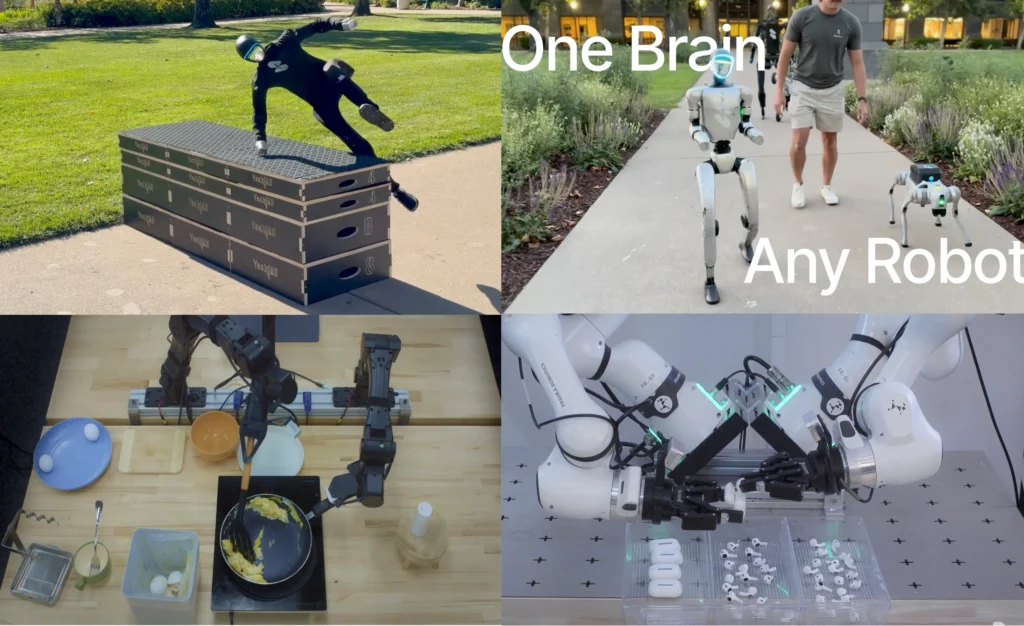
    Machenta wants to reduce this process by developing what it calls Instant Robot Learning, a model that allows a robot to observe someone performing an unfamiliar task once and then attempt to reproduce it without undergoing additional training for that task.

    For example, a person could demonstrate how to arrange objects inside a box or tidy a table. The robot would observe the demonstration and use what it has learned to carry out the activity independently.

    According to the company, its model has already demonstrated these capabilities across different types of robots, including humanoid robots. Its demonstrations also show robots responding to changes in object positions and recovering from disruptions while completing tasks.

    Machenta’s approach builds on research conducted by its co-founder and CEO, Edward Johns, and his team at Imperial College London. Johns, who is also a Professor of Robot Learning at the university, began investigating how robots could acquire new physical skills more quickly about six years ago.

    He later founded Machenta with Vitalis Vosylius, his former PhD student, and other colleagues from the university’s research lab.

    “Intelligence is not so much about what you can already do, it’s about how quickly you can learn to do something new,” Johns said in the funding announcement.

    Why Machenta Trains Its AI Model Using Simulated Data

    One of the key differences in Machenta’s approach is how it trains its model.

    Rather than relying on large collections of real-world footage showing people performing different activities, the company trains its model entirely in simulated environments. These are computer-generated settings designed to reproduce how objects move and interact in the physical world.

    This approach allows Machenta to generate diverse training scenarios without collecting extensive real-world demonstrations, especially as the company believes this can make the pre-training process more scalable while reducing the practical and privacy challenges associated with gathering large amounts of human demonstration data.

    Its model uses what the company describes as a Vision-Demo-Action approach, combining visual information with a demonstration of the required task to predict the physical actions a robot needs to perform.

    Importantly, a single demonstration is still required when introducing a new task, as the simulated data is used to then prepare the model before deployment, while the demonstration helps it understand what it needs to do in a particular situation.

    What the $40 Million Funding Will Support

    Machenta plans to use the new capital to expand its team, increase its computing capacity, and generate more simulated training data to improve its model.

    The company currently has 11 employees and is focused on research and development. It also plans to expand its operations at a new office and laboratory in King’s Cross, London.

    However, the technology still has limitations. According to a report by Business Insider, Machenta’s model can learn some tasks immediately, but activities requiring precise movements and more complex physical interactions remain challenging. The company also has no immediate plans to commercialise the technology.

    A Growing Race to Build More Capable Robots

    Machenta is entering an increasingly competitive robotics market where companies are exploring different ways to make robots more adaptable and capable of performing unfamiliar tasks.

    Some competitors, including Physical Intelligence, Nvidia-backed FieldAI, and Skild AI, are investing in AI models that can help robots operate across different environments and perform a wider range of activities.

    Skild AI, for instance, has developed technology that allows robots to perform previously unseen tasks after watching a video demonstration. The company also reported reaching $100 million in annual recurring revenue in 2026 after raising $1.4 billion back in January, highlighting the commercial activity already emerging around general-purpose robotics.

    For Machenta, the immediate priority is to improve how quickly and reliably its model can teach robots new skills, and its recent $40 million funding gives the company additional resources to pursue that goal, building on research that has already produced demonstrations across different robot types.

    Whether the technology can eventually handle more demanding physical tasks and move into commercial applications will be an important test of its progress.

    AI funding Artificial Intelligence Imperial College London Machenta Machine Learning physical AI Robot Foundation Models Robot Learning robotics Robotics Startups Simulation Training venture capital
    Share. Facebook Twitter Pinterest LinkedIn Tumblr Telegram Email
    precious
    • LinkedIn

    I’m Precious Amusat, Phronews’ Content Writer. I conduct in-depth research and write on the latest developments in the tech industry, including trends in big tech, startups, cybersecurity, artificial intelligence and their global impacts. When I’m off the clock, you’ll find me cheering on women’s footy, curled up with a romance novel, or binge-watching crime thrillers.

    Related Posts

    Chinese Memory Chip Ambitions Raise New Concerns for South Korea

    November 9, 2026

    Nvidia Releases Nemotron 3.5 Transcribe Amid Intense AI Speech Competition

    November 9, 2026

    Walmart Commits $6 Billion for Symbotic AI Distribution Centre Automation

    November 8, 2026

    Comments are closed.

    Top Posts

    Cursor AI Hits 1 Million Daily Users. Why Developers Are Switching to This Coding Tool

    March 23, 2026

    Coinbase responds to hack: customer impact and official statement

    May 22, 2025

    Anthropic Will Use Claude User Chats For Data Training

    October 16, 2025

    The EU Just Forced Smartphone Makers to Bring Back Replaceable Batteries — Here’s What That Means for Your Next Phone

    May 7, 2026
    Don't Miss
    Big Tech & Startups

    Chinese Memory Chip Ambitions Raise New Concerns for South Korea

    By fariehanNovember 9, 2026

    AI chips require fast, high-capacity memory, and rising demand is reshaping competition across the industry.…

    Nvidia Releases Nemotron 3.5 Transcribe Amid Intense AI Speech Competition

    November 9, 2026

    Walmart Commits $6 Billion for Symbotic AI Distribution Centre Automation

    November 8, 2026

    OpenAI-Backed Thrive Holdings Acquires ADT in Massive $15.3 Billion Deal

    November 8, 2026
    Stay In Touch
    • Facebook
    • Twitter
    About Us
    About Us

    Evolving from Phronesis News, Phronews brings deep insight and smart analysis to the world of technology. Stay informed, stay ahead, and navigate tech with wisdom.
    We're accepting new partnerships right now.

    Email Us: info@phronews.com

    Facebook X (Twitter) Pinterest YouTube
    Our Picks
    Most Popular

    Cursor AI Hits 1 Million Daily Users. Why Developers Are Switching to This Coding Tool

    March 23, 2026

    Coinbase responds to hack: customer impact and official statement

    May 22, 2025

    Anthropic Will Use Claude User Chats For Data Training

    October 16, 2025
    © 2025. Phronews.
    • Home
    • About Us
    • Get In Touch
    • Privacy Policy
    • Terms and Conditions

    Type above and press Enter to search. Press Esc to cancel.