






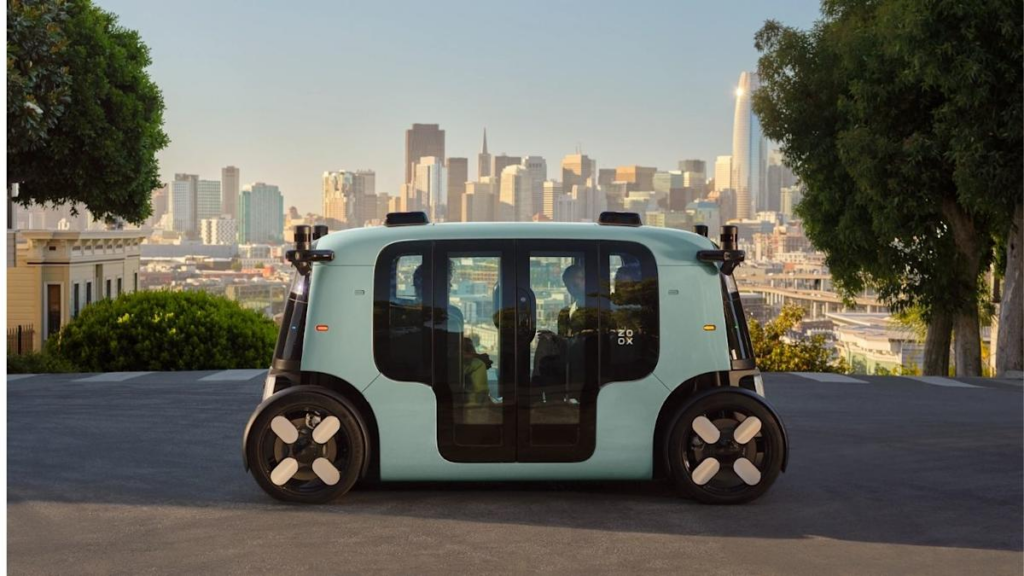
Amazon’s autonomous vehicle unit is sending Zoox robotaxi to two new cities. The company’s boxy vehicles were nicknamed “toaster on wheels” and will begin testing in Miami and Austin.
Those two cities now join Las Vegas and San Francisco as official testing locations. Together, these four markets mark Zoox’s biggest step yet toward commercial service.
Zoox Robotaxis: A Different Kind of Ride
Unlike conventional cars, Zoox built its vehicle from scratch. For that reason, it has no steering wheel and no pedals.
Also, its symmetrical design lets it drive forward or backward with equal ease. Sliding doors open to a cabin with four seats facing each other and riders control music and temperature with screen touch controls.
Because of the boxy shape, it earned the nickname “toaster” and Zoox has since embraced the name.
Currently, Zoox has logged nearly two million autonomous miles. More importantly, it has carried more than 350,000 riders in Las Vegas, where driverless service began in September 2025.
Furthermore, the company added rider features like “ZooxCast” that streams audio from a rider’s phone and “Find My Zoox” which uses sound and messages to guide passengers to their ride. These Zoox robotaxis are designed to make the experience feel effortless.
CEO Aicha Evans called 2026 “our year of growth.” She said the company is taking lessons from Las Vegas and applying them nationwide. Zoox wants to scale safely, and the Miami and Austin launches are a big part of that plan.
Why Miami and Austin
To prepare for the expansion, Zoox mapped both cities for months using modified test vehicles. This helped it learn road behavior signage and traffic patterns. Evans said the company picks markets based on three things: ride‑hail demand, weather and local regulations.
Following this, the Austin testing starts by the end of March and rides will go to employees first. Then, the company will open service to its Explorer waitlist. The general public will follow also and Miami will follow a similar pattern.
Initially, rides will be free and will run inside geofenced zones downtown and in nearby neighborhoods. At the moment, Zoox has not set a public launch date because they prefer to expand only after proving safety.
Expanding Zoox Robotaxis
Right now, Zoox is also growing in its existing markets. For example, it is doubling its Las Vegas service area to include the Strip, the Sphere, the Convention Center and T‑Mobile Arena. Airport service to Harry Reid International is in testing.
In San Francisco, Zoox will quadruple its service area this spring, adding the Marina North Beach and Chinatown. The goal is to cover the whole city by year‑end.
The company now operates in ten U.S. cities and expects to have about 100 robotaxis on public roads once Austin and Miami testing ramps up.
In a separate March announcement, Zoox said its robotaxis will appear in the Uber app. The partnership starts this summer in Las Vegas while Los Angeles follows next year.
The Road Ahead
At the moment, Zoox is still way behind Waymo, which plans to launch in ten new U.S. cities this year. But, Zoox has momentum.
Currently, more than 500,000 people are on its waitlist and its Fremont factory can build up to 10,000 robotaxis a year.
Ultimately, the Miami and Austin launches mark the start of a new era for the “toaster on wheels” and the autonomous ride-hail industry it aims to transform.


