






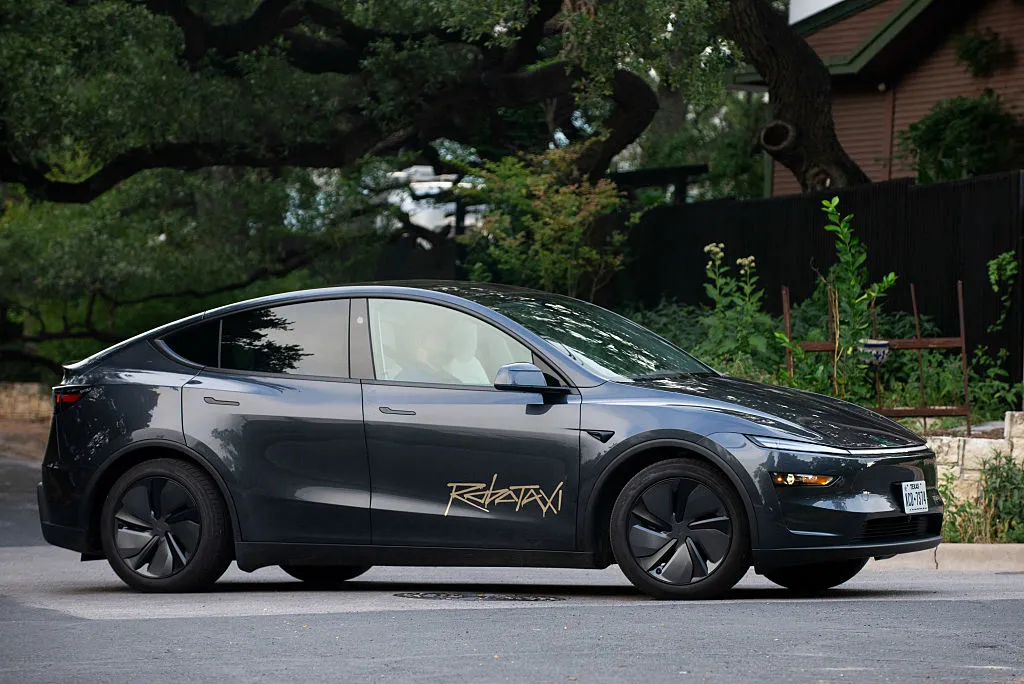
Tesla’s robotaxi service has promised to reshape urban transportation. The company announced seven new cities for 2026, including Dallas, Houston, Phoenix, Miami, Orlando, Tampa, and Las Vegas.
However as mid-2026 approaches, the active fleet sits at just 69 vehicles across Texas. Regulators are also asking hard questions about safety. Consequently, the gap between Elon Musk‘s grand vision and what authorities will permit is about to be tested in public.
Tesla’s Robotaxi Map Keeps Growing, But the Fleet Barely Moves
Tesla applied for a Nevada permit to deploy 5,000 robotaxis across Clark County. The company also expanded its Austin geofence to cover the entire metropolitan area. On a map, the service territory now looks impressive.
However, upon closer look, everything looks completely different. Roughly 20 active robotaxis roam Austin’s streets. Statewide numbers climbed from 42 to only 69. In comparison, Waymo operates 577 autonomous vehicles in the same state.
At the moment, this discrepancy raises the question of why Tesla is struggling to scale. But, the answer lies not in regulatory barriers but in the company’s own software readiness and that is a problem Tesla hasn’t solved.
The Software Is Not Ready, and Tesla Admits It
Currently, Tesla’s ability to scale depends entirely on Full Self-Driving v15, a neural-network rewrite with 10 billion parameters. Until v15 arrives, the company cannot deploy robotaxis in meaningful numbers.
Moreover, CEO Elon Musk acknowledged this limitation on the Q1 earnings call. He admitted safety validation remains a limiting factor and that robotaxi revenue will not materially affect 2026 results.
Furthermore, Musk also conceded that Hardware 3, the computing platform inside four million Teslas, “simply does not have the capability to achieve unsupervised FSD.”
Texas Says Yes, but “Yes” Comes With Fine Print
However, Texas regulators gave Tesla a green light through a new self-certification law. Tesla immediately seized this opportunity.
Yet, self-certification is not independent validation. California still demands 50,000 miles of testing before issuing a robotaxi permit. Tesla has applied in Arizona, Nevada, and Florida but has launched paid service nowhere beyond Texas.
Federal Regulators Are Closing In
NHTSA opened an investigation after receiving four crash reports involving FSD, including one fatal pedestrian accident. Each incident occurred when Tesla’s entered reduced visibility, including sun glare, fog, or dust.
In addition, the agency also launched a special probe after a Model 3 slammed into a Texas home, killing a 76-year-old woman inside. The driver claimed an automated system was engaged.
Two U.S. senators have also demanded action. Edward Markey and Richard Blumenthal argued Tesla relies on “methodological choices that systematically inflate FSD’s apparent safety advantage.”
Also, they added that “misleading safety statistics can encourage drivers to over-rely on FSD” and gave NHTSA a deadline to respond.
The Gap Between Tesla’s Robotaxi Hype and Reality, and Why It Matters
Looking ahead, the next few months will prove decisive. Tesla has always operated on the bleeding edge of innovation and this strategy built its electric vehicle dominance.
But, self-driving technology demands a different approach. Safety cannot be iterated in public the way software updates can be pushed overnight.
In the coming months, two paths lie ahead. Either v15 arrives and the fleet scales dramatically or regulators step in and slow everything down.
Ultimately, the era of blind faith in Tesla’s autonomy claims is ending. What replaces it will depend on real-world results, not Musk’s timelines.


